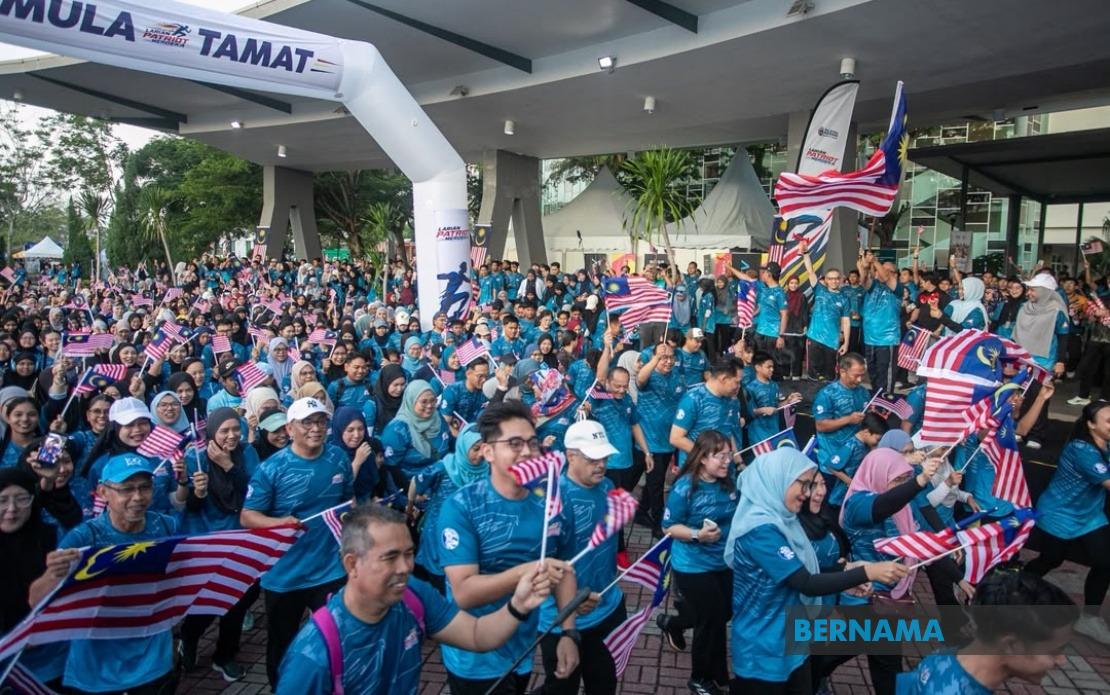
More than 2,000 Malaysians descended on the Sultan Azlan Shah Ministry of Health Training Institute in Ipoh on July 19 to participate in the Patriot Merdeka Run, a grassroots celebration of national pride and community spirit. The early morning gathering reflected broad public enthusiasm for the event, with families bringing children and representatives from various sectors joining what organizers billed as a platform to strengthen social cohesion ahead of the 2026 National Month and Malaysia Day festivities.
The event, officially part of the MPBKKJG 2026 (Fly the Jalur Gemilang Campaign), commenced with a mass aerobics session before the main 2.5-kilometre fun run began. This opening segment set an energetic tone, with participants moving together in synchronized movements while the national flag remained a visible symbol throughout the grounds. The combination of fitness and patriotic ritual underscores an emerging trend in Malaysian public events: weaving health consciousness with national identity building.
Communications Ministry secretary-general Datuk Abdul Halim Hamzah formally flagged off the participants at 7.30 am, signalling the official start of the fun run. Along the entire route, the Jalur Gemilang was prominently displayed, transforming the running path into a mobile exhibition of national symbolism. This deliberate placement reinforced the event's dual purpose—promoting wellness while embedding patriotic messaging into physical activity.
The atmosphere reflected genuine spontaneity and family-oriented participation, with parents guiding small children through the route and many runners adopting clothing in the colours of Malaysia's flag. Such visual displays, while simple, create powerful communal moments where individual participation collectively expresses national belonging. The cheers and encouragement exchanged between runners further highlighted how patriotic sentiment, when channelled through community activities rather than formal ceremonies, can feel organic and inclusive rather than imposed.
Organizers emphasized that the Patriot Merdeka Run served a broader mandate beyond mere physical exercise. The event deliberately targeted participants across age groups and socioeconomic backgrounds, reflecting a strategic approach to nation-building through inclusive public engagement. By framing patriotism as something accessible to families with young children and elderly participants alike, rather than restricting it to formal state functions, the campaign attempts to democratize national pride.
This grassroots initiative arrives as Malaysia enters a critical phase in its national calendar. The 2026 National Month and Malaysia Day celebrations represent significant milestones, and early events like the Ipoh run serve as mood-setters for months of planned activities. Such opening programmes allow government and civil society to gauge public receptiveness to patriotic campaigns and adjust messaging accordingly for subsequent larger celebrations.
The timing of the run also reflects broader strategic communication efforts by the government. By launching the MPBKKJG 2026 campaign through community-based activities rather than top-down proclamations, authorities appear intent on fostering organic participation rather than obligatory attendance. This approach carries particular resonance in contemporary Malaysia, where public sentiment toward state initiatives varies considerably across demographics and regions.
For Ipoh specifically, hosting this inaugural event positions the Perak capital as a significant player in early celebration activities. The choice of venue—a health ministry training institute—carries symbolic weight, reinforcing the government's messaging that national pride and public health advancement are complementary rather than competing priorities. This linkage may prove influential in subsequent events scheduled nationwide.
Prime Minister Datuk Seri Anwar Ibrahim was slated to officially launch the full 2026 celebration programme later that morning, positioning the Patriot Merdeka Run as the ceremonial overture to his remarks. This sequencing allows grassroots participation to precede high-level political rhetoric, potentially creating stronger resonance among attendees who can later connect their morning run to the PM's broader vision for the nation.
The success of events like the Patriot Merdeka Run in drawing substantial participation suggests sustained public interest in organized patriotic expression, particularly when structured around health and wellness themes. As Malaysia continues planning its bicentennial and other upcoming national commemorations, the model of embedding national identity messaging within accessible, family-friendly activities may increasingly shape how the government approaches civic engagement. The 2,000 participants in Ipoh represent a test case for this approach, with implications extending across Southeast Asia's broader landscape of how nations cultivate contemporary patriotism amid competing social and political pressures.

