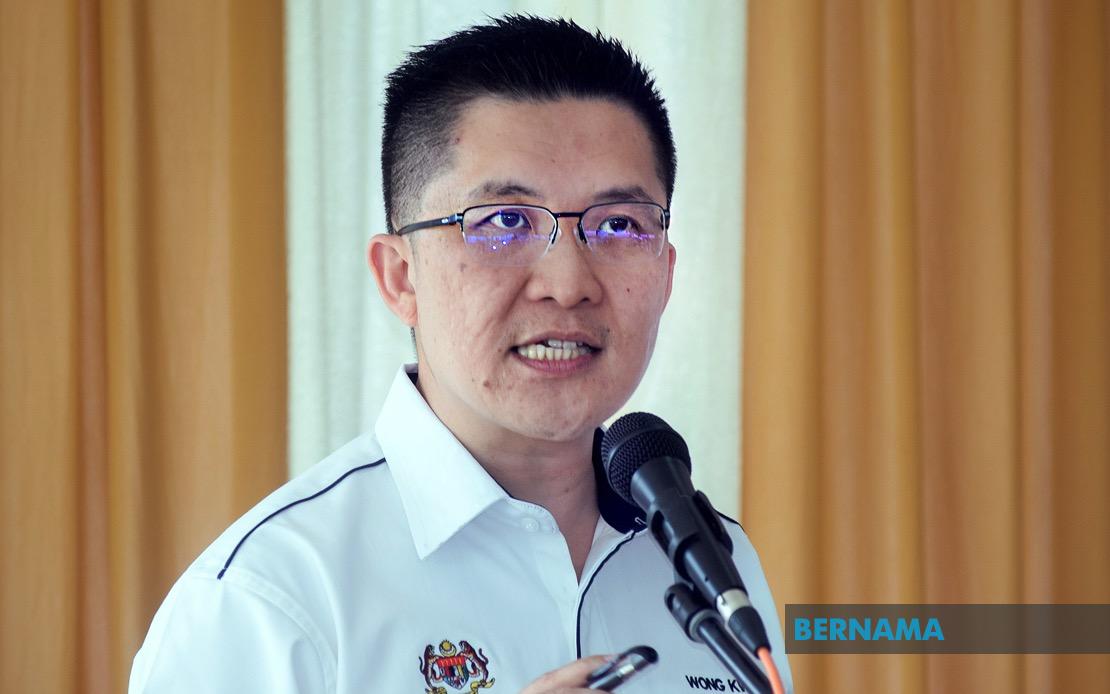
Malaysia maintains a network of 528 Tamil national-type schools (SJKT) educating 78,501 pupils, according to data presented in Parliament on June 22. Deputy Education Minister Wong Kah Woh disclosed these figures during a Special Chamber session, responding to parliamentary questions about the state of Tamil-language education across the country. The enrolment snapshot, captured as of May 31, reflects the continued significance of Tamil-medium schooling within Malaysia's diverse education landscape, serving primarily Tamil-speaking communities and families committed to preserving linguistic and cultural heritage through formal education.
The trajectory of Tamil language uptake at the secondary level reveals a gradual contraction in examination registration numbers. Wong reported that 8,023 candidates sat the Sijil Pelajaran Malaysia (SPM) examination with Tamil as a subject in 2023, declining to 7,925 in 2024, then 7,693 in 2025, and falling further to 7,494 new candidates in the current examination cycle. This downward trend, whilst modest in percentage terms, warrants attention from education policymakers concerned with maintaining language diversity and ensuring Tamil-speaking students have equal pathways to national qualifications. The ministry has moved to counteract such trends through curriculum innovation and expanded access mechanisms.
To ensure equitable examination participation, the Education Ministry has clarified that pupils attending schools without dedicated Tamil language instruction remain fully eligible to register for the subject during SPM, provided they meet standard examination requirements. This provision widens the opportunity for Tamil-language learners studying in vernacular, national, or international-stream schools to maintain their linguistic competency and secure qualifications in the language. The policy underscores the ministry's commitment to accommodating diverse learning pathways rather than confining Tamil-language education strictly to SJKT environments, recognizing that many families may have pragmatic or geographical reasons for choosing non-Tamil-medium schools.
The Education Ministry has committed substantial resources to revitalizing Tamil-medium education through the 2027 School Curriculum implementation, quality enhancement in teaching methodologies, strengthened literary instruction, and sustained organizational backing for SJKTs. These initiatives reflect a comprehensive strategy extending beyond maintaining schools as institutions to fundamentally upgrading educational quality and relevance for Tamil-speaking learners. By embedding Tamil literature more robustly into curricula and training educators in contemporary pedagogical approaches, the ministry aims to enhance both academic attainment and cultural engagement among pupils.
Johor represents a significant concentration of Tamil-medium schooling, hosting 71 SJKTs with combined enrolment of 12,906 pupils. Within Johor Bahru district specifically, 15 schools serve 7,840 pupils, with several institutions achieving notably high enrolment levels. SJKT Taman Tun Aminah leads with 1,529 pupils, followed by SJKT Ladang Rini at 1,055, SJKT Jalan Yahya Awal with 890, and SJKT Masai accommodating 768 students. These figures highlight how enrolment concentrates in particular urban localities and established institutional settings, whilst other schools operate with minimal pupil populations.
Infrastructure expansion forms a cornerstone of the ministry's support architecture for under-resourced Tamil schools. Two Johor facilities—SJKT Ladang Rini and SJKT Kulai Besar—have each received RM4.3 million allocations to construct new buildings designed to accommodate an additional 200 to 300 pupils per institution. Such capital investments signal the government's commitment to removing physical capacity constraints that might limit enrolment in high-demand areas and improving learning environments in established schools. These construction projects represent long-term confidence in Tamil-medium education's sustainability and role within the national schooling framework.
Conversely, the ministry confronts a concurrent challenge of under-enrolled institutions, with two Johor Bahru schools—SJKT Ladang Sungai Plentong and SJKT Ladang Mados—operating below 30 pupils each. Rather than precipitously closing such schools, the Education Ministry has developed a strategic roadmap addressing under-enrolment through multi-grade classroom implementation, institutional relocation to more accessible locations, and preservation decisions grounded in local community requirements. As of May 31, 2026, this approach has yielded 135 under-enrolled SJKTs nationwide adopting multi-grade configurations, whilst 36 schools have received approval for relocation to potentially higher-demand areas, demonstrating adaptive management respecting both fiscal prudence and community educational needs.
Teacher availability and qualification levels have substantially improved, suggesting effective recruitment and professional development efforts within Tamil-medium education. The ministry requires 1,334 option-level Tamil teachers in SJKTs, yet current staffing stands at 1,733—exceeding the requirement by approximately 30 percent. Secondary schools similarly exceed their teacher quota, needing 584 but employing 648 educators. This surplus capacity contrasts favourably with chronic teacher shortages affecting other subject areas and education sectors in Malaysia, indicating that Tamil-language education has not suffered from recruitment or retention deficits that might compromise instructional quality or force class consolidations.
Parliamentary discussion also encompassed examination grading transparency, with Wong clarifying that SPM results are determined exclusively through meritocratic assessment of candidate performance against curriculum standards rather than quota systems or predetermined grade percentage targets. Subject matter specialists, curriculum experts, and educational measurement professionals collectively evaluate candidate performance relative to examination instrument characteristics, curriculum requirements, and established competency thresholds before grade boundaries are established. This methodology aligns with international examination practices and protects grading integrity against external pressure to manipulate outcomes.
Grade boundaries necessarily fluctuate between examination years according to the performance distribution within particular candidate cohorts and variation in examination instrument difficulty characteristics, Wong explained, noting that such variation reflects established practices in international examination systems worldwide. This technical reality sometimes generates public controversy when grade distributions shift substantially year-to-year, yet reflects legitimate pedagogical and psychometric principles. Malaysian policymakers thus face the ongoing challenge of maintaining examination credibility whilst communicating these technical realities to education stakeholders who may misinterpret variation as evidence of inconsistency or manipulation.
For Southeast Asian context, Malaysia's approach to preserving Tamil-medium education through targeted infrastructure investment, teacher development, and curricular innovation offers instructive lessons for neighbouring nations managing multilingual education systems. As demographic and linguistic shifts reshape school populations across Southeast Asia, the balance between institutional viability and cultural preservation increasingly occupies education policymakers' agendas. Malaysia's strategy of adaptive management—combining infrastructure expansion in high-demand areas with flexible pedagogical responses in under-enrolled settings—potentially provides a replicable model for other nations navigating comparable educational pluralism challenges whilst maintaining fiscal responsibility.

