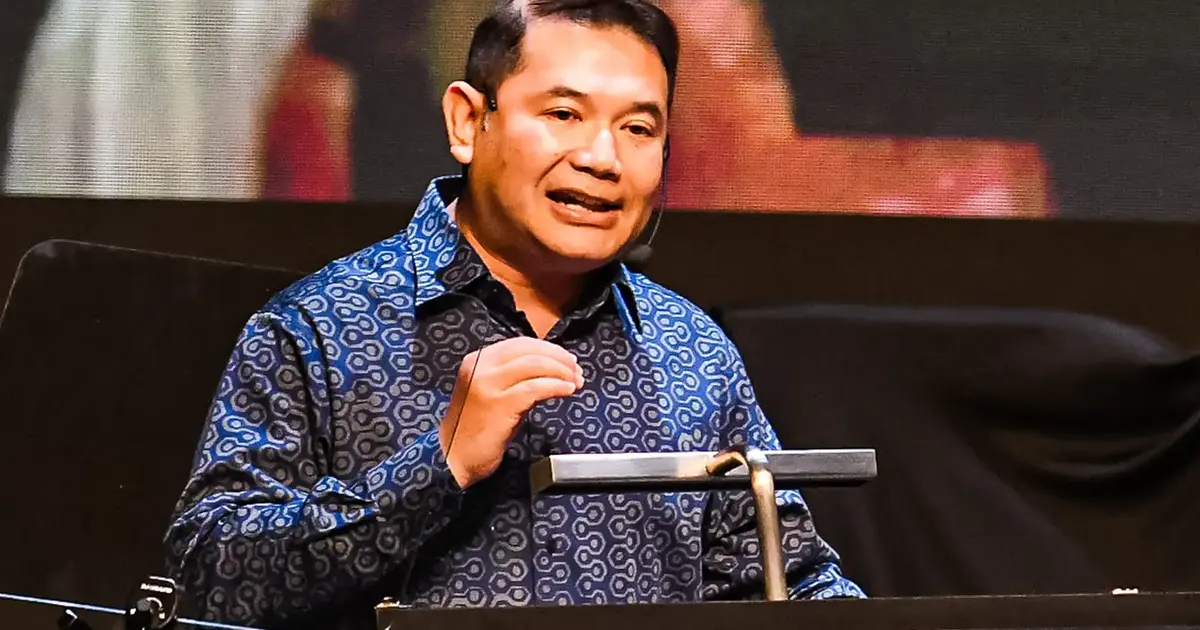
Parti Bersama Malaysia has concluded its vetting process for the Johor state election, drawing interest from 73 volunteer candidates across the state. The party's leadership, headed by Rafizi Ramli, has now transitioned from the recruitment phase to the critical decision-making stage, with the final list of approved contenders set to be revealed on Friday.
The substantial response from potential candidates reflects growing organisational momentum for the relatively newer political entity, which has been steadily building its presence across Malaysian states. For Johor, one of the nation's most politically significant states, the party's candidate pool represents a serious attempt to establish meaningful electoral competition beyond the traditional two-coalition framework that has dominated peninsular politics.
Rafizi Ramli's completion of the selection process marks a pivotal moment in the party's election preparation. The announcement scheduled for Friday will reveal which candidates have passed the party's evaluation criteria, a decision that carries implications not only for individual aspirants but for how Bersama intends to position itself ideologically and geographically across Johor's diverse constituencies. The party's internal assessment will have weighed factors including candidate viability, local rootedness, and alignment with party principles.
Johor's electoral significance cannot be overstated. As the second-most populous state and home to critical swing constituencies, the territory has historically been a proving ground for political movements. For Bersama, a strong showing in Johor could provide validation of its broader national strategy, particularly as Malaysian politics continues to experience fragmentation and realignment. The state's political composition—historically dominated by UMNO with pockets of opposition strength—presents both opportunity and challenge for a centrist-leaning newcomer.
The 73 volunteers represent diverse backgrounds and experience levels. Understanding the party's selection criteria will be crucial for observers seeking to predict Bersama's electoral strategy. Will the party prioritise candidates with deep community ties, established professional credentials, or younger figures representing generational change? The composition of the final list will signal whether Bersama is pursuing a broad-based appeal or targeting specific voter demographics.
For Malaysian political dynamics more broadly, Bersama's expansion into Johor contests reflects the broader trend of coalition fragmentation and the rise of single-party entries in state elections. Unlike the consolidated Barisan Nasional or Pakatan Harapan frameworks, Bersama's decision to field candidates independently rather than within a broader coalition underscores its ambition to establish itself as a distinct political force capable of attracting voters dissatisfied with existing alternatives.
The selection process itself reveals internal party discipline. That Rafizi Ramli has publicly committed to announcing results on a specific date suggests institutional credibility and an attempt to manage candidate expectations transparently. In Malaysian politics, where internal party disputes over candidate selection have frequently become public embarrassments, Bersama's managed approach—while typical of professional campaign operations—deserves note.
Johor voters will scrutinise the announced candidates closely. Rural constituencies may expect candidates with agricultural knowledge or established business interests, while urban areas will likely demand candidates with technical expertise and community engagement records. The quality and relevance of Bersama's final slate will significantly influence whether the 73-candidate effort translates into meaningful seat acquisition or remains largely symbolic.
The regional context matters too. Johor shares deep ties with Singapore economically, hosts the Iskandar development zone, and encompasses constituencies with distinct demographic profiles ranging from industrial zones to agricultural regions to urban centres. Candidates positioned to address these local specificities will carry electoral advantage. Bersama's challenge involves fielding contenders capable of navigating these complex local issues while maintaining coherent national messaging.
Rafizi Ramli's stewardship of this process will be watched not only by party members but by rival political operators assessing Bersama's maturation as an electoral competitor. How the party manages the inevitable disappointments among unsuccessful volunteers—potentially retaining them as grassroots activists or risk losing them to rivals—will influence its mid-to-long-term organisational health.
The Friday announcement will initiate the campaign period in earnest. Between candidate revelation and polling day, Malaysian political discourse will intensify around Johor's future direction, with Bersama's 73-strong initiative now condensed into a more focused team tasked with converting electoral opportunity into legislative representation. Whether the party's volunteer enthusiasm translates into voter conversion remains the fundamental question facing this ambitious endeavour.

