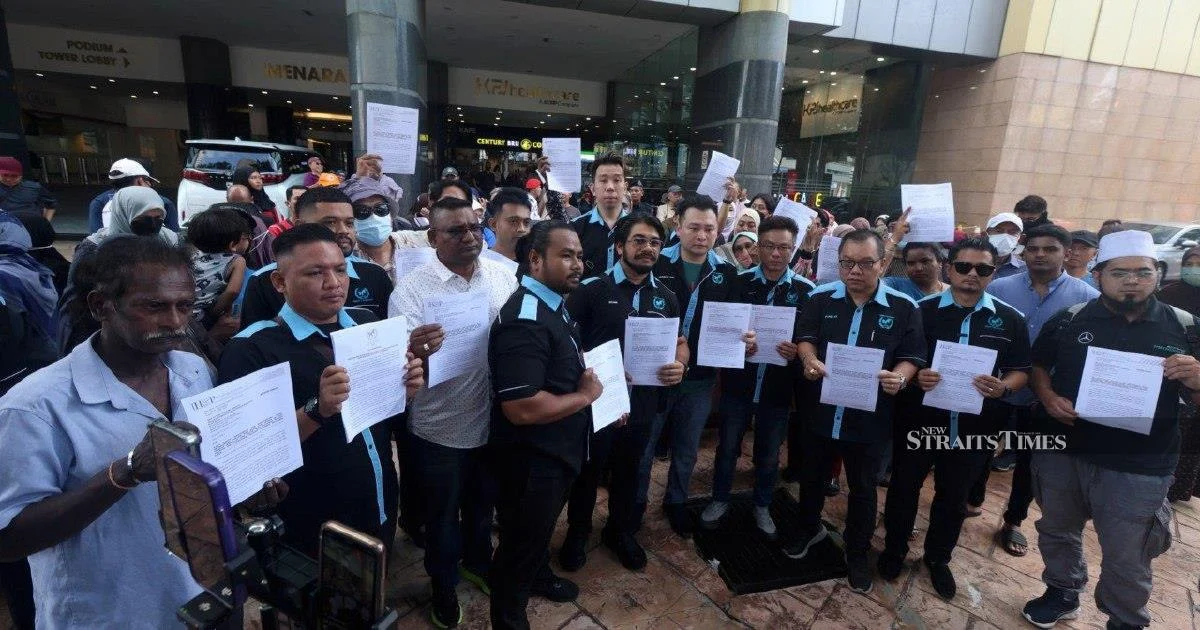
More than a hundred victims of investment fraud gathered in Kuala Lumpur on Wednesday, marshalled by the Malaysia International Humanitarian Organisation to amplify their calls for accelerated police action. The gathering underscores the mounting frustration among defrauded investors as investigations into 18 companies and investment platforms suspected of operating coordinated scam networks appear to stall. The MHO's mobilisation of such a sizable crowd represents one of the largest public demonstrations of investor grievance in recent months, reflecting the scale and severity of losses sustained across what appears to be a sophisticated, multi-layered fraud ecosystem.
The 18 entities under police scrutiny are alleged to operate as part of interconnected fraudulent schemes rather than isolated incidents, suggesting a degree of organisation and coordination that poses serious risks to retail investors throughout Malaysia and potentially across the broader Southeast Asian region. The involvement of digital investment platforms alongside traditional corporate structures indicates that perpetrators have adapted their tactics to exploit the growing popularity of online wealth-management services among retail clients. This hybrid approach—combining legitimate-looking corporate infrastructure with digital channels—has proven particularly effective at deceiving victims who might otherwise exercise caution with unfamiliar entities.
Investment fraud has emerged as one of Malaysia's most persistent crime challenges, with reported losses mounting annually despite awareness campaigns and regulatory tightening. The sheer number of victims willing to participate in Wednesday's gathering suggests that actual fraud cases may significantly exceed officially reported figures, as many individuals either lack awareness of proper reporting channels or harbour doubts about the efficacy of police investigations. Each victim's financial loss carries cascading consequences, from household budget disruptions and children's education delays to retirement security crises among older Malaysians who had invested life savings into schemes promising unrealistic returns.
The concentration of investigative resources remains a critical bottleneck within Malaysia's law enforcement apparatus. Police units dedicated to economic and investment crimes often juggle dozens of cases simultaneously, forcing investigators to prioritise based on case complexity, victim numbers, and available evidence rather than chronological order or case severity. This structural constraint means that even high-profile fraud networks may experience lengthy investigative delays, during which alleged perpetrators retain opportunity to liquidate assets, transfer funds across borders, or establish new fraudulent entities. The MHO's intervention by publicly highlighting police backlogs is designed to mobilise political and bureaucratic pressure that might accelerate resource allocation toward these 18 targets.
The regulatory framework governing investment platforms in Malaysia has undergone significant evolution in recent years, yet determined fraudsters consistently identify gaps that permit operation of deceptive schemes. Securities Commission Malaysia and Bank Negara Malaysia maintain oversight responsibilities across different jurisdictions, yet coordination failures between agencies sometimes allow suspicious platforms to operate in regulatory blind spots. Furthermore, the speed at which new digital platforms launch often outpaces regulatory bodies' capacity to conduct thorough due diligence, creating windows of vulnerability that sophisticated operators exploit ruthlessly. Scammers maintaining professional-grade websites, fabricated credentials, and testimonials from planted customers can appear credible to ordinary investors lacking sophisticated financial knowledge.
The geographic distribution of victims attending Wednesday's gathering likely spans multiple states, indicating that these fraud networks operate on a nation-wide or possibly regional basis rather than localised criminal enterprises. This geographic spread complicates investigations by introducing jurisdictional complexities and requiring coordination between state-level police contingents. Cross-border financial flows within Southeast Asia, facilitated by informal money transfer networks alongside legitimate banking channels, enable perpetrators to obscure fund origins and destinations while maintaining operational flexibility. Malaysian authorities investigating such cases frequently encounter obstacles when tracing assets into neighbouring countries where cooperation frameworks remain underdeveloped or inconsistently applied.
The psychological manipulation embedded within investment fraud schemes deserves particular attention, as perpetrators deliberately cultivate emotional bonds with victims through personalised communication, flattery, and staged success narratives. Many victims experience acute shame and psychological distress following discovery of fraud, deterring them from seeking help or reporting losses to authorities. This social dimension of fraud victimisation means that official statistics substantially underestimate the actual scale of harm, both financial and psychological, inflicted by these criminal enterprises. The MHO's role in providing emotional support alongside advocacy represents a holistic approach addressing victims' comprehensive needs beyond mere financial restitution.
Police operational timelines for complex fraud investigations can extend across months or years, during which investigative momentum sometimes dissipates owing to staff reassignments, competing priorities, or evidentiary challenges. The pressure generated by organised victim groups—supplemented by media attention—can galvanise bureaucratic responsiveness that might otherwise prove elusive. However, sustained momentum requires continuous victim mobilisation and public engagement, as single demonstrations rarely trigger lasting institutional change without follow-up advocacy. The MHO's effectiveness will ultimately depend on whether this gathering catalyses tangible investigative acceleration or remains merely symbolic.
For Malaysian retail investors contemplating investment decisions, Wednesday's gathering serves as a cautionary reminder that even apparently legitimate-looking platforms demand rigorous verification through official regulatory websites and direct contact with regulatory bodies themselves. Promising returns substantially exceeding conventional market benchmarks should trigger scepticism rather than enthusiasm, as legitimate investments typically reflect market realities. Regulatory bodies have published comprehensive guidance regarding investment verification procedures, yet many investors remain unaware of these resources or discount their importance. Educational initiatives reaching potential victims before they encounter fraud schemes represent a critical complement to police investigations addressing fraud already perpetrated.
The path forward requires simultaneous action across multiple domains: accelerated police investigations addressing current suspects, strengthened regulatory surveillance identifying emerging schemes before victim recruitment occurs, enhanced victim support services addressing both financial and psychological dimensions of fraud trauma, and expanded public education building investor resilience against manipulative tactics. The MHO's gathering Wednesday amplifies pressure for accelerated investigative progress, yet systemic vulnerability to investment fraud will persist absent comprehensive policy reform addressing underlying institutional weaknesses.

