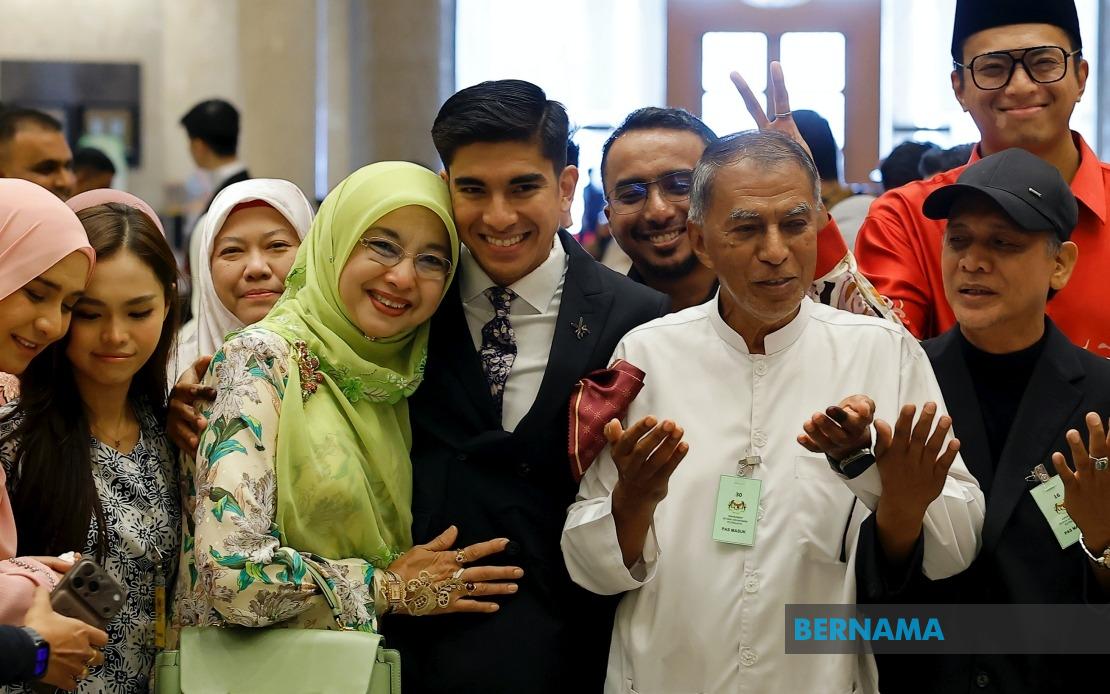
The Federal Court's decision to uphold the acquittal of Muar Member of Parliament Syed Saddiq Syed Abdul Rahman marks the end of a protracted six-year legal struggle that consumed not just the politician's time and resources, but also deeply affected his family, supporters and the broader political landscape. The court cleared him of all four charges relating to abetting criminal breach of trust, misappropriation of property and money laundering, allegations stemming from his management of funds belonging to Angkatan Bersatu Anak Muda (Armada), the youth wing of PKR. At 33, Syed Saddiq's vindication comes after years of navigating the Malaysian courts, a journey that has become emblematic of the country's lengthy litigation processes and the personal toll such proceedings exact on those involved.
The triumph was marked by a moment of religious observance when Syed Saddiq performed a sujud syukur with his family immediately following the Federal Court's pronouncement, a gesture that reflected both his personal faith and the emotional weight of the verdict. Speaking to reporters at the Palace of Justice, he articulated a conviction that has ostensibly sustained him through the ordeal: that courage is fundamentally rooted in standing on principle, and that this steadfastness has ultimately validated his position. The six years, he acknowledged, had been far from inconsequential—extending well beyond his own experience to test the patience and emotional endurance of his immediate family, close associates and political allies who had stood by him throughout the proceedings.
Syed Saddiq's remarks during the press conference revealed a man contemplating the deeper meaning of his legal vindication. He emphasised that his experience should serve as a broader lesson about institutional integrity, positioning Malaysia's justice system as foundational to the nation's continued strength and stability. In doing so, he framed his personal victory not merely as an individual triumph but as validation of Malaysia's judicial independence—a particularly significant statement given ongoing global scrutiny of judicial systems throughout Southeast Asia and Malaysia's own reputation regarding institutional autonomy. His insistence on this point suggests awareness that high-profile criminal cases involving politicians carry implications extending far beyond the individual defendant to shape public confidence in judicial impartiality.
The former youth and sports minister, who held that portfolio during the Pakatan Harapan administration, drew philosophical conclusions from his ordeal. He urged others facing seemingly insurmountable circumstances never to compromise their integrity or principles in pursuit of an expedient resolution. This message carries particular resonance in Malaysia's political culture, where settlements and plea bargains occasionally feature in high-profile cases. Syed Saddiq's refusal to pursue such a path, assuming his statement accurately reflects his choices, suggests either steadfast conviction in his innocence or strategic calculation regarding his political future. Either way, his emphasis on placing trust in divinity and institutional systems provides a carefully calibrated narrative of perseverance rooted in both faith and legal process.
Regarding his immediate future, Syed Saddiq indicated a measured withdrawal from the front lines of political activity, though one carefully circumscribed to avoid signals of permanent departure. He stated that whilst he remains formally within MUDA, he intends to step back from active political engagement to prioritise family matters and personal affairs. This phrasing represents a nuanced approach to managing political expectations—maintaining organisational affiliation while declining immediate recommitment to party functions. His commitment to attending parliamentary sittings demonstrates continued professional obligation as a member of the Dewan Rakyat, yet the emphasis on quality time with family and completing outstanding personal arrangements, including wedding preparations that he indicated his parents had approved, suggests a period of genuine withdrawal.
The legal team instrumental in securing Syed Saddiq's acquittal, represented by counsel Datuk Hisyam Teh Poh Teik, expressed gratitude to the judicial panel and acknowledged the trust that Syed Saddiq and his family had invested in their representation. Such statements, whilst customary in legal proceedings, underscore the collaboration required to navigate multi-year criminal cases through Malaysia's court hierarchy. The Federal Court's decision represents the culmination of appeals processes that would have involved lower courts and intermediate appellate review, each stage consuming time and legal resources. For Syed Saddiq, the journey through these jurisdictional levels has now concluded with categorical vindication, though the emotional and professional disruption from the six-year process will likely require considerably longer to fully resolve.
The prosecution's response, delivered through Deputy Public Prosecutor Datuk Wan Shaharuddin Wan Ladin, indicates continued deliberation regarding potential review mechanisms. The statement that a decision on whether to seek judicial review remains pending reflects standard prosecutorial procedure following adverse verdicts, though the qualified language suggesting it is premature to determine next steps may also signal acceptance of the outcome. The prosecution's acknowledgement that it awaits Attorney General guidance reflects institutional hierarchies within Malaysia's legal enforcement structures, where major case decisions typically require approval from the highest levels of the prosecutorial chain before proceeding. This procedural reality means that despite the Federal Court's categorical acquittal, the prosecution technically retains theoretical options for further action, though the likelihood of pursuing such avenues after a complete acquittal appears remote.
The case itself, rooted in allegations concerning MUDA party funds, formed part of broader controversies that have periodically surrounded Malaysian youth political movements. Angkatan Bersatu Anak Muda (Armada) had been established as a platform for younger politically engaged Malaysians, yet internal governance questions had occasionally surfaced. The charges against Syed Saddiq touched on familiar elements of Malaysian political scandals—questions of financial propriety, stewardship of organisational funds, and whether official positions created opportunities for personal enrichment. That the Federal Court ultimately rejected these allegations entirely suggests either that the evidence presented was fundamentally flawed or that interpretations of the law governing criminal breach of trust and money laundering did not align with the prosecution's construction of events.
For Malaysia's broader political ecosystem, Syed Saddiq's acquittal carries implications extending beyond his individual circumstances. As a prominent figure within MUDA, a reformist party established in 2020 that has positioned itself as an anti-establishment force in Malaysian politics, his legal vindication provides the party with credibility regarding its governance standards. MUDA has marketed itself as an alternative to older, more systemically compromised political structures, and having its most prominent parliamentarian fully exonerated reinforces that positioning. Conversely, the prosecution's pursuit and ultimate failure in the case raises questions about whether prosecutorial resources were optimally deployed and whether case construction was sufficiently robust before criminal charges were filed against a sitting parliamentarian.
The six-year temporal span of the legal proceedings warrants critical examination within Southeast Asia's broader context regarding judicial efficiency. Whilst Malaysia's courts function within frameworks comparable to other Commonwealth-influenced systems, the duration from initial charges to Federal Court acquittal suggests either exceptional complexity in the case, typical delays inherent to the Malaysian court system, or both. For investors, business operators and individuals contemplating whether to engage Malaysian legal processes, such timelines carry material implications regarding predictability and resource requirements. A six-year resolution for what ultimately proved to be unfounded charges represents an inefficient allocation of both state prosecutorial capacity and individual litigant resources.
Syed Saddiq's emphasis that the experience reinforced his faith in Malaysian judicial institutions warrants scrutiny given the extended timeline and the fact that he has now been fully exonerated. This framing suggests either genuine confidence in the system's eventual validity or strategic communication designed to preserve faith in institutions whilst still having experienced their demonstrated limitations. For Malaysian readers and observers across Southeast Asia, the case thus contains multiple narratives: a vindicated individual, an apparently vindicated justice system, but also evidence of institutional processes that consume extraordinary periods to reach conclusions that might alternatively have been reached with greater expedience. The politician's stated commitment to emphasizing judicial independence and institutional integrity appears partly shaped by recognition that confidence in such systems remains contested terrain requiring ongoing affirmation.

