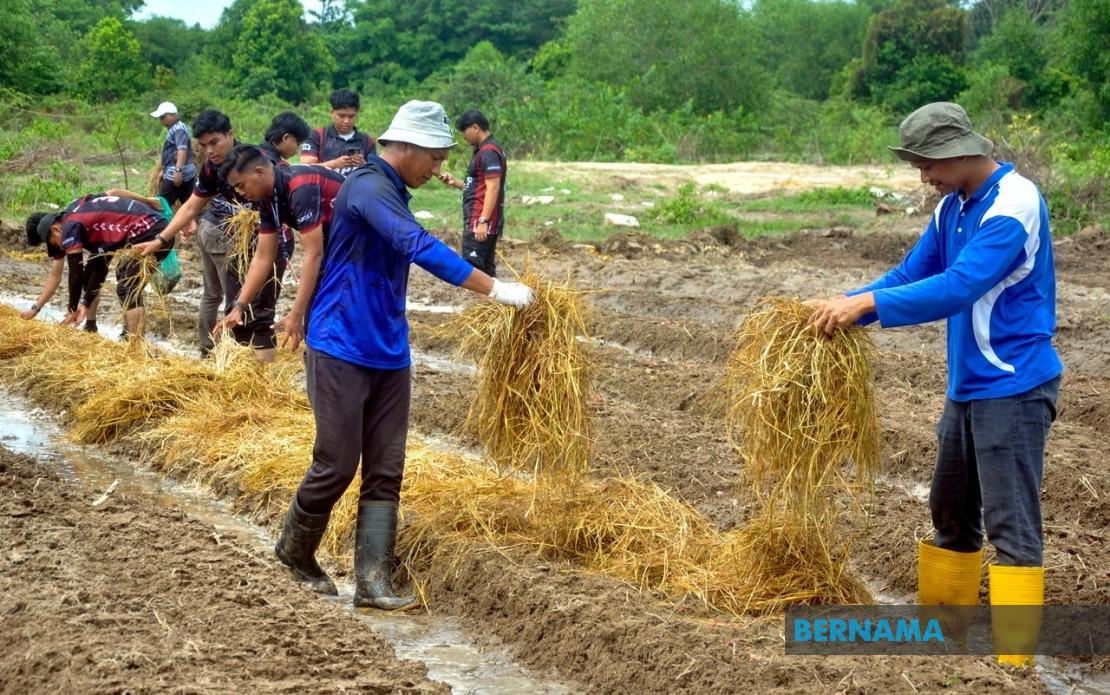
The Ministry of Agriculture and Food Security (KPKM) has released findings showing meaningful progress in agricultural vocational training outcomes, yet the data simultaneously highlights a persistent shortfall that threatens the sector's capacity to attract and retain young talent. Employment figures for Technical and Vocational Education and Training (TVET) graduates in agriculture reached 76 per cent in 2024, representing a substantial 15-percentage-point increase from the 61 per cent recorded in 2018, according to the Graduate Outcomes of Agricultural TVET in Malaysia report unveiled at a stakeholder engagement session in Putrajaya on July 23.
The report emerged from collaborative work between KPKM and PNB Research Institute (PNBRI), formalised through a Memorandum of Understanding signed on September 9, 2025. This partnership was explicitly designed to elevate agricultural TVET standards, build public awareness of farming as a viable career path, and mobilise youth participation in support of long-term national food security objectives. Researchers analysed extensive historical data from KPKM alongside graduate income patterns and entrepreneurial engagement to construct a comprehensive picture of post-graduation outcomes across Malaysia's agricultural training landscape.
Despite the upward trajectory, agricultural TVET employment remains substantially below the 95 per cent national TVET average, indicating that this specialised sector continues to struggle in converting trained workers into employed professionals relative to other vocational fields. This 19-percentage-point differential merits investigation, particularly as Malaysia attempts to strengthen domestic agricultural productivity amid global supply chain volatility and rising food import costs. The performance gap suggests either insufficient job creation within the agricultural sector itself, geographic mismatches between graduate locations and employment opportunities, or declining graduate interest in agriculture despite training completion.
Among the study's most compelling findings was evidence that graduates who pursued agricultural careers enjoyed tangible financial advantages. Those working directly within the agricultural sector earned approximately RM100 more per month than their peers who secured employment outside agriculture, a material difference that accumulates significantly over a career span. More strikingly, agricultural entrepreneurs demonstrated higher average incomes than graduates who established non-agricultural businesses, suggesting that farming and agro-based enterprises offer competitive returns when properly developed. This income differential potentially reflects higher value-added activities within the sector, though it may also indicate that the most motivated and skilled graduates self-select into agricultural entrepreneurship.
The sector confronts formidable demographic headwinds that threaten productivity and sustainability. Current workforce composition reveals that one in two agricultural workers has reached or exceeded age 40, reflecting decades of youth outmigration from rural areas toward urban employment and service-sector opportunities. This aging workforce exacerbates knowledge transfer challenges and limits capacity for labour-intensive agricultural expansion. Youth participation in farming has declined consistently throughout the past decade, a trend that outpaces the modest employment gains registered among TVET graduates, suggesting that vocational training alone cannot reverse deep structural disengagement from agriculture among younger Malaysians.
Geographic analysis reveals uneven distribution of agricultural TVET graduate participation across the country. Sabah leads with 15 per cent of participating graduates, followed by Kedah at 14 per cent and Sarawak at 13 per cent, concentrating trained capacity in states with established agricultural sectors and inherent comparative advantages. Conversely, major agricultural producers including Johor, Pahang, and Perak have yet to be systematically leveraged as deployment zones, representing untapped potential for programme expansion and regional economic development. This mismatch between graduate concentration and agricultural production capacity suggests inefficient allocation of human resources and underutilised development opportunities in economically significant states.
To address identified shortcomings, KPKM articulated six policy directions that reflect lessons learned from the research process. These include customising programme expansion to align with distinct state-level agricultural requirements rather than imposing standardised curricula; establishing success metrics grounded in agricultural outcomes rather than generic TVET benchmarks; mitigating entrepreneurial risk through targeted financial and advisory support; embedding business acumen and market awareness throughout all training modules; exposing trainees to the complete agricultural value chain from primary production through processing and distribution; and forging deeper partnerships with industry stakeholders to ensure curriculum relevance and employment pipeline development. Collectively, these directions represent a shift toward demand-driven, entrepreneurship-focused agricultural education.
The study's findings received endorsement at the National Technical and Vocational Education and Training Council (MTVET) meeting chaired by Deputy Prime Minister Datuk Seri Dr Ahmad Zahid Hamidi on June 4, positioning agricultural TVET strengthening within the government's broader policy framework. The research directly supports implementation of the National Food Security Policy 2030 and the National Agro-Food Policy 2021-2030 (DAN 2.0), flagship initiatives designed to reduce Malaysia's agricultural import dependence and build resilience against global market disruptions. By improving TVET employment outcomes in agriculture, policymakers aim to enlarge the pool of skilled farmers and agro-entrepreneurs capable of modernising production methods and increasing domestic output across strategic commodities.
The 76 per cent employment rate, while representing genuine progress over six years, underscores the complexity of transforming agricultural education into sustained employment and income gains at scale. Malaysian policymakers must now confront why nearly one in four agricultural TVET graduates remain outside employment, whether insufficient job creation, geographic mismatch, or skills-market disconnects bear primary responsibility. Addressing these questions will prove essential if agricultural TVET is to function as a meaningful engine of rural development, youth engagement, and food security reinforcement across Southeast Asia's broader economic landscape.

