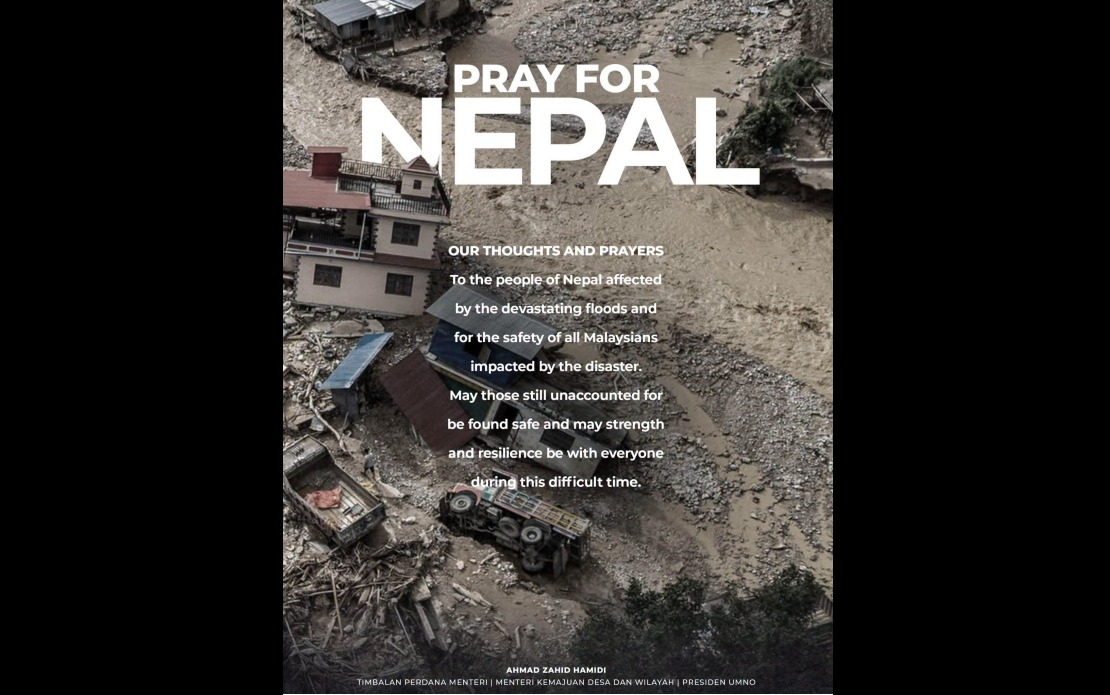
Malaysia's Deputy Prime Minister Datuk Seri Dr Ahmad Zahid Hamidi has publicly expressed deep concern for the welfare of Malaysian nationals caught in the devastating flash floods sweeping through Nepal, while simultaneously extending condolences to those who have perished in what has become one of the region's most significant natural disasters in recent months.
In his statement released on Thursday, Ahmad Zahid underscored his emotional response to the tragedy, describing himself as "deeply saddened" by the scale of destruction unfolding in the Himalayan nation. The floods have triggered a humanitarian crisis characterized by mass displacement, significant loss of life, and widespread infrastructure damage across multiple districts. For Malaysia, whose citizens maintain considerable ties with Nepal through tourism, education, and business ventures, the situation represents a concerning development that demands both diplomatic attention and practical assistance.
The Deputy Prime Minister's primary focus centred on locating and ensuring the safety of Malaysians reported missing in the wake of the disaster. His statement conveyed hope that ongoing search and rescue operations would yield positive outcomes, with missing persons being reunited with anxious families back home. This reflects the practical concerns of the Malaysian government in tracking nationals abroad during emergencies—a responsibility that requires coordination with Nepali authorities and potentially with international rescue organizations already mobilized in the region.
According to Nepal's official tourism board, the death toll had climbed to 359 by Thursday evening local time, a figure that continues to rise as rescue teams access previously unreachable areas and as the full extent of the damage becomes apparent. These statistics underscore the severity of the situation and the urgency with which Malaysian officials must work to account for their citizens. The scale of casualties also highlights the particular vulnerability of mountainous regions to flash flooding, where drainage systems are overwhelmed and evacuation becomes logistically challenging.
Ahmad Zahid's statement extended sympathy to families who have lost relatives in the floods, signalling Malaysia's broader solidarity with the Nepalese nation during this period of crisis. Such diplomatic gestures carry practical significance in maintaining bilateral relations during emergencies, establishing goodwill that can facilitate Malaysian access to affected areas and cooperation with local authorities in locating nationals. The expression of solidarity also reflects Malaysia's position as a responsible regional actor invested in humanitarian responses across South Asia.
The Deputy Prime Minister specifically appealed for divine protection for those still trapped or missing, articulating a spiritual dimension to Malaysia's response that resonates with the predominantly Muslim population at home. His call for strength and resilience for affected families demonstrates an empathetic leadership approach that acknowledges the psychological trauma accompanying natural disasters. Such messaging serves dual purposes: it provides comfort to Malaysians with relatives in Nepal while also communicating to the international community Malaysia's humanitarian values.
The role of Malaysia's diplomatic missions in Nepal becomes particularly critical during such emergencies. The Ministry of Foreign Affairs and Malaysian missions on the ground must actively coordinate with Nepali authorities, identify and assist Malaysian nationals, and provide consular support to those injured or displaced. This operational layer, while not explicitly mentioned in Ahmad Zahid's public statement, forms the backbone of Malaysia's practical response to the crisis.
For Malaysian families with members in Nepal—whether students, workers, or tourists—official acknowledgment of the situation from senior government figures provides reassurance that authorities are actively engaged in their protection. The Deputy Prime Minister's visibility in this matter helps manage domestic anxiety and demonstrates governmental competence during international crises. This is particularly important given Malaysia's experience with other regional disasters and the public expectation that its leaders will respond promptly and compassionately.
The Nepal floods disaster also carries broader regional implications for Southeast Asia and South Asia, revealing the climate vulnerability that transcends borders and political boundaries. Heavy monsoon rainfall, intensified by changing climate patterns, has become an increasingly frequent trigger for catastrophic flooding in the Himalayan foothills. Malaysia, similarly prone to flooding during monsoon seasons, can draw lessons from Nepal's experience regarding disaster preparedness, early warning systems, and evacuation protocols—making Ahmad Zahid's expressions of solidarity part of a larger regional learning process.
Looking forward, Malaysia may be expected to contribute to international relief efforts directed toward Nepal, whether through financial assistance, humanitarian supplies, or technical expertise in disaster management. Such contributions would extend beyond the protection of individual Malaysian nationals to encompass broader development partnership and humanitarian responsibility. The disaster thus becomes an opportunity for Malaysia to strengthen its regional position as a dependable partner during times of crisis.
The incident underscores the unpredictability of natural disasters and the importance of maintaining robust diplomatic infrastructure capable of responding rapidly when citizens abroad face emergencies. Ahmad Zahid's public statements serve as the initial phase of Malaysia's crisis response, preparing domestic constituencies for further updates while signalling to international partners that Malaysia is engaged and monitoring the situation closely. As rescue operations continue in Nepal, Malaysian officials will remain focused on accounting for nationals and providing necessary support to those affected by this unprecedented natural disaster.

