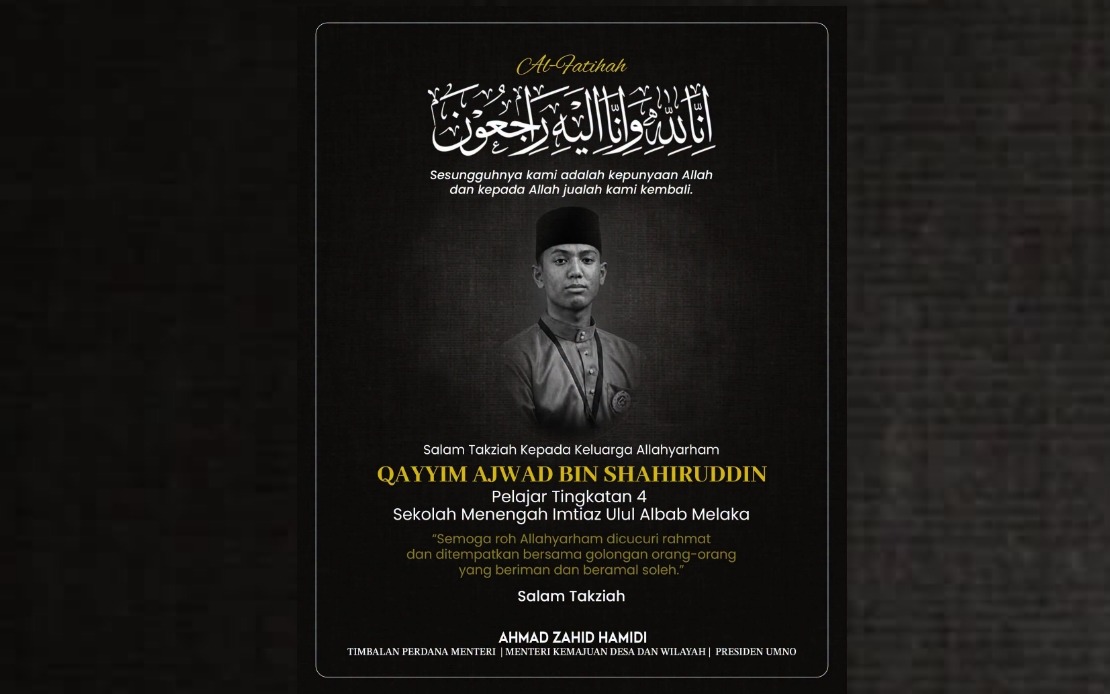
Deputy Prime Minister Datuk Seri Dr Ahmad Zahid Hamidi has mourned the loss of Qayyim Ajwad Shahiruddin, a student at Sekolah Menengah Imtiaz Ulul Albab in Melaka, who passed away from complications stemming from a vehicle collision that occurred earlier this month. The teenager was among four school personnel injured when their car collided with a lorry on July 8 at Solok Duku in Melaka while the group was returning from a table tennis competition.
In a Facebook statement, Ahmad Zahid characterised the student's death as a profound tragedy, emphasising the personal nature of his connection to the institution and its pupils. He articulated a deep emotional bond with the school community, framing the incident within a broader context of concern for youth welfare in Malaysia. The Deputy Prime Minister's remarks reflected the gravity officials attach to road safety matters affecting young people and educational institutions across the country.
The incident underscores the persistent dangers posed by road accidents in Malaysia, a nation that continues to grapple with high traffic fatality rates despite ongoing safety campaigns and enforcement efforts. The July 8 collision, which claimed one life weeks later and left other victims still undergoing medical treatment, represents another tragedy in a long chain of road incidents that have claimed students and educators nationwide. Such accidents often result not merely from momentary lapses but from systemic issues including road design, vehicle maintenance, driver behaviour, and emergency response capacities.
School-organised outings and sporting events, while beneficial for student development, inherently carry transportation risks that institutions must carefully manage. The journey to the table tennis competition at Sekolah Jenis Kebangsaan Cina Cheng represents the type of routine but essential activities that schools facilitate to broaden student engagement. However, the tragic outcome demonstrates how quickly routine circumstances can transform into life-altering crises, raising questions about safety protocols, vehicle quality, and route selection for such excursions.
Ahmad Zahid's invocation of prayer and religious observance reflects Malaysian cultural and religious norms in responding to death, particularly among the Muslim majority. His call for al-Fatihah recitation and prayers for the deceased's spiritual journey resonates with Islamic traditions and provides a framework through which many Malaysians process grief and loss. This dimension of the response also speaks to how religious and secular concerns intersect within Malaysian public discourse on matters affecting communities and families.
The broader implications of this incident extend beyond the immediate tragedy. The death raises critical questions about institutional accountability, whether for school transport arrangements, vehicle safety standards, or emergency medical response times. Educational institutions across Malaysia face ongoing challenges in balancing enrichment activities with duty-of-care obligations, particularly when such activities require students to travel beyond campus grounds. Families entrusting children to schools expect not only academic excellence but comprehensive safety measures that minimise preventable risks.
The prolonged nature of Qayyim Ajwad's hospitalisation before his eventual death also highlights medical system challenges in managing severe trauma cases. Weeks of treatment followed by a fatal outcome suggests either severe injuries that ultimately proved insurmountable or possible complications in the recovery process. Such situations place tremendous emotional and financial burdens on families while also reflecting the capacity limitations of Malaysia's healthcare infrastructure in managing catastrophic accident cases.
Road accident prevention in Malaysia remains a multi-stakeholder challenge requiring coordinated efforts from government agencies, law enforcement, vehicle manufacturers, driver educators, and the public. While individual incidents generate sympathetic responses from senior officials, systematic progress requires sustained investment in infrastructure improvements, vehicle safety standards, driver training programmes, and enforcement consistency. The recurring pattern of fatal accidents suggests that expressions of condolence, though necessary and humanely appropriate, must be accompanied by tangible policy measures addressing root causes.
For the school community at SM Imtiaz Ulul Albab, the loss extends beyond one family's grief to affect the entire institutional fabric. Students and staff who witnessed the incident or knew the deceased face collective trauma that requires professional psychological support and institutional care. Educational institutions increasingly recognise their responsibility to provide counselling and pastoral support following such incidents, acknowledging that loss impacts school communities comprehensively. The school's ongoing relationship with affected families and students will likely extend well beyond the immediate aftermath of this tragedy.

