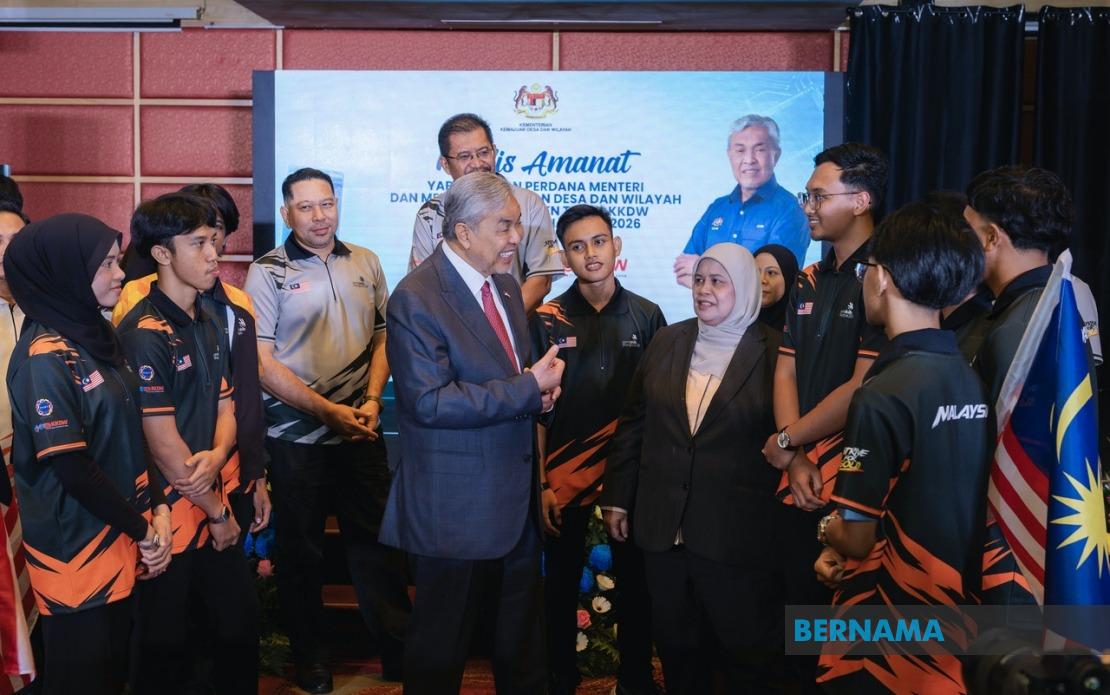
Deputy Prime Minister Datuk Seri Dr Ahmad Zahid Hamidi has unveiled an ambitious incentive scheme aimed at motivating Malaysia's technical vocational workforce, pledging to personally finance umrah pilgrimages for any gold medal winners from the nation's contingent at the WorldSkills Competition 2026 in Shanghai, scheduled for September 22 to 27. The commitment reflects a strategic effort to elevate the status of TVET excellence and reward participants who bring international recognition to the country's technical education sector.
Ahmad Zahid, who holds the dual portfolio of Deputy Prime Minister and Minister of Rural and Regional Development, framed the sponsorship as a personal gesture of gratitude rather than an official government initiative. By underwriting the full costs from his personal resources, the minister emphasised the symbolic importance of recognising outstanding achievement in vocational training. The distinction between personal and ministerial funding highlights the voluntary nature of the reward, positioning it as an expression of individual commitment to supporting technical talent rather than a standardised government programme.
The incentive structure extends beyond individual medallists to encompass their immediate families. Ahmad Zahid articulated his commitment with clarity, stating his intention to sponsor not only the gold medal winner's pilgrimage but also that of the participant's parents. This familial inclusion broadens the scope of recognition, acknowledging the sacrifices and support families provide throughout a trainee's development. Should all nine Malaysian participants secure gold medals—an ambitious but theoretically possible outcome—the minister committed to sponsoring the pilgrimages for all eighteen individuals, representing a substantial personal investment in recognising excellence.
The Malaysian contingent competing under the TVET@KKDW banner comprises nine skilled competitors representing diverse technical disciplines. Nadratulliyana Ab Malek will compete in Fashion Technology, while Haziq Syahmi Nazri focuses on Automobile Painting. The electronics category features Amirul Sharif Sharifudin, with Mohammad Ezaly Iman Ramli representing Malaysia in the increasingly critical field of Cyber Security. Wan Hamiz Ozai Wan Hamidzi brings expertise in Rail Vehicle Technology, a sector vital to regional infrastructure development. Supporting this cohort are Khairul Idham Bahari in Cabinetmaking, Muhamad Nashrul Zulkifli in Digital Construction, Muhammad Haziq Lailla Zamri in Electrical Installations, and Muhammad Huzairy Mohamad Thes in Mechanical Engineering CAD.
WorldSkills competitions serve as benchmarks for technical excellence globally, attracting competitors from dozens of nations to demonstrate mastery across hundreds of skills categories. Malaysia's participation in these events reflects the nation's commitment to positioning itself as a hub for quality technical talent and vocational training. The breadth of categories represented in the Shanghai edition underscores the sophistication of Malaysia's TVET ecosystem, spanning traditional crafts like cabinetmaking alongside emerging digital specialisms such as cybersecurity and digital construction methodology.
For Malaysia's TVET sector, which has historically struggled with perception issues relative to academic pathways, international competition provides crucial validation and visibility. Gold medal achievements at WorldSkills elevate the profile of vocational training domestically and internationally, potentially influencing student aspirations and employer confidence. Ahmad Zahid's announcement thus serves a dual strategic purpose: motivating the current cohort of competitors whilst signalling government-level support for technical education as a legitimate and prestigious career pathway.
The umrah sponsorship carries particular resonance within Malaysia's Muslim-majority context, where the pilgrimage holds profound spiritual and cultural significance. By offering this reward rather than monetary prizes, Ahmad Zahid aligned recognition with values meaningful to the broader Muslim community, creating an incentive that transcends purely financial consideration. This choice reflects cultural awareness and an understanding of what motivates and honours Malaysia's diverse population of technical trainees.
The announcement also occurs against a backdrop of renewed regional interest in developing technical talent pipelines. Southeast Asian economies increasingly compete for skilled workers in manufacturing, construction, digital infrastructure, and emerging sectors. Malaysia's emphasis on TVET excellence through high-profile international participation positions the nation competitively, potentially attracting investment and recognition as a source of capable technicians and engineers. Successful performances at WorldSkills 2026 could strengthen Malaysia's reputation across regional labour markets and foreign investor communities seeking reliable supplies of skilled personnel.
Deputy Rural and Regional Development Minister Datuk Rubiah Wang's presence at the announcement underscores institutional commitment to the initiative, suggesting the pledge receives broader ministry endorsement beyond Ahmad Zahid's personal commitment. This official acknowledgment lends credibility to the undertaking and potentially opens pathways for institutional follow-up or expansion of the programme to encompass broader recognition for medallists and participants.
Looking forward, the success of Malaysia's WorldSkills contingent will likely influence future competitions and government investment in TVET infrastructure. Strong performances could translate into increased budgetary allocations, enhanced training facilities, and expanded recruitment into technical programmes. Conversely, the pressure inherent in competing whilst conscious of such high-profile support places substantial expectations on participants. Ahmad Zahid's generous pledge thus carries implicit messaging about national aspirations for technical excellence and the willingness of government leaders to invest personally in youth achievement, establishing a powerful precedent for recognising vocational merit at the highest political levels.

