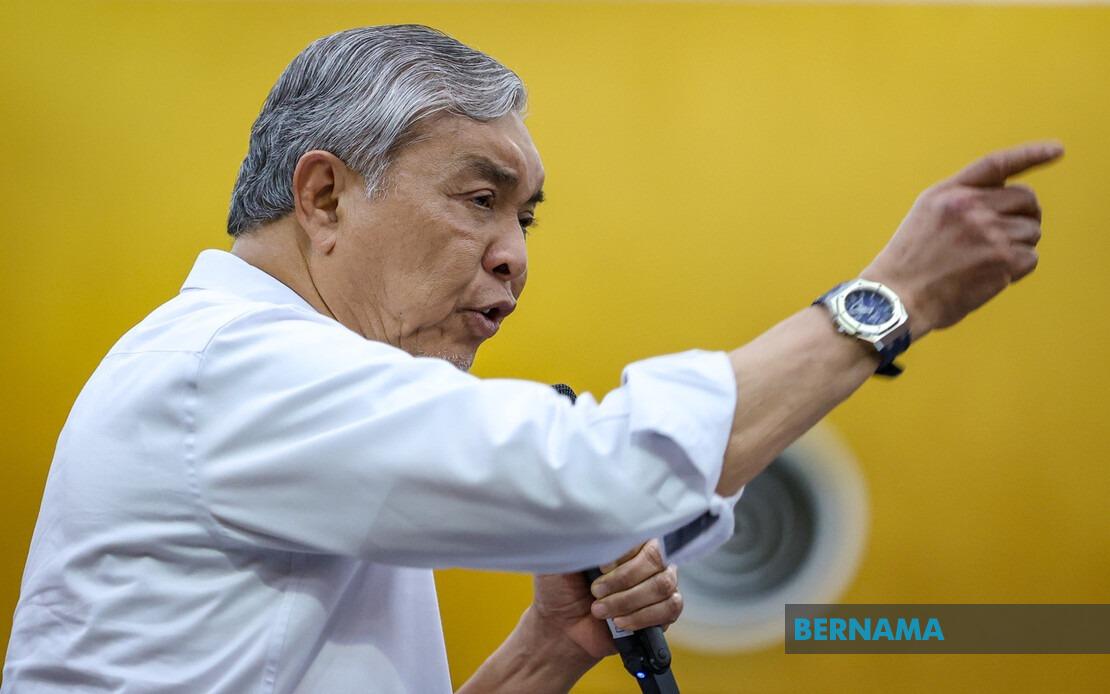
Deputy Prime Minister Datuk Seri Dr Ahmad Zahid Hamidi has put forward a proposal to provide targeted leadership and political education programmes for Student Representative Councils (MPP) across Malaysia's universities and colleges. Speaking in Johor Bahru on July 9, the senior government figure outlined his vision for equipping campus student leaders with deeper knowledge of democratic principles and the nation's political environment. His initiative reflects growing concern among senior policymakers about ensuring young Malaysians possess sufficient understanding of civic engagement and governance mechanisms.
The programmes Ahmad Zahid envisions would be designed to create a generation of student leaders equipped with maturity and substantive grasp of Malaysia's contemporary political challenges. Rather than treating political education as a narrow partisan exercise, the Deputy Prime Minister framed the courses as foundational knowledge that benefits society regardless of whether participants pursue active political careers. This distinction marks an important positioning: the government is not attempting to recruit student activists, but rather to foster informed citizenship among those positioned to influence peer thinking on campus.
Financial support represents a significant component of the proposal. Ahmad Zahid indicated the government stands ready to fund these educational initiatives, contingent upon requests from MPPs across the country and formal approval from Higher Education Minister Datuk Seri Dr Zambry Abd Kadir. This funding commitment suggests the initiative carries backing from multiple ministerial portfolios, indicating broader governmental consensus on the importance of political literacy among campus leaders. The budgetary dimension also removes financial barriers that might otherwise prevent resource-constrained student organisations from accessing quality educational programming.
The timing of Ahmad Zahid's proposal warrants careful consideration. His remarks surfaced as Johor geared up for state elections, with 56 state seats contested on the following Saturday. While the Deputy Prime Minister framed his comments in terms of broader national benefit, the proximity to electoral competition inevitably colours the announcement. Nevertheless, the substantive content of his proposal extends beyond immediate electoral calculation, addressing longer-term questions about how young Malaysians develop political consciousness.
Ahmad Zahid, speaking in his capacity as Barisan Nasional chairman, drew from personal experience when discussing youth and politics. He recounted his own journey as a student leader at Universiti Malaya, positioning his political engagement not as an aberration but as a natural channel for ambitious young people seeking influence and change. This personal anecdote lends authenticity to his position, though it also suggests the proposal partly reflects a particular worldview about how ambitious campus leaders should develop.
The Deputy Prime Minister offered nuance regarding expectations for young voters and student leaders. He explicitly rejected the notion that eighteen-year-olds or first-time voters must embrace active political involvement. Instead, Ahmad Zahid articulated a distinction between participation and literacy—young people need not necessarily join parties or contest positions, but they should remain informed about political developments and possess frameworks for understanding Malaysia's complex political landscape. This formulation responds to legitimate concerns about political apathy while avoiding charges that the government seeks to convert campus spaces into recruitment grounds.
The emphasis on informed voting choices carries particular resonance for Malaysia's democratic health. Ahmad Zahid stressed that young voters possess responsibility to cast ballots thoughtfully rather than treat elections as civic obligations to discharge without reflection. His argument that every vote influences party direction and leadership trajectories underscores the significance of electoral participation even at constituency level. For a nation grappling with questions about generational political engagement and the quality of democratic decision-making, this focus on voter education addresses genuine governance concerns.
Placing this proposal within regional context reveals its potential importance. Across Southeast Asia, universities have served as crucibles for political activism, intellectual ferment, and generational consciousness-raising. Malaysia's experience includes vibrant traditions of campus-based political debate, though periods of restriction have periodically constrained such forums. Ahmad Zahid's proposal to institutionalise political education through government funding and partnership with formal student organisations represents an attempt to channel youth political energy into structured frameworks. Whether such formalisation enhances or diminishes authentic civic engagement remains contested, but the initiative reflects official recognition that campus leaders require sophisticated understanding of politics.
The proposal also intersects with broader questions about political maturity in Malaysia's electorate. Several recent elections have seen surprising results and unexpected shifts in voting patterns, partly reflecting changing youth preferences and political realignments. By proposing systematic exposure to political education, Ahmad Zahid acknowledges that electoral outcomes depend partly on voter sophistication and understanding. Leaders able to comprehend governance complexity and political tradeoffs may support different candidates than those voting primarily on personality appeal or narrow interests.
Implementation details remain unclear from Ahmad Zahid's initial announcement. Determining curriculum content, identifying instructors, establishing selection criteria for participating councils, and ensuring programmes avoid partisan capture all present practical challenges. The requirement for Higher Education Minister approval introduces an additional institutional layer, potentially creating either protective oversight or bureaucratic impediment depending on implementation approach. How universities and student organisations respond to the proposal will also shape outcomes, as campus leaders may welcome government engagement or perceive it as intrusive.
The proposal reflects Ahmad Zahid's positioning as a modernising figure within government ranks. Rather than dismissing youth political engagement or seeking to restrict campus activism, he advocates constructive channelling of student interest through formal educational structures. This approach contrasts with more restrictive historical attitudes toward campus politics, suggesting shifting official perspectives on how government should relate to campus communities.
Looking forward, Ahmad Zahid's initiative may influence how political parties and government agencies approach political education more broadly. If the proposed programmes launch and gain traction, they could establish templates for engaging other demographic groups or institutional settings in political literacy efforts. Success depends substantially on whether the programmes prove genuinely educational rather than instrumentally partisan, though that distinction can prove difficult to maintain in practice given Malaysia's competitive political environment.

