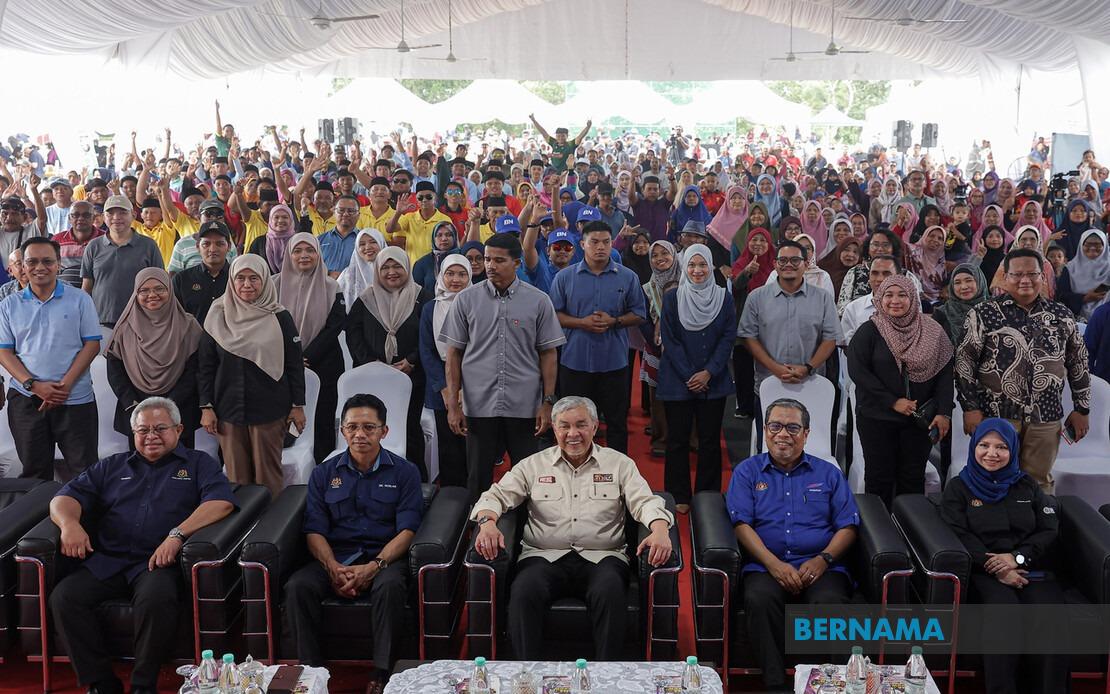
Malaysia's political terrain has grown so unpredictable that no single approach will guarantee stability, according to Barisan Nasional chairman Datuk Seri Dr Ahmad Zahid Hamidi, who outlined the need for adaptive coalition strategies as the country prepares for what could be transformative electoral contests. Speaking in Jempol on July 18, Ahmad Zahid acknowledged that the traditional rigid structures governing Malaysian politics must give way to more fluid arrangements responsive to local conditions and shifting voter sentiment.
The recent understanding between Barisan Nasional and Perikatan Nasional represents precisely this kind of pragmatic recalibration. Rather than competing head-to-head across all contested seats, the two major coalitions have agreed to coordinate their efforts in selected contests, eliminating the vote-splitting dynamics that have plagued Malaysian politics since the 2018 general election fragmented the country's long-established two-coalition system. This arrangement operates without formal legal obligations binding the parties, but rather functions as a practical accommodation designed to maximise the combined electoral prospects of both coalitions against their common rivals.
The 16th Negeri Sembilan state election, scheduled for polling day on August 1 following early voting on July 28, serves as the initial testing ground for this collaborative model. Ahmad Zahid emphasised that BN and PN leadership will carefully evaluate how the arrangement performs in this smaller electoral theatre before deciding whether to replicate it elsewhere. The outcome will carry significant implications not only for the forthcoming Melaka state election but also for the strategic positioning of both coalitions heading into the next General Election, commonly referred to as GE16.
What makes this development particularly significant for Malaysian observers is its tacit acknowledgement that neither Barisan Nasional nor Perikatan Nasional can rely on securing unilateral dominance across the entire country. Barisan Nasional, which governed Malaysia uninterrupted from independence until 2018, has spent the past six years rebuilding its infrastructure and credibility following the 1Malaysia Development Berhad scandal. Perikatan Nasional, meanwhile, emerged as a serious national force only recently, capturing several state governments and establishing itself as a significant counterweight to Barisan Nasional's historical dominance.
The mechanics of this understanding reveal how contemporary Malaysian politics has moved beyond the binary structure that characterised the country for decades. Rather than formal coalitions requiring members to contest elections under unified banners and symbols, the new approach permits both Barisan Nasional and Perikatan Nasional to maintain their distinct identities and organisational structures while coordinating strategically at the seat level. This flexibility allows each coalition to preserve internal decision-making autonomy while achieving the practical benefit of avoiding mutually destructive electoral competition.
For voters and observers across Southeast Asia, this reconfiguration carries broader implications. Malaysia has emerged as a case study in democratic resilience and coalition management following the tumultuous politics of recent years. How Barisan Nasional and Perikatan Nasional navigate these new arrangements will demonstrate whether established political entities can adapt to fragmentation or whether Malaysian democracy is entering a period of permanent instability characterised by constantly shifting alliances.
The political dynamics in Negeri Sembilan itself add a layer of complexity to this experiment. The state has historically served as a bellwether for national trends, and its electoral outcome will carry symbolic weight beyond the actual number of seats at stake. Should the BN-PN understanding produce a harmonious result, it may encourage similar arrangements in other states where both coalitions maintain significant presence. Conversely, if tensions emerge or the coordination proves awkward in practice, it could reinforce scepticism about whether such flexible alliances can function effectively in Malaysia's context.
Ahmad Zahid's explicit statement that no binding agreement exists between the coalitions proves crucial for understanding the fragility of modern Malaysian political arrangements. Without legal or constitutional mechanisms to enforce cooperation, these understandings depend entirely on the continued willingness of party leaders to prioritise collective benefits over individual advantage. Historical Malaysian politics suggests that such voluntary arrangements can fracture rapidly when circumstances change or when local factions perceive greater benefit in breaking ranks.
The reference to GE16 underscores the ultimate prize motivating this cooperation. Both Barisan Nasional and Perikatan Nasional recognise that the next general election will determine Malaysia's political trajectory for the next five years. Neither coalition can confidently predict winning an outright parliamentary majority, making strategic partnerships increasingly attractive despite the complications they introduce for internal party management and member satisfaction.
As Malaysia approaches what many political analysts regard as a critical juncture, Ahmad Zahid's emphasis on flexibility and dynamism suggests that established political actors understand the rules have fundamentally changed. The days when either Barisan Nasional or Perikatan Nasional could unilaterally dominate Malaysian politics appear to have passed. Instead, the country appears headed toward an era of more negotiated, coalition-based governance where electoral success depends not merely on organisational strength but on the capacity of different parties to find workable compromises on contested terrain.
The Negeri Sembilan experiment will reveal whether Malaysian politicians can sustain such arrangements or whether the country's political culture will continue cycling through periods of cooperation and conflict. Success would suggest a maturation of Malaysian democracy toward more sophisticated coalition management; failure might indicate that deeper structural reforms remain necessary to achieve lasting political stability.

