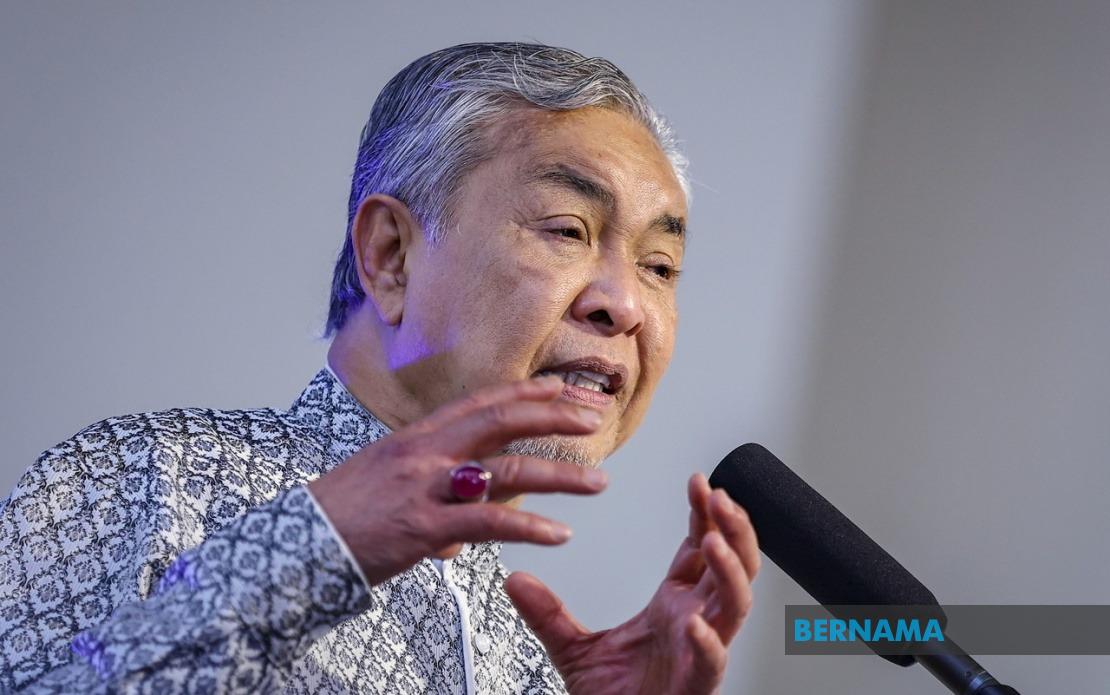
With the Johor state election set to take place on July 11, Barisan Nasional chairman Datuk Seri Dr Ahmad Zahid Hamidi has made a pointed call for all political contestants to abandon campaign tactics centred on historical disputes unrelated to the state's immediate needs and concerns. Speaking in Johor Bahru on July 3 after attending a community event in the Kempas constituency, the Deputy Prime Minister stressed that a mature and dignified political competition should focus instead on what individual candidates and parties can realistically deliver to Johor residents.
The appeal carries particular weight given the complex coalition dynamics at play in Malaysian politics. Several political parties competing in the Johor race maintain working relationships with one another at the federal government level, where they sit together in Cabinet and collaborate on national policy. Ahmad Zahid's comments appear designed to prevent these underlying partnerships from becoming fractured by campaign rhetoric that dredges up unresolved grievances or attacks historical antagonisms. His suggestion that leaders would feel uncomfortable meeting colleagues after being attacked in the electoral arena suggests a genuine concern that aggressive campaigning could undermine functional relationships required for effective governance at the national level.
The BN chief explicitly acknowledged that certain individuals have been levelling criticisms against UMNO and its Barisan Nasional coalition, using what he characterised as outdated material. However, he expressed confidence that such tactics would ultimately be set aside in favour of constructive debate. The rationale he offered—that weekly Cabinet meetings require a degree of professional courtesy—reflects a pragmatic understanding that Malaysian politics operates on multiple tiers simultaneously, and antagonism in one arena can have ripple effects across others.
Contrary to external perceptions, Ahmad Zahid rejected suggestions that BN is entering the Johor contest with excessive confidence. Instead, he positioned the coalition as the underdog, a characterisation he attributed to significant shifts in the state's political terrain over recent years. This framing serves a dual purpose: it tempers expectations among supporters while simultaneously motivating the party machinery to execute a more energised campaign. The admission that BN must substantially improve upon its previous performance of capturing 40 seats demonstrates awareness that the political landscape in Johor has become genuinely competitive.
Demographic changes in the state constitute a critical factor in this competitive equation. Ahmad Zahid noted that more than half of Johor's voters are now young people, a generational shift that fundamentally alters campaign messaging and policy priorities. Younger voters typically exhibit different concerns from older demographics—they prioritise employment prospects, skills development, and economic opportunities over historical party rivalries or ideological debates that may preoccupy their parents' generation. This demographic reality underscores why BN has elected to centre its manifesto on youth-focused initiatives rather than on settling old political scores.
The Menteri Besar, Datuk Onn Hafiz Ghazi, has accordingly positioned BN's campaign around tangible offerings for younger Johor residents. Technical and Vocational Education and Training (TVET) initiatives feature prominently in the coalition's policy framework, reflecting recognition that job creation and wage growth depend increasingly on developing skilled workforces in sectors offering premium compensation. This represents a substantive policy direction rather than mere electoral posturing, addressing a structural challenge facing Malaysia's economy as it seeks to move beyond low-skill, low-wage employment models.
Macroeconomic indicators lend credibility to the BN campaign's employment narrative. Ahmad Zahid cited recent data showing unemployment rates have declined to 2.9 per cent, a figure he characterised as encouraging. However, he simultaneously acknowledged that mere job availability falls short of what young voters reasonably expect—they seek positions offering genuine career progression and earning potential. The gap between joblessness and underemployment represents a persistent concern in Malaysia, where many young people accept positions below their qualification level or experience wage stagnation despite technical competence.
BN's emphasis on skills training addresses this gap directly. By pledging to expand access to vocational and technical education, the coalition positions itself as addressing a root cause of youth economic anxiety rather than merely managing symptoms. This approach requires sustained investment and institutional commitment extending beyond a single electoral cycle, suggesting a longer-term strategic calculation about how BN intends to rebuild support among younger voters who came of age during periods when the coalition faced political setbacks.
The timing of the campaign also matters contextually. With the federal government currently comprising a broad coalition spanning multiple political traditions, stability and mature political conduct carry heightened importance. A Johor campaign characterised by escalating personal attacks and historical grievances could destabilise the broader federal arrangement, particularly if smaller coalition partners feel compelled to defend themselves aggressively or if public perception of infighting undermines confidence in the government's cohesion. Ahmad Zahid's appeal thus serves broader governance interests beyond the immediate state contest.
Polling arrangements for the 16th Johor state election reflect standard procedures, with early voting scheduled for July 7 and regular polling on July 11. Barisan Nasional is contesting all 56 state seats, representing a comprehensive engagement with the electorate. This total slate commitment, combined with Ahmad Zahid's candid assessment of competitive challenges and his explicit repudiation of overconfidence, suggests BN leadership recognises this election as consequential for the coalition's trajectory in one of Malaysia's most politically significant states.
The broader implication of Ahmad Zahid's intervention extends beyond electoral strategy into fundamental questions about how Malaysian politics evolves. If political parties can successfully compartmentalise their relationships—competing vigorously during state elections while maintaining functional cooperation at federal level—it establishes a precedent for managing ideological and partisan differences without allowing them to poison institutional relationships. Conversely, if campaign conduct becomes increasingly toxic regardless of such appeals, it signals a deepening fragmentation of Malaysian politics that could complicate governance regardless of which coalitions form.
For Johor voters, the choice Ahmad Zahid presents is straightforward: evaluate candidates and parties on their concrete proposals for economic development, employment creation, and skills enhancement rather than on historical disputes disconnected from present circumstances. Whether the electorate accepts this framing will become apparent when polling concludes on July 11, with results providing insight into whether younger voters prioritise policy substance or whether other factors ultimately determine voting behaviour.

