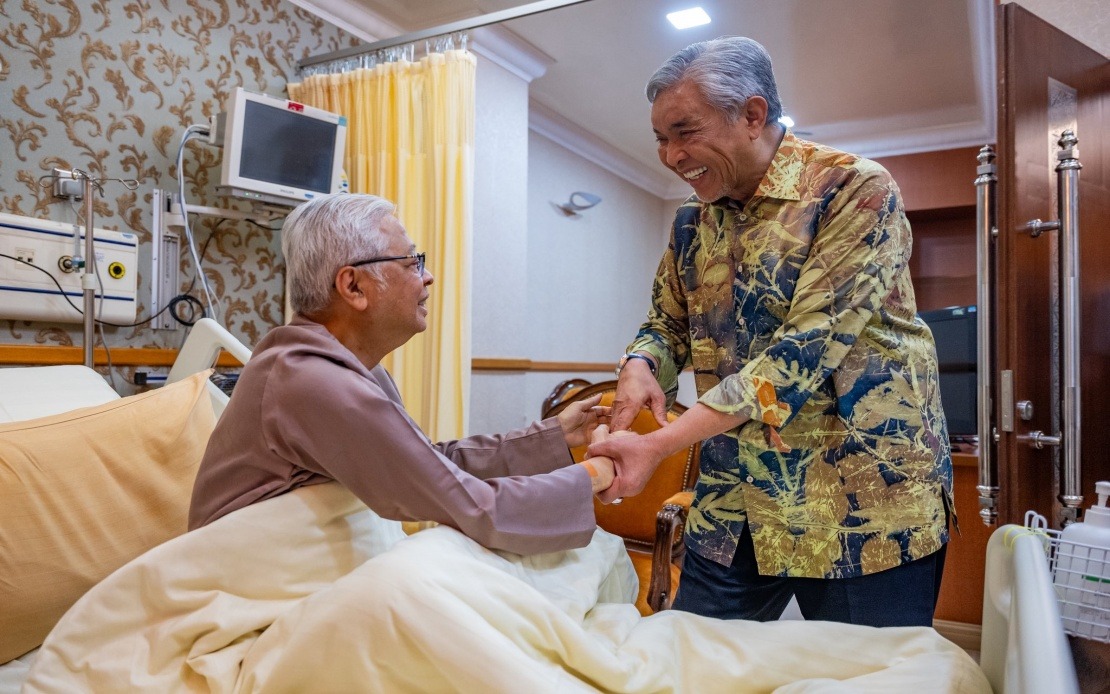
Deputy Prime Minister Datuk Seri Dr Ahmad Zahid Hamidi made a visit to the National Heart Institute (IJN) in Kuala Lumpur on August 10 to check on former Prime Minister Datuk Seri Ismail Sabri Yaakob, who is currently receiving medical care at the facility. The gesture underscores the continued bonds between senior figures in Malaysia's political establishment, even as the country navigates its complex political landscape. Through a statement shared on social media, Ahmad Zahid conveyed his well-wishes and spiritual support for the Bera Member of Parliament, signalling public solidarity during a period of health concerns affecting one of the nation's recent leaders.
The visit carries particular significance given the circumstances that precipitated Ismail Sabri's hospitalisation. The former Prime Minister experienced a health emergency on August 6 while at the Malaysian Anti-Corruption Commission (MACC) headquarters, where he had been attending a scheduled session to provide a statement. The sudden nature of the incident prompted immediate medical intervention, with Ismail Sabri being transported to IJN without delay. The timing of the health episode—during an engagement with the anti-corruption body—drew public attention, though the underlying medical condition requiring urgent intervention was an abnormal heart rhythm.
Following his admission to IJN, medical specialists determined that Ismail Sabri would benefit from a wireless pacemaker implantation to regulate his heart's electrical activity. The procedure represents a modern approach to treating arrhythmias and other cardiac conduction disorders, offering patients improved mobility and reduced complications compared to traditional pacemaker systems. The wireless technology eliminates the need for conventional leads and reduces infection risks associated with conventional devices, making it increasingly popular in advanced cardiac care facilities such as IJN, which is recognised as a centre of excellence in cardiovascular medicine within the region.
In his statement, Ahmad Zahid expressed hope that the Bera MP would regain sufficient strength to resume his parliamentary and personal responsibilities. The Deputy Prime Minister invoked prayers for Ismail Sabri's complete recuperation, the easing of his difficulties, and the restoration of his capacity to engage in his regular duties. Such expressions of support from the nation's second-highest political office reflect the protocol and conventions surrounding senior political figures facing health challenges, emphasising continuity and stability within the leadership hierarchy.
Ismail Sabri's health situation has drawn attention to broader questions about the demands placed on Malaysia's political leadership and the importance of maintaining robust health infrastructure for senior government figures. The rapid response from IJN and the availability of cutting-edge cardiac interventions demonstrate the quality of private healthcare available in Malaysia, though it also highlights the concentration of advanced medical services in urban centres. For many Malaysian citizens, such sophisticated procedures might not be as readily accessible, raising ongoing discussions about healthcare equity and the distribution of specialised medical facilities.
The incident also occurs against the backdrop of ongoing anti-corruption investigations and institutional accountability processes that have characterised Malaysian politics in recent years. Ismail Sabri's statement-recording session at the MACC was part of these broader institutional efforts, and his health emergency underscores the physical and emotional toll that such processes can impose on those involved. The Malaysian political establishment's emphasis on supporting affected individuals reflects maturity in handling such situations, even as the anti-corruption agenda remains a priority for national governance.
From a broader political perspective, Ahmad Zahid's hospital visit demonstrates the maintenance of collegial relationships across Malaysia's political spectrum. Despite the intense competition and occasional rivalries that characterise parliamentary politics, visits and expressions of concern for hospitalised colleagues represent important social rituals that help preserve institutional cohesion. Such gestures contribute to a political culture where personal relationships and mutual respect can coexist with substantive policy disagreements and competitive electoral dynamics.
The use of social media by Ahmad Zahid to communicate his visit and prayers reflects modern political communication practices in Malaysia, where senior officials routinely utilise platforms such as X to share official announcements and personal reflections. This transparency allows the public to remain informed about significant developments involving their leaders while simultaneously demonstrating the Deputy Prime Minister's accessibility and engagement with contemporary communication channels. The approach also personalises leadership in ways that traditional media cannot achieve, fostering a sense of connection between political figures and citizens.
Ismail Sabri's recovery trajectory will likely attract sustained public interest, given his recent tenure as Prime Minister from August 2021 to August 2022 and his continued prominence within the United Malays National Organisation (UMNO) and Malaysian politics more broadly. His health status has potential implications for factional dynamics within the ruling coalition and parliamentary configurations, particularly regarding his capacity to participate in legislative business and party matters. The hospitalisation thus carries significance extending beyond personal health concerns to encompass broader political ramifications.
The emphasis placed by Ahmad Zahid on Ismail Sabri's return to full capacity reflects recognition that continuity of participation by experienced political figures strengthens institutional functioning. The Malaysian political system benefits from the active engagement of former prime ministers who, despite no longer holding executive office, maintain influence through their legislative positions, party roles, and accumulated experience. Ismail Sabri's eventual return to normal activities will therefore contribute positively to the operational effectiveness of parliament and party structures.
Looking forward, the incident serves as a reminder of the importance of comprehensive health screening and preventive care for senior political figures whose demands require sustained physical and mental resilience. The accessibility of world-class cardiac care at IJN provides reassurance that Malaysian leaders have access to treatment standards comparable to international benchmarks. For the broader public, Ismail Sabri's case may also raise awareness about early detection of arrhythmias and the importance of regular cardiac monitoring, particularly among individuals in high-stress positions.

