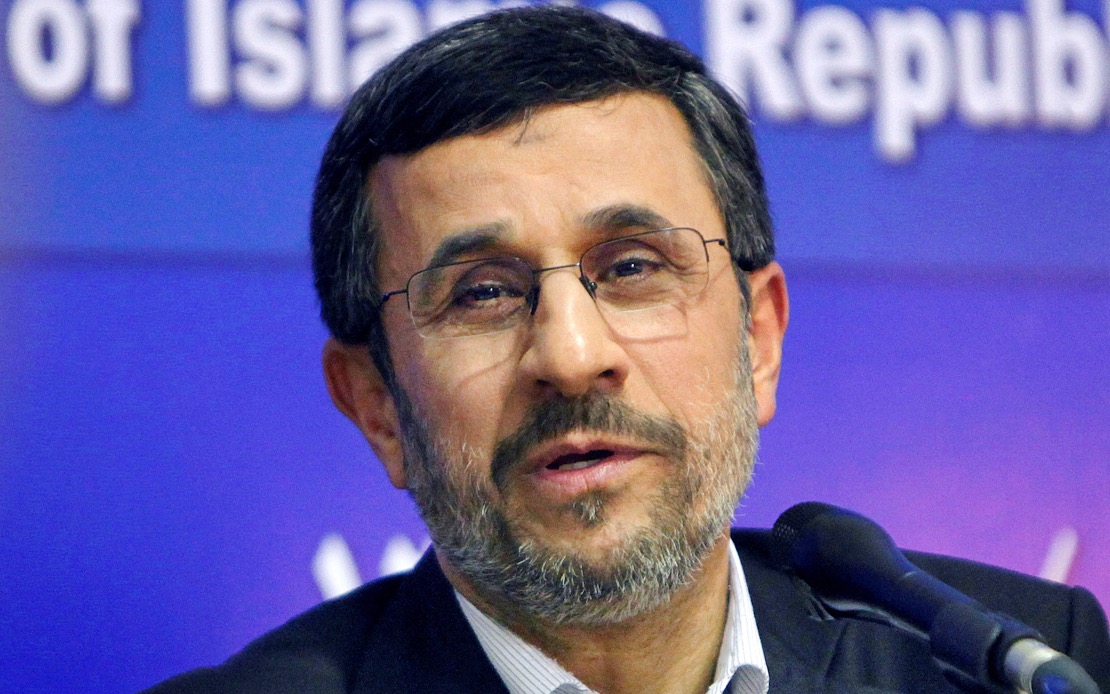
Former Iranian President Mahmoud Ahmadinejad has mounted a forceful denial of allegations published by The New York Times, which claimed that Israel's Mossad intelligence agency attempted to turn him into a collaborator and that he is currently confined under house arrest. Speaking through his office on Tuesday in Istanbul, Ahmadinejad rejected the contentions as entirely baseless, describing them as part of a coordinated campaign designed to confuse public opinion and deepen rifts within Iranian society.
The Ahmadinejad camp launched a comprehensive counterattack against the newspaper's credibility, suggesting that The New York Times had deliberately fabricated elements of its report to advance a particular narrative hostile to Iran's current leadership. Rather than addressing each allegation individually, the former president's representatives took the more confrontational approach of dismissing the entire body of claims, insisting that the house arrest assertion had no factual foundation and was merely a tool to give superficial plausibility to what they characterized as journalistically irresponsible speculations about his relationship with Israeli intelligence.
The New York Times had reported a day earlier that Mossad operatives, according to American officials with knowledge of the matter, had engaged in a sustained effort to compromise Ahmadinejad, viewing him as a potential asset who could conceivably serve as an alternative leader for Iran. The newspaper's investigation suggested that the recruitment attempt represented merely one component of a broader Israeli strategy aimed at engineering a government change in Tehran, particularly following Israel's initial military operations against senior Iranian leadership figures.
According to the Times account, the alleged cultivation of Ahmadinejad extended beyond mere conversation. The report asserted that Israeli intelligence had channeled financial resources to the former president, ostensibly covering costs associated with his residential arrangements and his journeys abroad, while arranging clandestine meetings with Mossad operatives during his travels, notably including episodes in Budapest. These contacts, the newspaper suggested, formed part of a methodical approach to building leverage over someone who held considerable visibility within Iranian political circles.
The alleged operation apparently reached a critical juncture in late February, during the initial phases of the wider conflict between the United States, Israel, and Iran. At that moment, according to the Times, Israeli intelligence apparently attempted to extract Ahmadinejad from Tehran itself, viewing the military operation as an opportune window for removing him from the country and potentially positioning him as a replacement head of government. The newspaper cited an Israeli airstrike on February 28 as evidence of this operation, noting that munitions struck his residential compound and an adjacent structure housing his security detail, while also damaging an armoured vehicle associated with him.
The most dramatic element of the Times account involved testimony from four senior Iranian officials who reported observing a dark-coloured Peugeot sedan that arrived at Ahmadinejad's location immediately after the strike, collected the former president, and transported him to an undisclosed secure location within Iran's borders. The newspaper attributed the vehicle's operation to Mossad personnel, basing this assertion on information provided by American and Iranian officials privy to operational details.
Ahmadinejad's timing in issuing his denial carries particular significance given his recent reappearance in the Iranian public sphere. Last week, the former chief executive, who held office between 2005 and 2013, made what observers characterized as his first substantial public engagement since the commencement of active hostilities between the United States, Israel, and Iran. He participated in commemorative services honoring the late Supreme Leader Ali Khamenei, his attendance marking a notable return to formal occasions after an extended period of relative invisibility.
For Malaysian and regional Southeast Asian observers, the incident illuminates the ongoing strategic competition between established Middle Eastern powers and the precarious positioning of individuals who have held high office but fallen from immediate influence. Ahmadinejad's experience, whether the allegations carry truth or represent deliberate misinformation, underscores how former leaders in volatile regions face extraordinary security pressures and international pressures that transcend normal political retirement. The episode also demonstrates the extent to which intelligence operations, media narratives, and political maneuvering remain deeply intertwined in Middle Eastern conflicts.
The controversy additionally highlights the difficulty of establishing factual truth in high-stakes geopolitical disputes where multiple actors—journalistic institutions, intelligence agencies, and political representatives—operate with competing interests and asymmetrical access to information. The New York Times grounded its reporting in attributions to American officials, yet Ahmadinejad's representatives have suggested that such claims represent either misrepresentations of what those officials actually said or deliberate fabrications masquerading as authenticated intelligence.
For Iran specifically, the allegations, whether substantiated or spurious, represent a challenge to the narrative of state control and domestic security. If Mossad had genuinely maintained contact with a former president and attempted extraction operations, the implications would suggest vulnerabilities in Iran's intelligence apparatus and security protocols. Conversely, if the report rests upon fabrication or embellishment, Iran faces a different but equally complex challenge: countering a widely-circulated international narrative that shapes perceptions of Iranian governance and stability among both regional actors and global audiences who rely on Western media sources.
Ahmadinejad's categorical rejection, however, may face skepticism among international observers who note that intelligence agencies regularly operate through layers of deniability, and individuals suspected of compromising contacts might logically deny such allegations regardless of their factual status. The former president's reassurance that he remains at liberty and unencumbered does not definitively resolve questions about his operational freedom or the nature of his interactions with foreign intelligence services, particularly given that intelligence relationships, when they exist, typically remain concealed from public view and denied through official channels as a matter of operational security doctrine.

