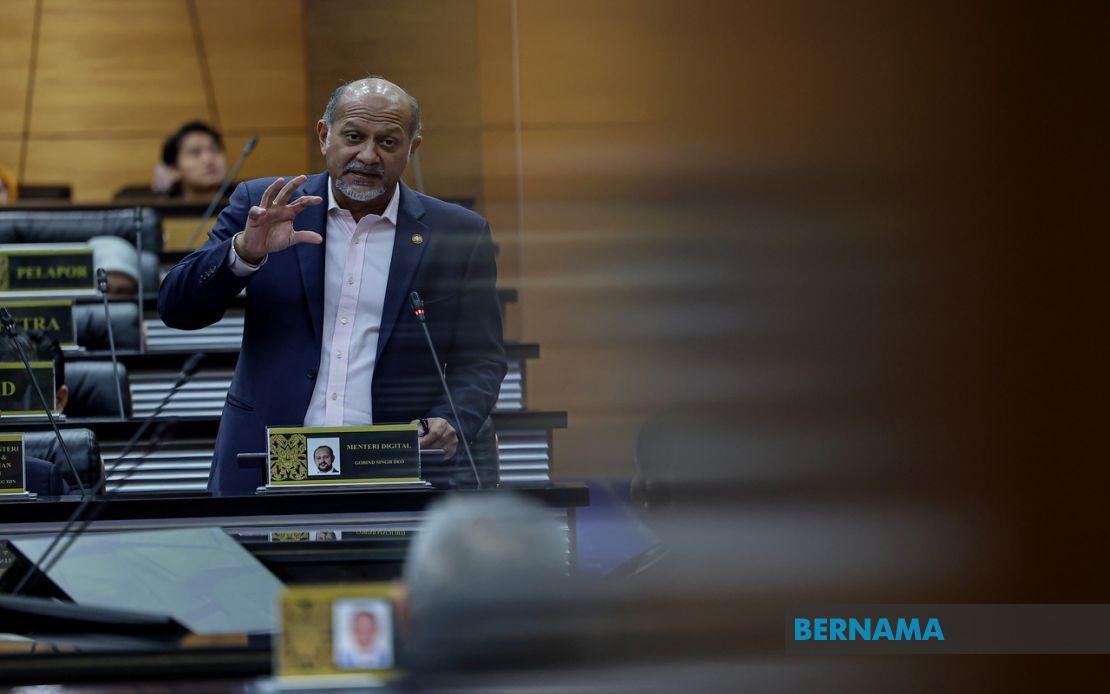
Malaysia is moving towards establishing a comprehensive legal framework that places responsibility squarely on the humans and organisations behind artificial intelligence systems, rather than on the technology itself. Digital Minister Gobind Singh Deo outlined this approach during a parliamentary session, clarifying that the forthcoming AI Governance Bill represents a crucial step in managing the rapid integration of AI across both public and private sectors of the Malaysian economy.
The fundamental principle underpinning the legislation reflects a legal reality: artificial intelligence, no matter how sophisticated, cannot bear moral or legal responsibility in the way humans and institutions can. Consequently, accountability must rest with those who develop, deploy, operate, or utilise these systems. This distinction is critical for Malaysia as the country navigates an increasingly complex technological landscape where AI applications touch nearly every sector of the economy, from finance to healthcare to governance itself.
Gobind explained that the government recognises accountability as a cornerstone of the bill's design, particularly because AI deployment has transitioned from experimental territory into routine operational use across government agencies and commercial enterprises. The breadth of this integration underscores why legal clarity cannot be postponed—citizens and organisations need transparent rules governing AI use before problems become systemic.
A notable strength of the proposed framework is its lifecycle approach. Rather than focusing narrowly on how an AI system performs at a single moment, the bill examines risks across the entire journey from initial conception and development through operational deployment and eventual decommissioning. This reflects a sophisticated understanding of how AI systems degrade or become problematic: a system that operates safely in one context may present serious risks when applied elsewhere, connected to different networks, modified by subsequent developers, or used with populations different from those originally intended. This temporal and contextual sensitivity distinguishes the Malaysian approach from simpler regulatory models.
Crucially, the bill is being designed as a horizontal governance layer that sits alongside existing legislation rather than replacing it. Malaysia maintains sector-specific regulators and industry-focused laws that will continue functioning within their respective domains. When AI issues intersect with criminal law, consumer protection, intellectual property rights, or other regulated sectors, those existing legal frameworks and their supervising agencies remain primary. This layered approach prevents regulatory overlap while ensuring that no gap exists between the AI-specific provisions and broader legal protections citizens already enjoy.
The minister clarified that the government does not intend to directly regulate the content or outputs that AI systems generate—a distinction reflecting concerns about government overreach into speech and expression. Instead, the focus lies on governance mechanisms designed to prevent risks from materialising in the first place. This preventive orientation differentiates the Malaysian approach from reactive frameworks that address problems only after they cause harm.
Among the mechanisms under consideration is a mandatory AI incident reporting system. By requiring developers and operators to report when AI systems malfunction, produce harmful outputs, or create unexpected risks, authorities can build a detailed picture of failure patterns, identify emerging problems before they become widespread, and implement timely interventions. Over time, this data accumulation allows regulators to spot trends that individual operators might not recognise, enabling proactive rather than merely reactive governance.
The government is also exploring the creation of a regulatory sandbox—a controlled testing environment where developers, industry players, and government agencies can collaborate to refine AI systems before broader market deployment. This mechanism acknowledges that innovation requires space to experiment, while public protection demands safeguards against untested systems being released into society without adequate oversight. Sandboxes have proven valuable in fintech regulation and can similarly benefit AI development by allowing problems to surface and be resolved in controlled conditions.
For Malaysian businesses and researchers, this framework presents both opportunities and obligations. Companies developing or deploying AI must anticipate scrutiny of their accountability structures, documentation, and risk management practices. However, the emphasis on innovation and national competitiveness suggests the government seeks partnership with the private sector rather than confrontation. A well-designed sandbox and clear accountability rules can actually facilitate investment and development by reducing uncertainty about regulatory expectations.
Regionally, Malaysia's approach carries significance. As Southeast Asian nations grapple with AI governance, Malaysia's balance between protection and innovation may influence neighbouring countries considering similar legislation. The region's lack of binding standards creates opportunities for thoughtful leadership, though divergent approaches across ASEAN could complicate cross-border AI operations.
The government's commitment to refining the bill through parliamentary and public consultation suggests awareness that AI governance requires continuous adjustment. Technologies evolve faster than legislation; mechanisms deemed appropriate today may prove inadequate tomorrow. Building in flexibility and establishing clear processes for updating the framework will be essential for long-term effectiveness.
Ultimately, Gobind's exposition reflects recognition that AI's transformative potential can only be realised safely when clear rules define who bears responsibility for what outcomes. By establishing that accountability flows through human and organisational chains rather than residing in algorithms themselves, Malaysia provides legal certainty that should encourage both responsible innovation and public confidence in AI integration.

