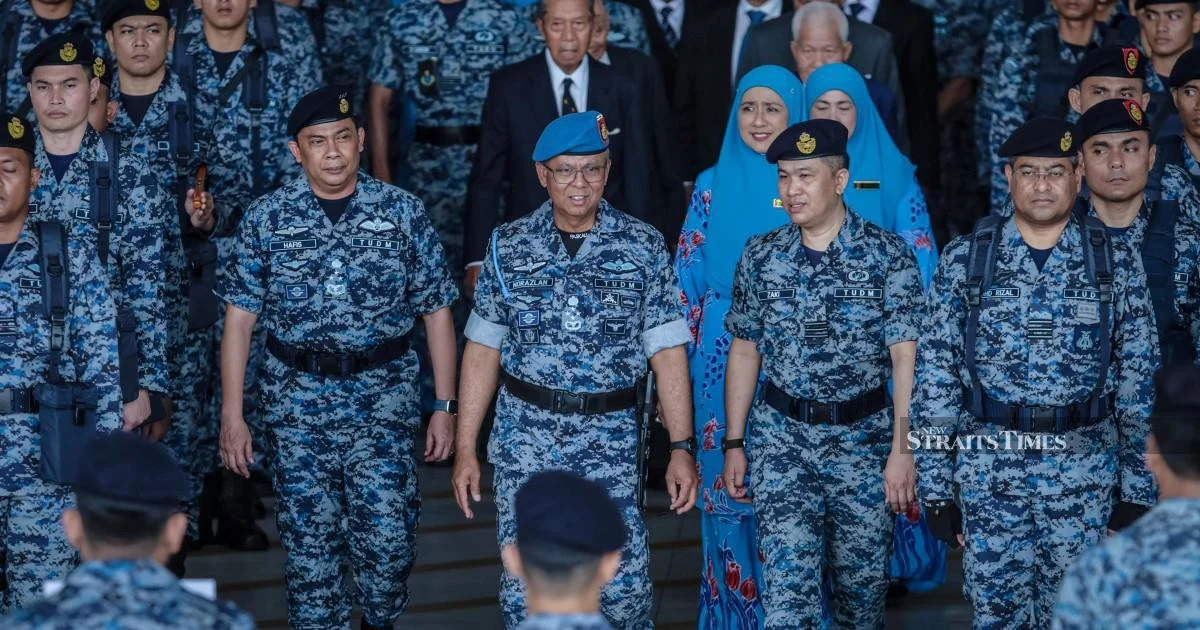
The Royal Malaysian Air Force believes aerial capabilities have become indispensable to defending the nation's extensive maritime interests, according to General Tan Sri Muhamad Norazlan Aris, the service's commanding officer. Speaking from Subang, the air force chief highlighted how the strategic landscape surrounding Southeast Asian waters has become more complex in recent years, necessitating a reassessment of how Malaysia deploys its security resources to maintain control and visibility over its territorial waters and shipping lanes.
Malaysia's reliance on maritime commerce makes this positioning particularly acute for the country. The nation sits astride some of the world's busiest shipping routes, including critical passages through the Strait of Malacca, where trillions of dollars in international trade transit annually. Disruption to these routes threatens not merely Malaysia's prosperity but the economic stability of the broader region and beyond. Air-based surveillance and rapid-response capabilities offer advantages that traditional surface naval patrols alone cannot provide, particularly in monitoring vast stretches of ocean and responding swiftly to emerging threats.
The emphasis on air power reflects broader military thinking about how modern forces should operate in maritime environments. Rapid advancement in reconnaissance technology, coupled with increased commercial shipping volumes and emerging security concerns, has elevated the role of aircraft in maintaining awareness across Malaysia's Exclusive Economic Zone and beyond. Aircraft can cover enormous distances in brief timeframes, maintaining persistent surveillance over critical passages where piracy, smuggling, and other illicit activities have periodically emerged as regional concerns.
This strategic pivot also addresses the challenge of resource constraints that many regional militaries face. Malaysia's naval capabilities, while respectable, remain finite in scope. Augmenting surface vessels with robust air operations allows the country to extend its effective maritime reach without proportionally expanding its naval fleet. This represents a pragmatic allocation of limited defence budgets, enabling maximum coverage and deterrence across contested waters where multiple claimants assert overlapping interests.
The geopolitical context underlying General Tan Sri Muhamad Norazlan Aris's remarks deserves careful attention. The South China Sea remains a zone of considerable strategic competition, with several powers maintaining competing territorial and maritime claims. While Malaysia has generally pursued a measured diplomatic approach to these disputes, military readiness remains essential to preserve the nation's ability to enforce its internationally recognised maritime rights. Enhanced air capabilities serve as both a practical security measure and a signal of Malaysia's determination to maintain sovereignty over its waters.
Regional tensions have periodically flared in recent years, from fishing vessel confrontations to incidents involving foreign military operations. The presence of sophisticated surveillance aircraft and rapid-response aviation units provides Malaysia with credible capacity to detect, investigate, and respond to violations of its maritime boundaries. This capability ultimately undergirds the nation's ability to conduct effective maritime governance and extract value from its natural resources, including fisheries and potential hydrocarbon deposits.
The evolution of security challenges extends beyond traditional military threats. Non-traditional security concerns, including transnational crime, human trafficking, and irregular migration, increasingly feature in maritime patrol responsibilities. Aircraft equipped with modern sensors can identify suspicious vessels and patterns of activity across vast areas, providing intelligence that enables targeted interdiction efforts by naval and coast guard assets. This integrated approach, leveraging air capabilities within a broader maritime security framework, represents contemporary best practice in regional security operations.
Investment in air power also reflects Malaysia's positioning within the regional military balance. As other Southeast Asian nations modernise their defence capabilities, maintaining a credible aerial presence becomes essential to upholding Malaysia's interests and status within regional forums. The country competes with neighbours for defence resources and international military partnerships; demonstrating commitment to aviation modernisation signals Malaysia's serious engagement with its security challenges and enhances the nation's standing within defence establishments across Asia.
The sustainability of Malaysia's approach depends on continued investment in aircraft acquisition, pilot training, and maintenance infrastructure. The air force requires modern platforms capable of long-range maritime patrol, adequate fuel range for extended operations over the South China Sea, and sensor packages sophisticated enough to generate actionable intelligence. These requirements demand substantial budgetary commitment and strategic planning extending across multiple budget cycles, underscoring the seriousness with which Malaysian defence planners approach maritime security.
Looking forward, the integration of air power into comprehensive maritime strategies will likely define Southeast Asian security approaches for coming decades. Malaysia's explicit recognition of this reality positions the nation appropriately to meet emerging challenges. The capability to maintain awareness and exercise sovereign control over vast maritime expanses depends fundamentally on aerial assets. As regional competition intensifies and new security concerns emerge, the RMAF's continued modernisation and operational excellence will remain central to Malaysia's ability to protect its maritime interests and contribute to regional stability.

