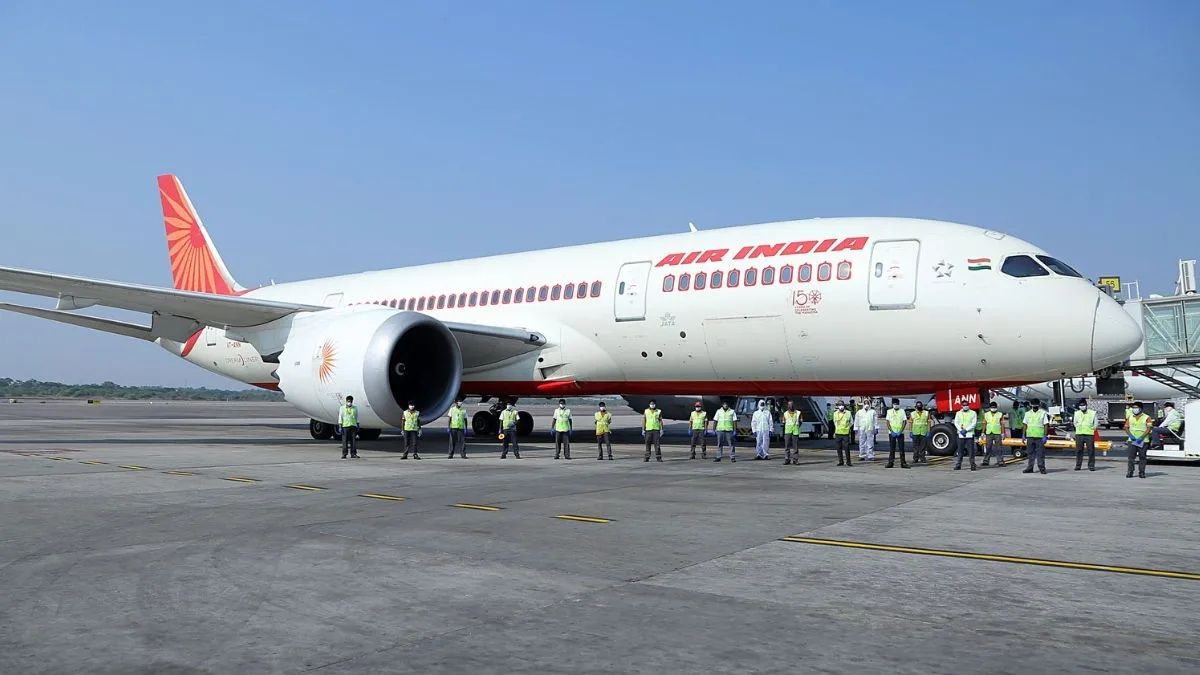
An Air India passenger jet briefly penetrated Pakistani airspace on Monday night after encountering a technical failure in its navigation equipment, authorities confirmed this week. The incident underscores the persistent technical and operational challenges facing commercial aviation in South Asia, where international borders and congested airspace demand precision flying and robust ground-based safety protocols. The aircraft involved was an Airbus A321 operating as Flight AI-463 on the Delhi-Amritsar route, one of India's busier regional corridors connecting the capital to the heart of Punjab.
The flight departed from Delhi's Indira Gandhi International Airport at 9.18pm on June 22 and immediately began experiencing difficulties as it climbed into the night sky. Within the opening minutes of what should have been a straightforward 90-minute journey to Amritsar, the aircraft's onboard navigation system encountered a malfunction that disrupted the crew's ability to maintain their prescribed flight path. The technical failure caused the aircraft to gradually drift westward, crossing the International Border and inadvertently entering airspace controlled by Pakistan. For operators and passengers alike, such deviations carry immediate safety concerns and potential diplomatic complications, given the heightened security sensitivities along the India-Pakistan frontier.
The breach did not go undetected for long. Pakistani Air Traffic Control identified the incursion and promptly initiated contact with the flight crew to notify them of the airspace violation. This coordination between controllers on opposite sides of a tense border exemplifies the professional protocols that aviation safety depends upon, even amid broader geopolitical tensions. The pilots, alerted to their position, immediately began corrective manoeuvres to guide the aircraft back across the International Border into Indian controlled airspace. According to officials briefed on the incident, the return to Indian territory occurred swiftly, and the flight crew re-established proper navigation and continued toward their destination without further incident during this phase of the journey.
However, the troubles facing Flight AI-463 extended well beyond the navigation system malfunction and the airspace incursion it triggered. By the time the aircraft approached Sri Guru Ram Dass Jee International Airport in Amritsar around 10.30pm, the airport's arrival airspace was congested with other traffic, leaving no immediate landing slot available. Rather than holding the aircraft in a holding pattern or attempting to force a landing during busy conditions, air traffic controllers made the operational decision to instruct the flight to return to Delhi. This second diversion proved costly in terms of passenger inconvenience and fuel consumption, yet it reflected contemporary air traffic management priorities that prioritize safe spacing and orderly sequencing over rapid turnarounds.
The aircraft executed a second about-turn and flew back to the capital, where it landed safely at Indira Gandhi International Airport. Upon arrival, the aircraft was subjected to a technical inspection focused on the navigation system malfunction that had triggered the entire chain of events. Engineers examined the equipment and systems, conducting the checks necessary to establish the aircraft's airworthiness before it could safely return to the skies. Only after receiving the required operational clearances from maintenance and regulatory personnel did the flight crew receive permission to continue their journey to Amritsar.
The aircraft finally took off again for its original destination in the early hours of Tuesday morning. It landed safely in Amritsar at approximately 2.20am on June 23, nearly four hours behind the originally scheduled arrival time. For the passengers aboard, what had begun as a routine domestic service transformed into a frustrating overnight ordeal involving two diversions, extended flying time, and considerable delays. The compounded inefficiencies of the technical failure, the unscheduled return to Delhi, and the renewed journey to Amritsar illustrated how cascade effects in aviation operations can substantially disrupt passenger experiences and operational schedules.
Neither Air India nor India's Directorate General of Civil Aviation (DGCA), the primary aviation regulator, have released detailed public statements regarding the specific nature of the navigation system failure. This silence is not uncommon in the immediate aftermath of incidents, as investigators typically prefer to complete their examinations before making detailed disclosures. The absence of early transparency can frustrate observers seeking to understand technical details and systemic implications. Aviation safety authorities have launched a routine investigation to determine the precise circumstances that led to the route deviation, which will eventually establish whether the failure stemmed from equipment malfunction, pilot error, inadequate maintenance, or a combination of factors.
The incident arrives roughly one month after a contrasting case involving Pakistan International Airlines, when a PIA flight briefly ventured into Indian airspace during adverse weather conditions. In that instance, Indian air traffic controllers guided the aircraft back to its designated route without incident. That earlier occurrence demonstrated that airspace incursions, while serious, occur occasionally despite the best efforts of modern aviation safety systems. The symmetry of these two incidents—one Pakistani aircraft entering Indian airspace, one Indian aircraft entering Pakistani airspace—reflects the reality of air corridors in a densely populated region where international borders cut through busy flight paths and weather, equipment failures, and operational pressures create conditions where human and technical error can materialise.
For aviation professionals and regulators across South Asia, these incidents reinforce several critical imperatives. Navigation system redundancy and rigorous maintenance schedules are essential to prevent technical failures from triggering route deviations. Coordination and professionalism between air traffic control agencies on either side of international borders remain vital safety mechanisms, regardless of political tensions. The technical and procedural protocols that have been established facilitate safe outcomes even when problems arise. For Malaysian and Southeast Asian aviation operators, the Delhi-Amritsar incident serves as a reminder that the region's airspace remains vulnerable to the same technical and operational challenges that can occur anywhere aircraft operate, and that investment in modern navigation systems, rigorous training, and robust regulatory oversight remain non-negotiable imperatives for safe skies.

