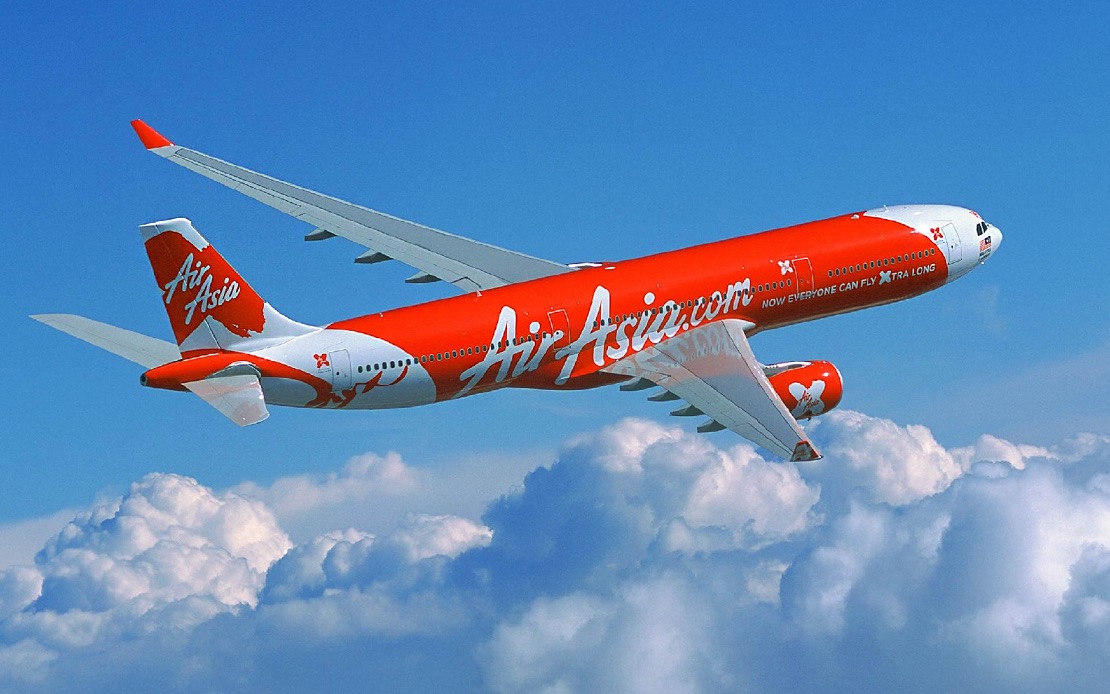
AirAsia has successfully inaugurated a direct air service connecting Jakarta with Kota Bharu, positioning the route as a pivotal link for boosting tourism and economic activity across Kelantan and the wider East Coast region during the Visit Malaysia 2026 promotional period. The inaugural flight AK2354, operated by a 180-seat Airbus A320 aircraft, touched down at Sultan Ismail Petra Airport on a Tuesday afternoon in June, carrying 117 passengers that included travellers from across Southeast Asia as well as Malaysians returning home. The initial load factor of approximately 63 per cent reflects solid early demand, with passengers originating from Indonesia, Thailand, the Philippines and several neighbouring countries.
The launch represents a considered expansion of Malaysia's regional air connectivity infrastructure, particularly in efforts to capture Indonesia's substantial outbound tourism market. Tourism Malaysia's director-general Mohd Amirul Rizal Abdul Rahim characterised the new route as a milestone achievement under the VM2026 strategic framework, emphasising that Indonesia continues to rank among Malaysia's most significant tourism source markets. The enhanced accessibility provided by direct flights circumvents the need for multi-leg journeys, thereby reducing travel friction and encouraging spontaneous leisure decisions among Indonesian visitors who might otherwise consider alternative destinations within the region.
Kelantan's tourism landscape stands to benefit considerably from improved international connectivity. The state tourism director Azwan Ab Rahman highlighted the region's extensive portfolio of cultural and heritage attractions, positioning Kota Bharu as an increasingly competitive offering within Malaysia's tourism hierarchy. Signature destinations including Pasar Siti Khadijah, the historic Kampung Laut Mosque, Kampung Kraftangan's traditional crafts corridor, and Stong Geopark represent diverse appeal spanning cultural immersion, religious heritage, artisanal experiences, and geological education. These assets differentiate Kelantan from more commonly traversed Malaysian tourism circuits, particularly for visitors seeking authentic cultural encounters beyond standardised resort experiences.
Beyond conventional leisure tourism, the new route carries implications for Malaysia's emerging medical tourism sector. Officials noted that the direct Jakarta service would facilitate patient flows seeking healthcare services, representing a strategic diversification opportunity for Kelantan's tourism economy. Medical tourism has become an increasingly significant revenue stream across Southeast Asian healthcare hubs, with middle-class Indonesian patients particularly seeking value-for-money treatments combined with tourist experiences, a model the Jakarta-Kota Bharu corridor explicitly supports.
The route also establishes Kota Bharu as a functional gateway for deeper regional exploration. Travellers arriving from Jakarta can efficiently access southern Thailand's tourism offerings and the East Coast's established resort destinations, transforming Kelantan from a standalone destination into a distribution hub within a broader Southeast Asian itinerary. This positioning strategy aligns with the broader VM2026 initiative, which emphasises Malaysia's role as a regional connection point rather than merely a final destination.
Capacious air connectivity between Malaysia and Indonesia already supports substantial passenger volumes, with Tourism Malaysia reporting 634 weekly flights operating between both nations as of April 2026, representing a combined weekly capacity exceeding 114,806 seats. The Jakarta-Kota Bharu addition augments this infrastructure, though it remains a specialised route rather than a high-volume trunk service. Nevertheless, dedicated services to secondary cities like Kota Bharu signal broader strategic recognition that tourism growth requires distributed accessibility rather than concentration in primary hubs like Kuala Lumpur.
AirAsia's operational commitment to this route reflects the carrier's strategic positioning within low-cost airline competition. Datuk Captain Fareh Mazputra articulated the company's focus on connecting underserved regional markets with major metropolitan centres, thereby unlocking economic multiplier effects throughout tourism supply chains and associated service sectors. This approach differs markedly from traditional full-service carriers' emphasis on high-frequency trunk routes, instead pursuing route proliferation that maximises network coverage despite lower individual route traffic volumes.
The route carries particular significance for Kelantan's economic diversification objectives. Eastern Malaysian states have historically operated within Malaysia's secondary tier regarding tourism revenue generation and international visitor arrivals. Enhanced air accessibility represents a necessary though insufficient condition for changing this trajectory; the route's success ultimately depends upon complementary investments in destination marketing, accommodation infrastructure, tourism product development, and ground transportation services. State authorities must recognise this launch as a platform requiring concurrent institutional and marketing reinforcement.
Indonesia's geographic and demographic proximity to Malaysia creates particular resonance for this expansion. With a population exceeding 270 million and rapidly expanding middle-class cohorts, Indonesia represents perhaps Southeast Asia's most substantial untapped tourism market for Malaysian destinations outside established Kuala Lumpur circuits. Direct Jakarta-Kota Bharu connectivity addresses a structural gap in Malaysia's air network, potentially opening visitor flows that previously faced friction due to connection requirements or limited frequency alternatives.
The people-to-people dimensions of this connectivity deserve emphasis beyond purely economic calculations. Enhanced travel accessibility facilitates cultural exchange, business relationship development, and social networks between Malaysia and Indonesia, potentially generating non-monetary value spanning educational, diplomatic, and community domains. These softer outcomes, though difficult to quantify, contribute substantially to the broader integration objectives implicit within regional cooperation frameworks.
As Visit Malaysia 2026 progresses, the Jakarta-Kota Bharu route's performance will likely influence future aviation decisions regarding underserved Malaysian destinations. Should this service generate projected passenger growth and economic returns, competitive carriers may launch parallel or alternative services to secondary cities, potentially establishing a sustainable trend toward distributed regional connectivity. Conversely, underwhelming performance might reinforce existing patterns of aviation concentration in metropolitan hubs, perpetuating historical tourism geography.
The route launch ultimately represents an inflection point for Kelantan's tourism positioning. Success requires coordinated effort extending beyond aviation into destination management, marketing sophistication, and service quality consistency. The infrastructure now exists; the critical question becomes whether Kelantan's tourism stakeholders can leverage this connectivity advantage into sustained visitor growth and measurable economic transformation.

