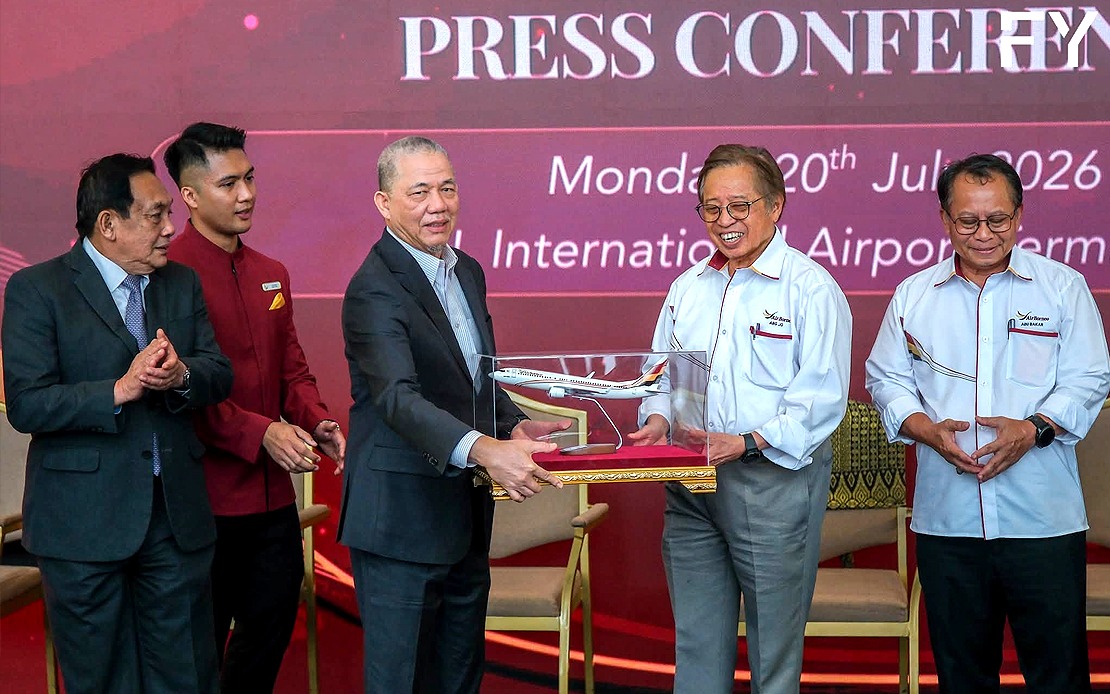
Sarawak has taken a significant step toward tackling one of its most persistent economic challenges with the inaugural flight of AirBorneo Airways from Kuching to Kuala Lumpur International Airport on July 20. The launch of the state government-owned carrier marks an attempt to resolve decades of complaints about inflated ticket prices that have hindered travel, tourism, and business opportunities across the East Malaysian state. Deputy Prime Minister Datuk Seri Fadillah Yusof framed the development as a watershed moment, emphasising that the airline represents far more than a commercial venture—it embodies Sarawak's determination to chart its own economic course.
The timing of AirBorneo's debut, arriving just two days before Sarawak Day on July 22, carries symbolic weight. Fadillah pointed to this coincidence as testament to the airline's significance within the broader narrative of Sarawak's development and autonomy. The carrier's inaugural flight carried Sarawak Premier Tan Sri Abang Johari Tun Openg along with state ministers and dignitaries, underscoring the political importance attached to the venture. This high-level endorsement signals unified support across Sarawak's leadership for the airline's mission and strategic importance to the state's future.
For Malaysian and Southeast Asian observers, AirBorneo represents a growing regional trend of state and provincial governments establishing their own carriers to bypass high fares imposed by incumbents. Similar initiatives have emerged across the region as local governments recognise that air connectivity—or the lack thereof—directly impacts economic potential. Sarawak's move reflects frustration with existing market conditions where limited competition and lengthy supply chains have kept airfares substantially higher than comparable routes elsewhere in Malaysia and the region.
The airfare problem in Sarawak has long constrained the state's economic prospects. High ticket prices deter tourists from visiting natural attractions and cultural sites, discourage business investment, and isolate rural communities that depend on air transport for essential services. By establishing its own airline, Sarawak aims to inject competition into a market where a handful of carriers have wielded considerable pricing power. The expectation is that AirBorneo's entry will force existing operators to adjust their pricing strategies, potentially benefiting all travellers regardless of which airline they choose.
Fadillah's public commitment to affordability, transparency, and passenger-friendly service without sacrificing quality sets clear performance benchmarks for the carrier. These three pillars address the core grievances that have dogged aviation services in Sarawak. Affordability directly tackles the ticket price issue; transparency refers to the unclear or inconsistent pricing practices that have frustrated consumers; and passenger-friendliness suggests improvements in service standards that have sometimes lagged behind expectations. By anchoring the airline's mission to these principles, the government has created measurable criteria against which public support can be evaluated.
Beyond immediate fare reductions, AirBorneo's architects envision broader economic catalysts across multiple sectors. Enhanced air connectivity is expected to unlock opportunities in tourism, particularly for Sarawak's world-class attractions including the Rejang River, Batu Niah caves, and indigenous cultural experiences. The airline could also facilitate trade and investment by reducing travel costs for business delegations and investors exploring opportunities in the state. Regional development projects, especially in less accessible areas, may benefit from improved access to markets and services.
A critical dimension of AirBorneo's mandate involves maintaining air service to rural and remote communities where commercial operators have found routes unprofitable. This commitment to universal air access reflects a broader development philosophy that views connectivity as essential infrastructure rather than purely commercial enterprise. In a state where geography presents formidable challenges and many communities lack road access, maintaining aviation links is not a convenience but a necessity. By prioritising rural service, AirBorneo addresses equity concerns that market-driven operators might overlook.
The airline also represents Sarawak's desire for greater autonomy over its air transport network—a point Fadillah emphasised explicitly. This reflects the state's constitutional position as a partner in the Malaysian federation with distinct powers and economic interests. By controlling its own airline, Sarawak gains leverage in negotiations with federal agencies, other carriers, and international partners. This autonomy extends to route planning, pricing strategies, and service standards, allowing the state to align the airline's operations with local priorities rather than national or multinational corporate objectives.
The success of AirBorneo will depend on several factors beyond initial enthusiasm. The airline must establish reliable operations, build customer trust, and navigate the complexities of competing against entrenched carriers with established networks and customer loyalty programmes. Fuel costs, currency fluctuations, and global aviation dynamics present ongoing challenges. Competition may eventually encourage rival carriers to reduce fares temporarily, but sustainability requires AirBorneo to achieve operational efficiencies and build a loyal customer base.
For Malaysia more broadly, Sarawak's experiment offers insights into state-level economic development strategies. If AirBorneo succeeds in delivering meaningful fare reductions and improving connectivity, it could inspire similar initiatives in other Malaysian states or serve as a model for regional governments elsewhere in Southeast Asia. Conversely, if the venture encounters difficulties, it would prompt reassessment of whether state-owned carriers remain viable in increasingly competitive global aviation markets.
The airline's performance will also carry implications for Malaysia's broader aviation sector development. The federal government has long sought to enhance regional connectivity and reduce domestic transport costs as part of economic development strategies. AirBorneo's entry into the market provides an alternative approach to the typical federal initiatives, demonstrating how decentralised action by state governments can complement or challenge national-level strategies.
Looking forward, the true measure of AirBorneo's success will extend beyond passenger numbers and financial metrics. The airline's impact on Sarawak's tourism arrivals, foreign direct investment flows, and rural community development will ultimately determine whether it has fulfilled its strategic mandate. The coming months will reveal whether this state-owned venture can genuinely reshape air transport economics in Sarawak or whether it represents a symbolic gesture that proves insufficient to overcome deeper market dynamics.

