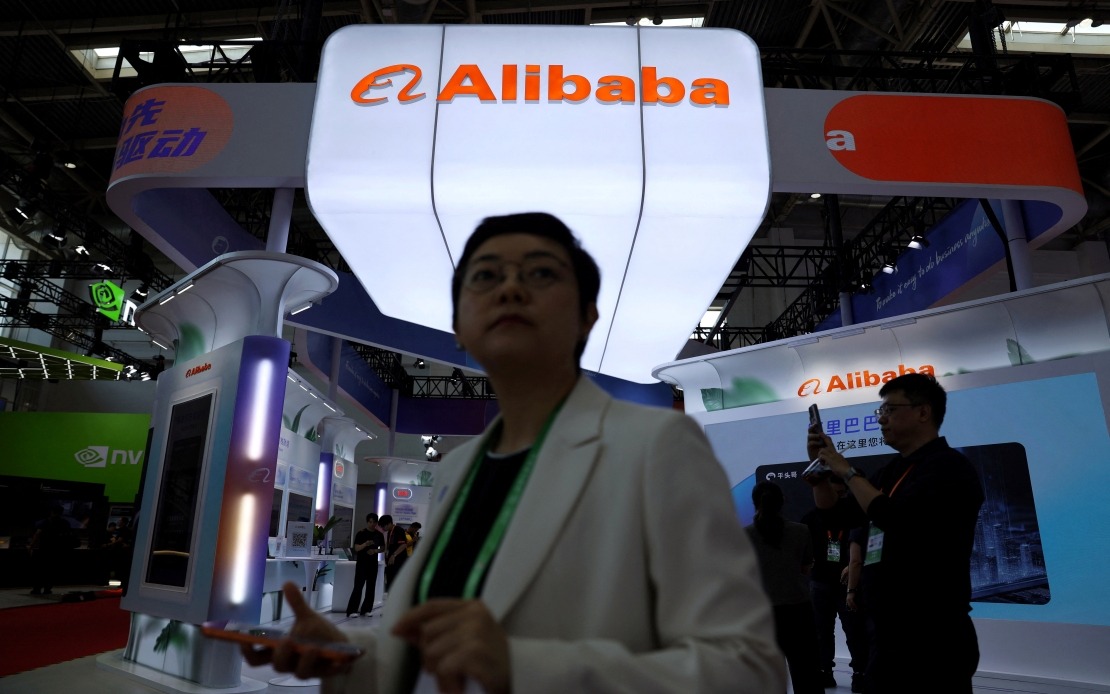
Alibaba has escalated its dispute with Washington by filing a lawsuit against the United States Department of Defense in response to being designated as a Chinese military company, according to court documents released this week. The action represents a significant pushback from one of Asia's largest technology firms against what it characterises as an unfounded and damaging classification that threatens its international operations and reputation.
In its legal challenge, Alibaba categorically rejected the Pentagon's determination, asserting that the designation rests on no factual foundation or legal justification. The company emphasised in its filing that its governance structure remains entirely independent, with no board members holding any military affiliation whatsoever. This structural argument forms a cornerstone of Alibaba's defence, suggesting that the absence of military personnel in leadership positions should exempt it from such a designation.
The technology conglomerate further contended that the full scope of its business activities centres exclusively on commercial retail operations, logistics services, and enterprise-level information technology solutions. According to the lawsuit documents, Alibaba's entire operational mandate focuses on these civilian sectors, with no involvement in military procurement, defence systems, or national security applications. This characterisation underscores the company's position that its business model fundamentally diverges from any military-industrial apparatus.
Alibaba also highlighted its internal compliance framework as evidence of its non-military status. The company stated that its contracts and policy provisions explicitly prohibit any military applications of its products and services. Additionally, the firm pointed out that it holds neither military certifications nor relevant defence industry licences, further strengthening its argument that associating it with China's military-industrial complex lacks substantive grounding.
The lawsuit comes after the Pentagon's June announcement that it was adding 188 companies to its list of entities deemed connected to the Chinese military-industrial complex. This significant expansion of the list reflected heightened American scrutiny of Chinese technology firms' potential national security implications. Alongside Alibaba, the Pentagon designated major corporations including Tencent Holdings and BYD, creating substantial repercussions across China's technology and manufacturing sectors.
The implications of this designation extend far beyond Alibaba's legal standing in American courts. Companies placed on the Pentagon's military-linked entity list face severe constraints on their operations globally. American investors face restrictions on financial engagement with these firms, and the designation can trigger secondary sanctions affecting their international supply chains and partnerships. For a company as deeply embedded in global commerce as Alibaba, such restrictions threaten billions of dollars in market value and operational capacity.
The broader context reveals intensifying US-China technological competition and Washington's growing emphasis on countering what it views as Beijing's military modernisation agenda. American policymakers have increasingly targeted Chinese technology companies as potential vehicles for advancing Chinese military capabilities, particularly in emerging domains such as artificial intelligence, semiconductors, and advanced manufacturing. The Pentagon's expansive interpretation of military-industrial linkages has consequently broadened the net of affected companies significantly.
For Malaysian and Southeast Asian businesses with ties to Alibaba or similar designated entities, the case carries practical significance. Regional companies relying on Alibaba's cloud computing services, logistics platforms, or financial technology solutions may face pressure or uncertainty regarding the legality and prudence of continued commercial relationships. Additionally, Malaysian firms seeking to access American markets or investment may themselves face heightened scrutiny if they maintain substantial business connections with designated Chinese companies.
Alibaba's legal challenge also reflects the company's confidence in navigating the American judicial system. By pursuing litigation rather than accepting the designation, Alibaba signals its commitment to contesting what it views as an unjust and commercially damaging classification. The company's strategy focuses on demonstrating that established legal and factual standards do not support the Pentagon's characterisation, potentially setting precedent for how other Chinese technology firms might challenge similar designations.
The lawsuit underscores deepening complications in US-China relations, particularly regarding technology sector integration. American efforts to decouple from Chinese technology suppliers clash with decades of commercial integration and the practical dependencies that multinational corporations have developed. Alibaba's case exemplifies the tension between geopolitical risk management and commercial pragmatism that increasingly characterises international business in sensitive technology sectors.
For investors and stakeholders in Alibaba, the judicial outcome could prove consequential for the company's future valuation and operational capacity in Western markets. A successful challenge would validate the company's assertions and potentially facilitate its rehabilitation within American policy circles. Conversely, an unsuccessful lawsuit would entrench the military designation and likely accelerate American efforts to restrict Alibaba's market access and financial relationships further.
The case also demonstrates how American national security determinations can fundamentally reshape competitive dynamics within technology markets globally. By constraining Chinese competitors through regulatory designations, the US effectively shields American technology companies from competition while simultaneously fragmenting previously integrated global supply chains. This regulatory approach carries profound implications for companies throughout Southeast Asia, which have increasingly positioned themselves as alternative technology hubs.

