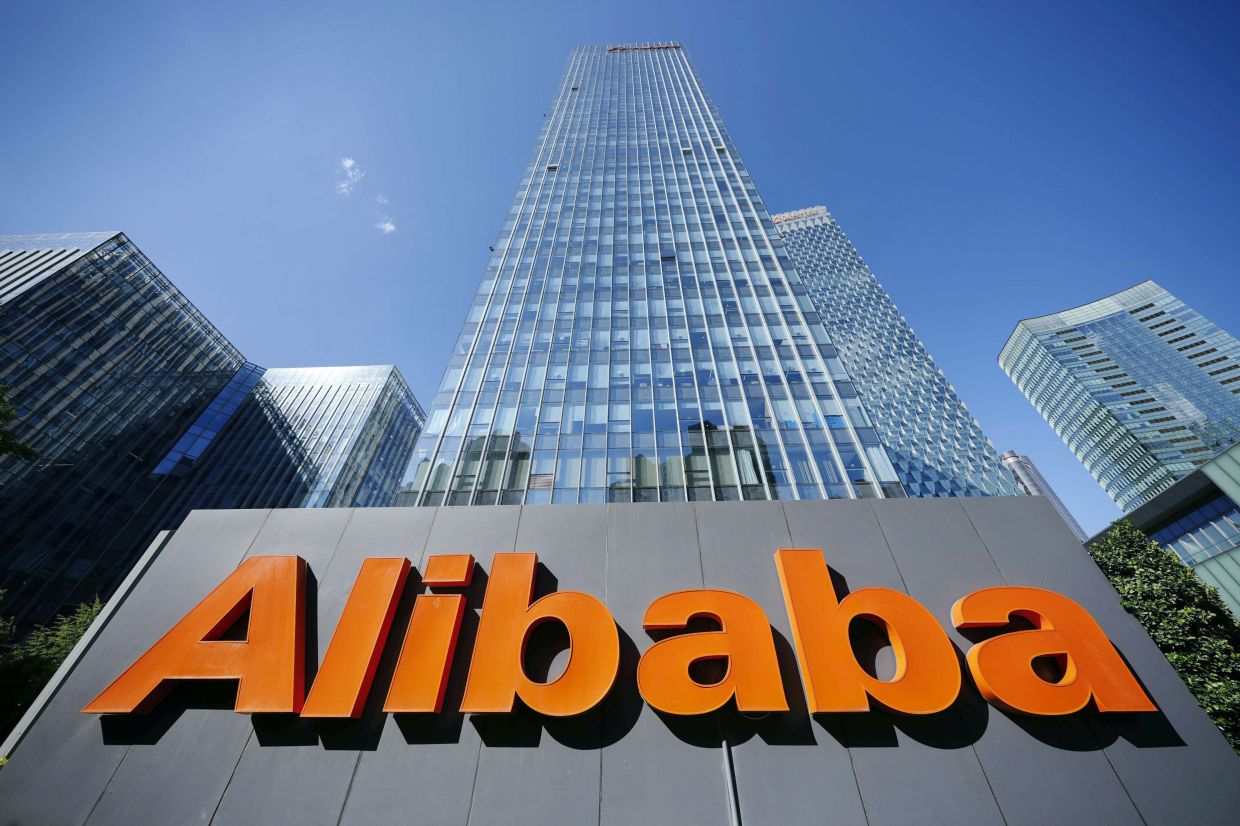
Alibaba Group Holding, China's dominant technology and e-commerce conglomerate, has launched legal action against the Pentagon in a California district court, contesting its inclusion on a blacklist designating the company as a supporter of China's military establishment. The move represents an extraordinary step by the Hangzhou-based firm to protect its interests in American capital markets and underscores deepening friction in the technological rivalry between the world's two largest economies.
The Pentagon added Alibaba to its "Chinese military companies" list on June 9 alongside several other prominent Chinese firms spanning artificial intelligence, biotechnology, solar power and transportation sectors. The roster includes electric vehicle manufacturers BYD and Nio, search giant Baidu, robotics firm Unitree Robotics, and networking equipment supplier TP-Link. The designation was made under Section 1260H of the National Defence Authorisation Act, a legislative provision that grants the Pentagon authority to identify companies with alleged military connections. While the classification does not automatically impose sanctions, it substantially complicates these enterprises' access to American financial markets and government contracts, creating significant commercial headwinds.
Alibaba's legal challenge, filed this week in San Jose, contests the Pentagon's constitutional authority to place the company on the list without proper due process. The company's lawyers argue the designation infringes upon Alibaba's constitutional right to free speech and violates fundamental procedural fairness. The lawsuit represents a calculated gambit to force the Pentagon to provide transparent justification for its decision or withdraw the designation entirely. Alibaba's spokesperson rejected the military connection allegation directly, stating that the company "is not a Chinese military company nor part of any military-civil fusion strategy" and characterising the Pentagon's decision as "arbitrary and capricious."
The Pentagon's characterisation of Alibaba rested substantially on claimed indirect connections to two Chinese government entities. The Department of Defence asserted that Alibaba maintained affiliated relationships with the State-owned Assets Supervision and Administration Commission, China's principal overseer of state enterprises, and also suggested ties to the Ministry of Industry and Information Technology based on alleged military-civil fusion contributions. In its legal filing, Alibaba categorically refutes both contentions, asserting it maintains no relationship whatsoever with SASAC and that any interaction with MIIT comprises exclusively routine regulatory compliance activities standard for technology companies operating within Chinese jurisdiction.
Alibaba claims it engaged in good faith dialogue with Pentagon officials in January regarding the potential designation and subsequently submitted a detailed written response in March. Despite this engagement, the Pentagon proceeded with the June listing, suggesting to Alibaba that the administrative process afforded insufficient opportunity for meaningful challenge before final determination. This sequence of events underpins the company's legal argument that due process protections were violated. Other designated companies, notably Baidu and BYD, have similarly expressed strong opposition to the Pentagon's determination.
The Alibaba lawsuit arrives amid an escalating cycle of tit-for-tat measures between Washington and Beijing targeting critical technology sectors. On the same day Alibaba filed its complaint, China's Ministry of Commerce announced retaliatory export controls against ten American companies, including defence contractors Ball Aerospace & Technologies, Oshkosh Defense and L3Harris Maritime Services, alongside robotics and drone manufacturers. The Chinese ministry justified its action as a response to what it characterised as "malicious actions" by the United States in restricting Chinese technology enterprises. Simultaneously, China's Ministry of Finance restricted 46 American companies from Chinese government procurement contracts, including defence giants Lockheed Martin, Raytheon Missiles & Defense and Boeing Defence, Space & Security.
The accumulating designations reflect the intensifying strategic competition between the superpowers over dominance in emerging technologies essential to military capability and economic competitiveness. Artificial intelligence, advanced semiconductors, robotics and rare earth elements have become contested battlegrounds where each side seeks technological advantage while attempting to deny the other access to critical capabilities. Alibaba's inclusion on the Pentagon list strikes at one of China's most globally prominent and commercially sophisticated technology enterprises, signalling Washington's determination to restrict Chinese access across an expanding spectrum of industries.
For Malaysian and Southeast Asian technology companies and investors, these escalating restrictions carry profound implications. The US-China technology decoupling is fragmenting global supply chains and forcing businesses throughout the region to choose between competing ecosystems or maintain expensive parallel operations. Malaysian semiconductor manufacturers, electronics assemblers and technology distributors increasingly face pressure to manage complex compliance frameworks across multiple jurisdictions with contradictory requirements. The dispute between Alibaba and the Pentagon exemplifies how technological tensions translate into concrete commercial restrictions affecting businesses far beyond the primary belligerents.
Alibaba's legal strategy appears designed to establish judicial precedent challenging the Pentagon's unilateral authority to designate Chinese companies without transparent criteria or meaningful due process. Should the San Jose court find merit in Alibaba's arguments regarding constitutional violations, the decision could constrain the Pentagon's future blacklisting authority and require more rigorous evidentiary standards. Conversely, if the court upholds the Pentagon's actions, it would affirm broad executive discretion in national security matters related to foreign technology companies. The outcome will likely influence how aggressively the American government pursues similar designations and whether designated companies can successfully challenge their placement through domestic courts.
The Pentagon declined substantive comment on the pending litigation, providing only a terse statement that it does not discuss ongoing legal proceedings. This reticence reflects standard departmental practice but also suggests reluctance to defend publicly the specific evidence underlying Alibaba's designation. The Chinese government, through its embassy in Washington, has condemned the American approach as an overstretched interpretation of national security concerns and criticised the use of discriminatory designation lists as inconsistent with international trade norms. These diplomatic protests accompany Beijing's reciprocal restrictions on American companies, establishing a mutually reinforcing cycle of economic retaliation.
The broader context suggests that American restrictions on Chinese technology companies will likely expand rather than contract. Congress continues proposing legislation to broaden the Pentagon's authority to identify and restrict Chinese entities deemed security threats. Alibaba's lawsuit, regardless of outcome, will not reverse the underlying strategic impulse driving these designations. Nevertheless, should Alibaba successfully overturn its listing or establish legal constraints on Pentagon authority, the company would achieve a significant commercial victory while demonstrating that Chinese technology enterprises possess legal remedies within the American system. For the region's technology sector, the case underscores the necessity of strategic positioning as global technology architecture continues fragmenting along geopolitical lines.

