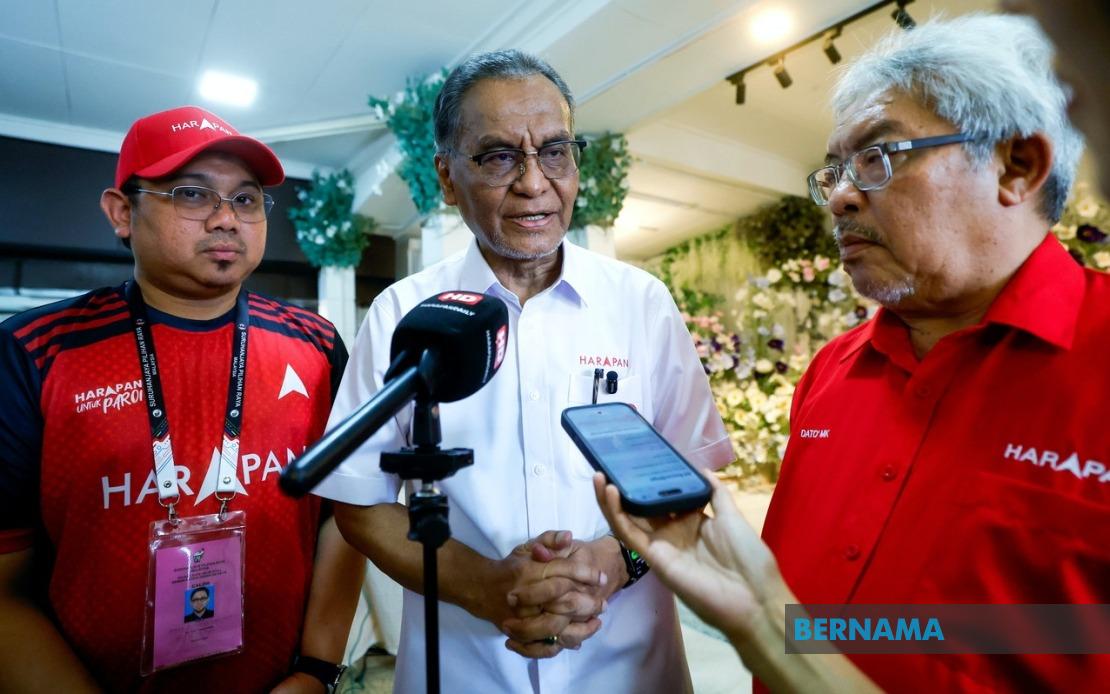
The Pakatan Harapan coalition is entering Negeri Sembilan's 16th state election on August 1 with a strategy centered on showcasing what its administration has delivered to voters over the past two years. Nine Amanah candidates are spearheading this effort across various constituencies, betting that a track record of tangible governance improvements will resonate more effectively than rhetoric alone in convincing Negeri Sembilan's electorate to maintain support for the ruling coalition.
Amanah vice-president Datuk Seri Dr Dzulkefly Ahmad outlined the coalition's reasoning during a campaign engagement in Seremban, emphasizing that PH's primary message revolves around administrative competence and service delivery. The strategy allocates specific constituencies to each coalition partner, with Amanah taking nine seats, PKR contesting sixteen, and the DAP fielding eleven candidates across the state. This structured approach, rather than allowing parties to compete against each other in the same seats, aims to consolidate PH's voter base and avoid internal division that could weaken the coalition's overall performance.
Dzulkefly stressed that the election ultimately hinges not on campaign noise or organizational spectacle, but on which representatives can demonstrate genuine problem-solving ability and commitment to constituent welfare. Amanah's candidates have been selected on the basis of established community service records and proven administrative experience, according to the vice-president. This emphasis on credibility and track record reflects a calculated judgment that Negeri Sembilan voters, having experienced nearly two years of PH governance since the 2023 state election, are inclined to evaluate candidates based on concrete performance rather than promises.
The coalition's campaign methodology extends beyond traditional political rallies to encompass more intimate voter engagement. Amanah is deploying grassroots tactics including small-group discussions, door-to-door canvassing, and social media communication to establish direct contact with residents. These methods are designed to allow candidates to identify specific community problems and subsequently facilitate solutions through coordination with relevant government agencies. By positioning candidates as problem-solvers connected to administrative machinery rather than distant politicians, PH hopes to reinforce the impression that voting for Amanah delivers practical benefits.
In the Paroi state constituency, where more than 65,000 voters and approximately 140,000 residents are eligible to participate, PH candidate Ahmad Shahir Mohd Shah is prioritizing support for small traders and informal sector entrepreneurs. His platform includes streamlining business licensing procedures, improving basic infrastructure in commercial areas, and upgrading trading zones through coordination with local authorities. This focus on economic empowerment of lower-income constituencies reflects an understanding that material improvements in business viability represent a tangible outcome of political support that voters can measure directly.
Amanah's candidate slate reveals an attempt to balance incumbent retention with fresh faces. Datuk Bakri Sawir returns as the party's standard-bearer for Klawang, seeking to extend his tenure, while the party has selected nine other candidates for constituencies including Serting, Lenggeng, Senaling, Johol, Kota, Bagan Pinang, and Gemencheh. This combination strategy acknowledges both the importance of maintaining parliamentary experience and institutional memory while introducing new representatives who might attract voters seeking alternatives to established political figures.
The political context underpinning this election reflects shifting dynamics in Negeri Sembilan. When voters went to the polls in 2023, PH secured seventeen seats against Barisan Nasional's fourteen and Perikatan Nasional's five, establishing a clear majority. Since then, the coalition government has accumulated a performance record that it now presents as justification for continued voter support. However, the narrowness of that 2023 majority—only three seats above the twenty-four-seat threshold required for majority control—means that any significant swing could alter the state's political configuration.
The timing of this election occurs amid broader Malaysian political transitions. At the federal level, the composition of coalitions and the terms of political alliances continue to evolve. Some voters in Negeri Sembilan might view the state election as an opportunity to send signals about coalition performance more generally, while others focus exclusively on local governance. Amanah's emphasis on administrative competence and service delivery attempts to keep the conversation centered on Negeri Sembilan-specific issues rather than larger national political narratives.
For Malaysian political observers, this election offers insights into how voters assess coalition governments. If PH's emphasis on track record and institutional performance proves persuasive, it suggests that governance quality and problem-solving capacity have become important determinants of electoral choice. Conversely, if other factors—including opposition campaign effectiveness or broader coalition dynamics—significantly influence the result, it would indicate that voter preferences remain susceptible to messaging beyond administrative performance.
The Election Commission has scheduled early voting for July 28, with general polling on August 1. This timeline provides candidates approximately one week for intensive campaigning following the nomination period. For Amanah and its coalition partners, the campaign will likely intensify efforts to connect specific policy achievements to individual constituency contexts. The party is counting on voters recognizing that political support translates into measurable improvements in local services, business conditions, and government responsiveness—the core argument underlying its service-oriented campaign approach.
Negeri Sembilan's election also carries implications for Malaysia's federal political equation. The state has historically served as a microcosm of national trends, and results could influence calculations about coalition sustainability and voter sentiment toward Pakatan Harapan's governance model. Whether Amanah's emphasis on delivery and administrative credibility proves sufficient to retain voter support will provide important data about the effectiveness of performance-based campaigning in contemporary Malaysian politics.

