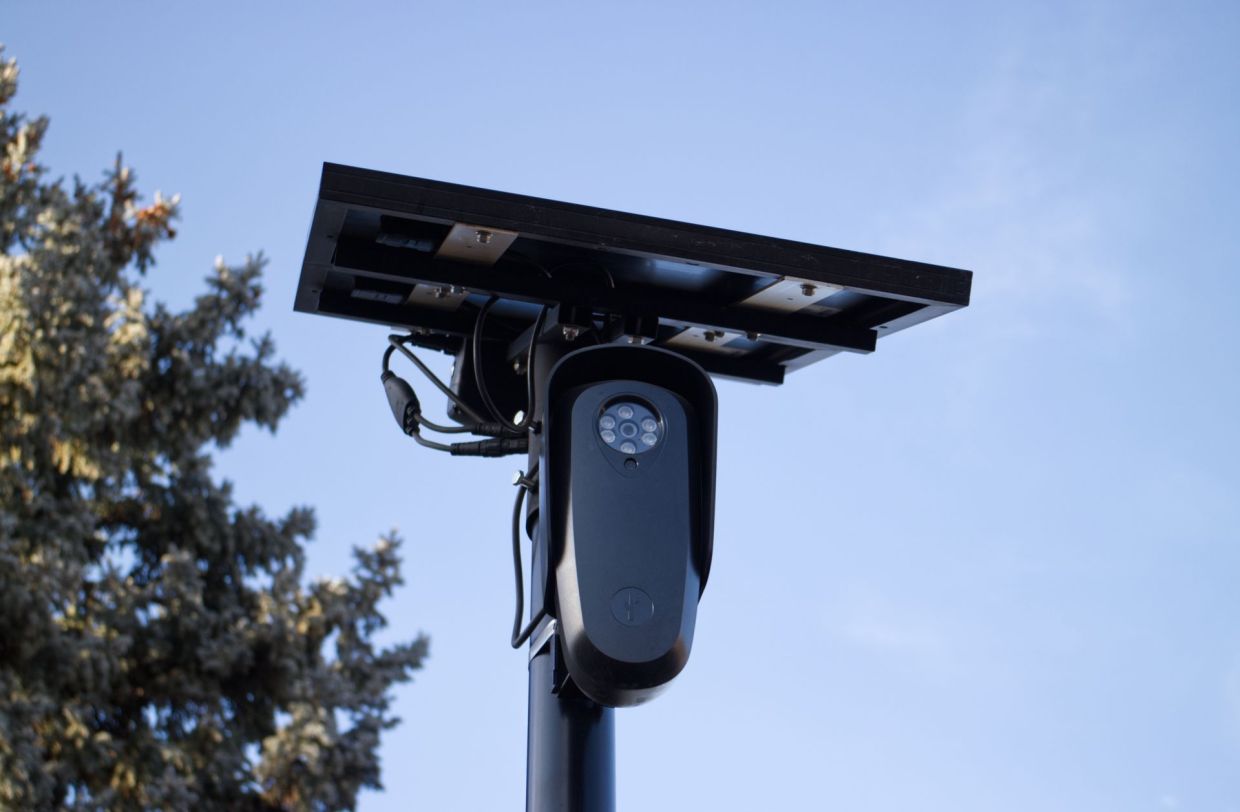
The United States is witnessing an unusual convergence of political activism as ordinary citizens mobilise against what they perceive as unchecked surveillance infrastructure. At the centre of this growing resistance is Flock Security, a company whose automated license plate recognition cameras have proliferated across American streets in recent years. What began as scattered complaints about privacy erosion has evolved into a coordinated national movement, bringing together unlikely political allies and forcing municipal governments to reconsider their technology contracts.
The Flock camera system operates fundamentally differently from conventional surveillance equipment. Rather than recording continuous video footage, these devices capture still images of vehicles, extracting crucial data points including license plate numbers, vehicle make and model, colour, and distinctive features such as bumper stickers. Crucially, this information is stored in networked cloud databases for up to one month, allowing police departments, private security companies, and homeowners' associations to query and share the data across jurisdictional boundaries. This networked capability distinguishes Flock from traditional isolated surveillance systems and has become the primary target of critics who argue it enables unprecedented vehicle tracking without judicial oversight.
The resistance movement has taken multiple forms, ranging from digital activism to physical intervention. A 20-year-old self-described vigilante operating under the alias Nomark has become a symbolic figurehead, demonstrating to his 500,000 Instagram followers how to disable cameras while documenting his actions publicly. Having systematically disabled approximately 30 devices in the Minneapolis area, Nomark describes an evolution from initial apprehension to growing confidence in his activities. However, the movement extends far beyond individual actors. Online platforms have become organisational hubs, with the Facebook group DeFlock America accumulating over 600,000 members and expanding by thousands daily. These groups maintain crowdsourced maps of camera locations, share technical information about blocking camera lenses, and celebrate individuals arrested for equipment destruction as heroes of a privacy rights cause.
Law enforcement agencies and surveillance technology proponents present a compelling counterargument regarding Flock's crime-fighting utility. Jon Bridges, a police official in Virginia's state capital Richmond, explains that his department queries the Flock database for virtually any investigation involving vehicles. He illustrates this capability through a concrete example: during a domestic-related double homicide investigation in May, detectives used Flock data to rapidly identify a suspect who had fled in a pickup truck. By entering a system alert with the suspect's license plate information, officers in a neighbouring county apprehended the individual when his vehicle appeared on another camera. Such efficiency arguments resonate with law enforcement agencies seeking technological solutions to complex criminal investigations, with Richmond's police department having utilised Flock since 2023.
Despite law enforcement's documented successes, documented abuses have substantially fuelled the privacy movement's expansion. An investigation by The Washington Post revealed that at least 50 police officers have been accused of misusing the Flock system, predominantly to surveil romantic partners and ex-partners without legal justification. The platform's capacity for abuse extends beyond interpersonal crimes. Documented cases reveal officers using Flock to track women obtaining abortions in states where the procedure is illegal, and some instances of law enforcement illegally transferring Flock data to immigration enforcement agencies. These revelations have transformed privacy concerns from theoretical discussions into concrete demonstrations of power misuse, validating the movement's warnings about unchecked surveillance infrastructure.
The political dimensions of this movement deserve particular attention from Malaysian observers. The anti-Flock coalition brings together traditionally opposing political factions, including civil libertarians from the left and libertarian-oriented conservatives. This ideological bridge represents something increasingly rare in polarised American political discourse. Conservative heavyweight Tucker Carlson, himself a former Fox News host, has publicly characterised camera vandals as "decent, patriotic Americans" exercising justified resistance against governmental overreach. This cross-partisan endorsement has legitimised the movement beyond typical activist circles, suggesting that surveillance concerns transcend traditional political divisions.
The movement has demonstrably translated grassroots energy into tangible municipal victories. Organised local groups have successfully pressured city council members and mayors to terminate their Flock contracts, with more than 70 municipalities across the country abandoning the service in recent months according to American Civil Liberties Union records. These successes span geographically diverse locations, from major cities like Los Angeles to smaller Virginia communities. The strategy of direct engagement with local elected officials has proven more effective than anticipated, suggesting that public pressure can influence technology procurement decisions when organised systematically.
Flock Security's leadership has responded defensively to mounting criticism. CEO Garrett Langley has characterised movement opponents as "terrorists," a rhetorical escalation that has arguably amplified rather than diminished activist determination. This confrontational approach contrasts markedly with the measured, law-and-order messaging employed by police departments defending the technology's crime-fighting applications. The company's hostile public positioning may prove counterproductive, inadvertently validating activist claims that surveillance infrastructure development prioritises technological expansion over public consent and democratic deliberation.
For Southeast Asian observers, particularly those in Malaysia, this American situation offers instructive parallels and contrasts. As digital surveillance technologies proliferate globally, questions about oversight mechanisms, public participation in technology deployment, and accountability structures become increasingly pertinent. The American movement demonstrates both the potential for grassroots mobilisation against surveillance infrastructure and the real limitations that emerge when technology adoption precedes democratic consensus-building. The fact that community resistance required coordinated activism rather than preceding thoughtful policy discussion suggests that surveillance technologies often expand through incremental deployment rather than transparent public processes.
Chad Marlow, senior policy counsel for the American Civil Liberties Union, characterises the emerging anti-Flock movement as representing a "stunning" grassroots response that defies conventional expectations regarding technology adoption. In a nation typically divided along partisan lines regarding governmental authority and privacy regulation, this convergence around shared surveillance concerns represents a notable phenomenon. Steven Keener, a criminology professor at Christopher Newport University, emphasises that residents possess straightforward mechanisms for resistance through democratic participation, essentially arguing that legal avenues remain available for those opposing municipal surveillance contracts.
The fundamental tension animating this movement reflects deeper questions about how democratic societies should govern emerging technologies. Should surveillance infrastructure expansion proceed incrementally, with resistance emerging post-hoc once systems become entrenched? Alternatively, should communities establish deliberative processes before implementing networked tracking systems? The American experience suggests that waiting for grassroots resistance typically means confronting already-deployed infrastructure, requiring substantially greater effort to reverse course than would have been necessary during initial procurement decisions. As more governments worldwide consider similar technologies, the American Flock controversy provides a case study in both the possibilities and limitations of democratic resistance to surveillance expansion.

