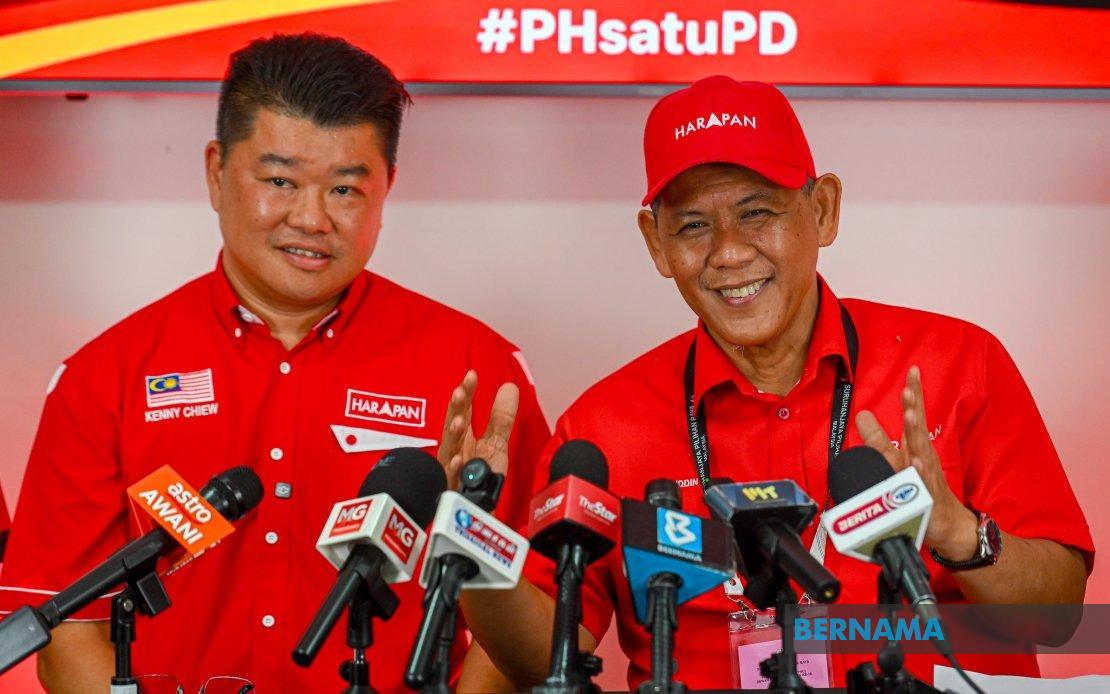
The 16th Negeri Sembilan State Election is taking shape as a test of political decorum, with Menteri Besar Datuk Seri Aminuddin Harun stepping forward to champion ethical campaign practices. While campaigning in the Linggi constituency on July 20, Aminuddin made an impassioned call for all participating political parties to uphold the law and conduct their operations with integrity, setting a standard he believes befits a developed state and modern democracy.
Aminuddin's intervention arrives at a critical juncture. The Pakatan Harapan coalition, which he represents as the candidate for the Linggi state seat, had just released a statement detailing incidents of vandalism that marred the opening days of the campaign. These were not isolated incidents: flagpoles were damaged in the Chembong constituency, and party flags were deliberately burned in Palong. Such actions, Aminuddin suggested, undermine the very foundations of democratic participation and reflect poorly on the state's political maturity.
The Negeri Sembilan Menteri Besar framed the campaign conduct issue not merely as a matter of party politics but as a reflection on the state itself. By conducting campaigns with respect for rules and allowing voters to judge politicians on merit rather than through intimidation or destruction of property, he argued, Negeri Sembilan can demonstrate what a civilised state looks like in practice. His appeal resonated beyond partisan boundaries, suggesting that campaign integrity benefits all parties and ultimately strengthens democratic institutions.
Police involvement underscores the seriousness of the situation. Negeri Sembilan Police Chief Datuk Alzafny Ahmad confirmed that law enforcement had received reports of campaign material vandalism in Jempol and was actively investigating incidents in Chembong. This police engagement indicates that election authorities are monitoring the campaign environment and ready to take action against those who breach electoral conduct standards, a reassurance to political parties that the rules will be enforced equitably.
The timing of Aminuddin's remarks carries particular weight given his dual role. As both Menteri Besar and a candidate in the upcoming election, his call for ethical conduct carries the authority of his office, while simultaneously advancing his party's interests. This positions Pakatan Harapan—the coalition facing these vandalism reports—as the champion of proper campaign behaviour, potentially neutralising any perception that they are the targets of unfair treatment.
For Malaysian observers, particularly in Peninsular Malaysia where state elections have occasionally been contentious affairs, the Negeri Sembilan race serves as a barometer for political culture. The early emergence of vandalism reports raises questions about candidate discipline and party control mechanisms. Campaigns are inherently competitive, but the line between vigorous advocacy and unethical conduct remains crucial to maintain.
The State Legislative Assembly's dissolution on June 5 set the stage for an election originally scheduled but brought forward through procedural measures. With early voting set for July 28 and polling day on August 1, the campaign window is compressed, intensifying competition for voter attention. In such high-pressure environments, maintaining ethical standards becomes more challenging but arguably more important, as candidates and supporters seek shortcuts to campaign visibility.
Aminuddin's intervention reflects broader concerns about election conduct in Malaysia. While the country's electoral processes have improved significantly, isolated incidents of malpractice—from vote-buying allegations to intimidation of voters—periodically surface. By publicly emphasising the importance of clean campaigns, the Menteri Besar attempts to set a cultural baseline that transcends partisan advantage, suggesting that all parties benefit when campaigns focus on ideas and policy rather than vandalism and intimidation.
The call for respect for election laws also carries implications for how political differences are resolved in Malaysian society more broadly. Democratic maturity, as Aminuddin framed it, means accepting that opponents have the right to campaign freely and that voters will make their own informed choices. This stands in contrast to tactics that attempt to silence opposition through property destruction or intimidation, which fundamentally undermine democratic principles.
For younger voters in Negeri Sembilan and across Malaysia, the conduct of this campaign may influence their engagement with politics. A campaign characterised by integrity and respect for law sends a powerful message about the nature of democratic participation, while repeated incidents of vandalism can breed cynicism about the entire political process. Aminuddin's emphasis on demonstrating proper campaign behaviour thus serves an educational function for the electorate.
The Negeri Sembilan election will ultimately be decided on the merits of candidates, their parties' track records, and voters' policy preferences. However, the manner in which the campaign unfolds will shape not just the election outcome but also the health of democratic institutions in the state. By front-loading a message about ethical conduct, Aminuddin has created space for other party leaders to echo similar commitments, potentially establishing norms that extend beyond this single election cycle.
As the campaign intensifies over the coming days, attention will focus on whether Aminuddin's call resonates among political operatives on the ground. The true test of campaign integrity will emerge not in statements from party leaders but in the actual behaviour of candidates, volunteers, and supporters across Negeri Sembilan's constituencies, where the democratic will of voters will ultimately be expressed and respected.

