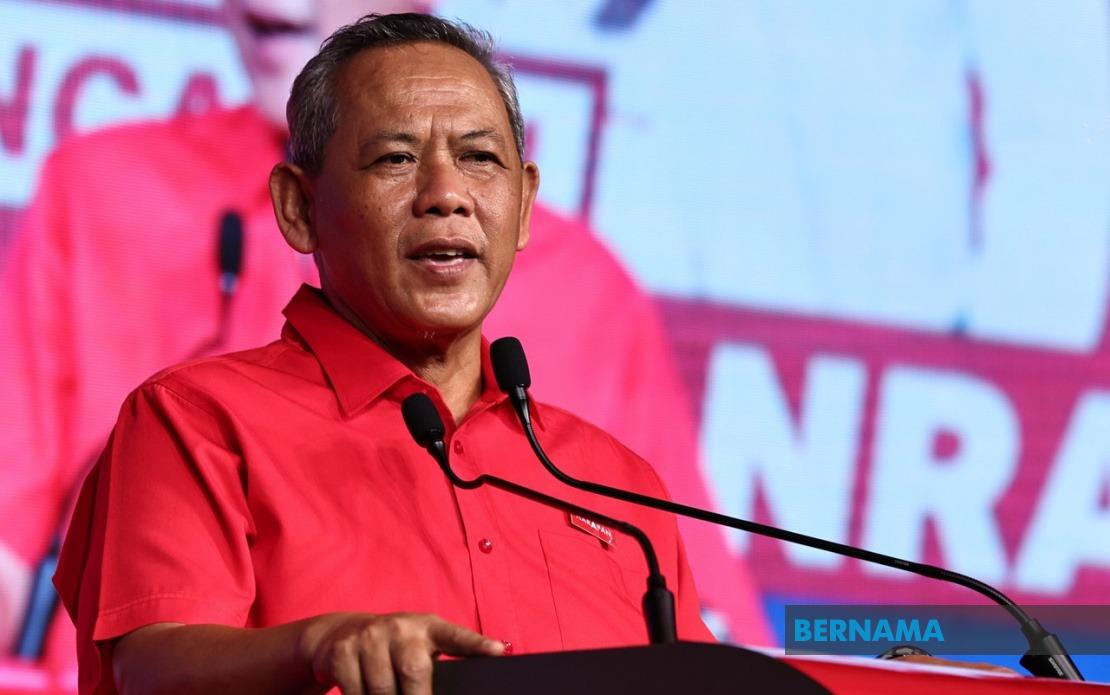
Negeri Sembilan Menteri Besar Datuk Seri Aminuddin Harun has made a direct appeal to constituents ahead of the 16th state election, urging them to look beyond political posturing and assess the government's genuine efforts to tackle Linggi's chronic flooding crisis. Speaking after Friday prayers in Seremban on July 17, the Pakatan Harapan candidate for the Linggi state seat expressed concern that the long-standing water management problem has become the subject of viral social media claims and political point-scoring rather than substantive policy discussion.
The flooding situation in Linggi has periodically captured public attention whenever heavy rainfall blankets Seremban, prompting online discourse about the government's competence in addressing infrastructure challenges. Aminuddin's remarks suggest the coalition recognizes the need to reframe this narrative away from blame and towards evidence-based assessment of concrete solutions already underway. He emphasized that the government has treated the matter with appropriate seriousness, neither dismissing community concerns nor allowing them to become fodder for electoral manipulation.
Two flood mitigation projects targeting the Linggi area have been formally approved and are currently in the implementation phase, marking the culmination of collaborative planning between state and federal authorities. These initiatives represent a structured, long-term approach to infrastructure resilience rather than hastily assembled campaign promises. Aminuddin acknowledged that such projects inherently demand extended timeframes for completion, a reality that sometimes clashes with public expectations for immediate resolution of persistent problems. The emphasis on proper planning and methodical execution reflects a governance philosophy prioritizing sustainable outcomes over quick political wins.
The mention of Almhamdulillah and the project approvals signals the administration's sense of progress on an issue that has vexed policymakers for years. By pointing to concurrent state and federal involvement, Aminuddin highlights the multi-layered coordination required for effective infrastructure development in Malaysia. This cross-level government cooperation, while often taken for granted, represents a significant achievement in addressing challenges that transcend administrative boundaries.
Aminuddin's broader message extends beyond Linggi's specific circumstances, presenting the coalition's electoral strategy as rooted in demonstrated administrative capability and ongoing development initiatives rather than rhetorical flourishes or exploitation of community grievances. This positioning suggests confidence in Pakatan Harapan's track record in Negeri Sembilan while implicitly criticizing opposition tactics that may prioritize sentiment-driven messaging over substantive governance discussion. The contrast drawn between problem-solving infrastructure work and political sentiment-mongering frames the election as a choice between pragmatism and opportunism.
The timing of these remarks is significant given that nomination day for the state election falls on July 18, with early voting scheduled for July 28 and polling day set for August 1. This compressed campaign timeline means candidates and parties must rapidly establish their core messages and rebut opponent narratives. Aminuddin's emphasis on flood mitigation projects serves as a concrete example of Pakatan Harapan's governance approach, offering voters tangible evidence of administrative follow-through rather than abstract promises.
For Negeri Sembilan voters, particularly those in Linggi experiencing recurring flood impacts, the election presents an opportunity to assess competing visions for infrastructure development and crisis management. The Menteri Besar's framing invites constituents to evaluate not just political promises but demonstrated capacity to navigate complex, multi-jurisdictional projects requiring sustained commitment and technical expertise. This appeals to voters prioritizing competent administration over populist rhetoric.
The broader implications for Malaysian politics reflect ongoing tension between performance-based electoral messaging and sentiment-driven campaigns. As Malaysian politics increasingly features digital mobilization and social media narratives, established political figures like Aminuddin are attempting to anchor voter decision-making in verifiable outcomes and substantive policy delivery. The flood mitigation projects, whether ultimately successful or not, represent the coalition's attempt to create a material record upon which electoral judgments can rest.
For opposition parties contesting Negeri Sembilan, Aminuddin's preemptive framing presents a challenge. Dismissing infrastructure projects appears obstructionist, while crediting them undermines criticism of government performance. This dynamic reflects the inherent advantage incumbent administrations enjoy in state elections, where they can point to ongoing projects and completed works as evidence of governance capacity.
The Negeri Sembilan election ultimately serves as a barometer of voter sentiment across multiple dimensions: satisfaction with state-level governance, assessment of Pakatan Harapan's stewardship compared to previous administrations, and evaluation of opposition parties' credibility and platforms. Aminuddin's emphasis on flood mitigation work adds a specific, localized issue to these broader considerations, suggesting that state elections often hinge on practical outcomes affecting daily community life rather than grand national political narratives.
Looking forward, the 16th Negeri Sembilan state election will reveal whether voters prioritize demonstrated infrastructure development and administrative continuity, or whether they seek electoral change based on perceived governance shortcomings or opposition promises. Aminuddin's confident tone suggests the coalition believes its record provides sufficient foundation for voter confidence, even in constituencies like Linggi where persistent challenges remain partially unresolved. The outcome may also signal broader trends in Malaysian state-level politics, where infrastructure delivery and practical governance increasingly compete with traditional political messaging for voter attention.

