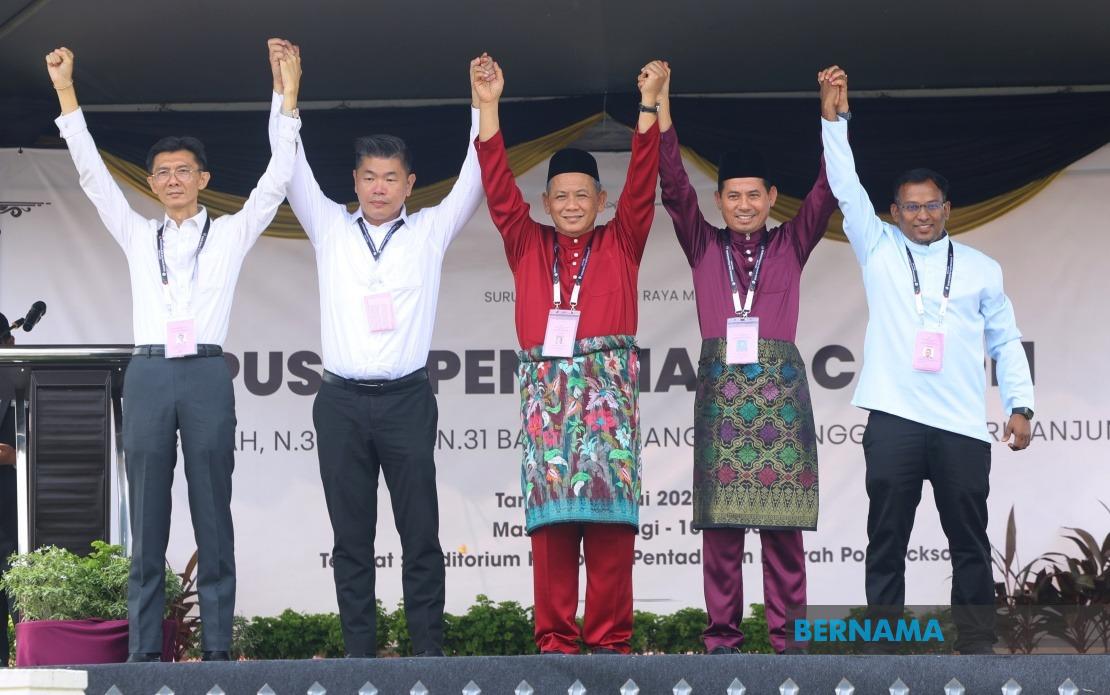
Datuk Seri Aminuddin Harun, the Menteri Besar of Negeri Sembilan and chairman of Pakatan Harapan in the state, has revealed ambitious infrastructure proposals for the Linggi state constituency as part of his election manifesto ahead of the 16th Negeri Sembilan state election scheduled for August 1. Speaking at the nomination centre in Port Dickson, Aminuddin detailed a port development project alongside a dedicated industrial estate, framing these initiatives as cornerstone components of a comprehensive economic revitalisation strategy intended to boost prosperity and create employment within the constituency.
The proposed port facility and industrial park represent a significant territorial expansion of economic activity in Negeri Sembilan's coastal belt. For Malaysian voters, such infrastructure pledges carry particular weight given the state's geographic position as a maritime gateway between Kuala Lumpur's hinterland and the Strait of Malacca. A functional port in Linggi could potentially redirect regional trade flows and reduce dependency on larger facilities in Port Klang or Port Dickson itself, while an accompanying industrial estate would offer manufacturers an alternative location with lower land costs and proximity to both Klang Valley markets and southern Peninsular networks. These projects, if realised, would reshape Negeri Sembilan's economic profile beyond its traditional reliance on palm oil, rubber, and light manufacturing.
Aminuddin's candidacy itself represents an unconventional political gambit. Linggi has long been considered a fortress seat for Barisan Nasional, with the incumbent Datuk Mohd Faizal Ramli holding the position. By fielding his state leadership in what observers regard as hostile terrain, Pakatan Harapan signals both desperation and conviction—a calculated decision to deploy the party's heaviest artillery in pursuit of a symbolic breakthrough. The Menteri Besar acknowledged the difficulty of his assignment, yet expressed determination to campaign vigorously and secure voter confidence through both policy substance and organisational rigour.
The three-way contest complicates outcomes significantly. Datuk Zamri Md Said's Bersatu candidacy fragments the opposition vote, potentially advantaging the Barisan Nasional incumbent if anti-government support remains divided. This fracturing reflects broader tensions within Malaysia's political ecosystem, where coalition partners occasionally field competing candidates, undermining unified opposition strategies. For Aminuddin, victory would require not merely converting BN voters but consolidating support across his own party base and persuading Bersatu supporters to strategically vote for Pakatan Harapan—a daunting arithmetic in a three-cornered battle.
Mohd Faizal's public response displayed measured confidence without complacency. The incumbent cautioned against underestimating the contest despite Linggi's historical alignment with Barisan Nasional, and he called for a campaign conducted with civility, implying concern that aggressive tactics might backfire or alienate fence-sitters. His appeal for restraint suggests awareness that Pakatan Harapan's presence, particularly with Aminuddin as the challenger, brings elevated campaigning intensity and media scrutiny that could expose governance vulnerabilities within Barisan Nasional's local administration.
The broader context of the 16th Negeri Sembilan state election reflects Malaysia's ongoing political realignment. The state has become a bellwether of shifting electoral preferences, having experienced coalition transitions in recent electoral cycles. Pakatan Harapan's challenge in Linggi forms part of a statewide effort to recapture ground lost to Barisan Nasional's resurgence following the 2022 general election. Port Dickson itself, as the constituency's principal urban centre, carries symbolic importance as a developed, cosmopolitan enclave where swing voters congregate and economic concerns dominate political discourse.
The infrastructure promises advanced by Aminuddin resonate with Malaysian economic anxieties amid sluggish growth and employment concerns. Port development and industrial diversification address material preoccupations—jobs, business opportunities, logistical connectivity—rather than abstract ideological claims. This grounding in tangible projects potentially appeals to pragmatic voters prioritising outcomes over partisan loyalty, particularly in constituencies where economic stagnation or uneven development drives dissatisfaction with incumbent administrations.
However, delivering on such pledges demands substantial capital, federal and state coordination, and sustained political will across electoral cycles. Voters in constituencies across Southeast Asia have grown weary of campaign promises that evaporate post-election. Aminuddin's credibility hinges partly on whether Pakatan Harapan has demonstrated capacity to execute major infrastructure initiatives in areas it governs. The sustainability of funding mechanisms, land acquisition processes, and environmental clearances will determine whether the port and industrial estate remain electoral rhetoric or materialize as functional assets.
The Linggi contest also illuminates regional economic competition within Negeri Sembilan. Other constituencies may anticipate similar development packages, creating pressures on state finances and forcing difficult prioritisation decisions. A port facility benefits primarily Linggi's commercial interests and port-adjacent communities, while industrial zones generate wider employment but concentrate environmental externalities in specific locations. Distributional politics—how development benefits and burdens are allocated geographically—will shape public reception of Aminuddin's vision and influence outcomes in neighbouring seats.
Packatan Harapan's broader strategy in Negeri Sembilan appears to combine defensive consolidation in areas of traditional strength with aggressive offence in hitherto hostile territory. Fielding the Menteri Besar in Linggi represents a calculated gamble, signalling that the coalition contests every seat competitively and will not concede any constituency without struggle. This posture, though electorally risky if Aminuddin loses his own seat, demonstrates organisational confidence and sends motivational signals to party activists statewide.
The campaign period, scheduled for approximately two weeks preceding the August 1 polling, will test both candidates' organisational capacity and message discipline. Aminuddin's port and industrial proposals will require sustained elaboration—detailing financing mechanisms, timeline projections, environmental assessments, and employment generation estimates. Vagueness invites scepticism; specificity enables voters to evaluate feasibility and hold candidates accountable to explicit commitments.
For Malaysian observers tracking state-level politics, the Linggi contest warrants close attention as a microcosm of broader electoral dynamics. The intersection of infrastructure promises, coalition fragmentation, incumbent entrenchment, and leadership personalisation mirrors dynamics playing out nationally. Results will signal whether Pakatan Harapan can regenerate electoral competitiveness in traditionally non-aligned territories and whether economic development messaging effectively counters established party incumbency advantages in Malaysian state politics.

