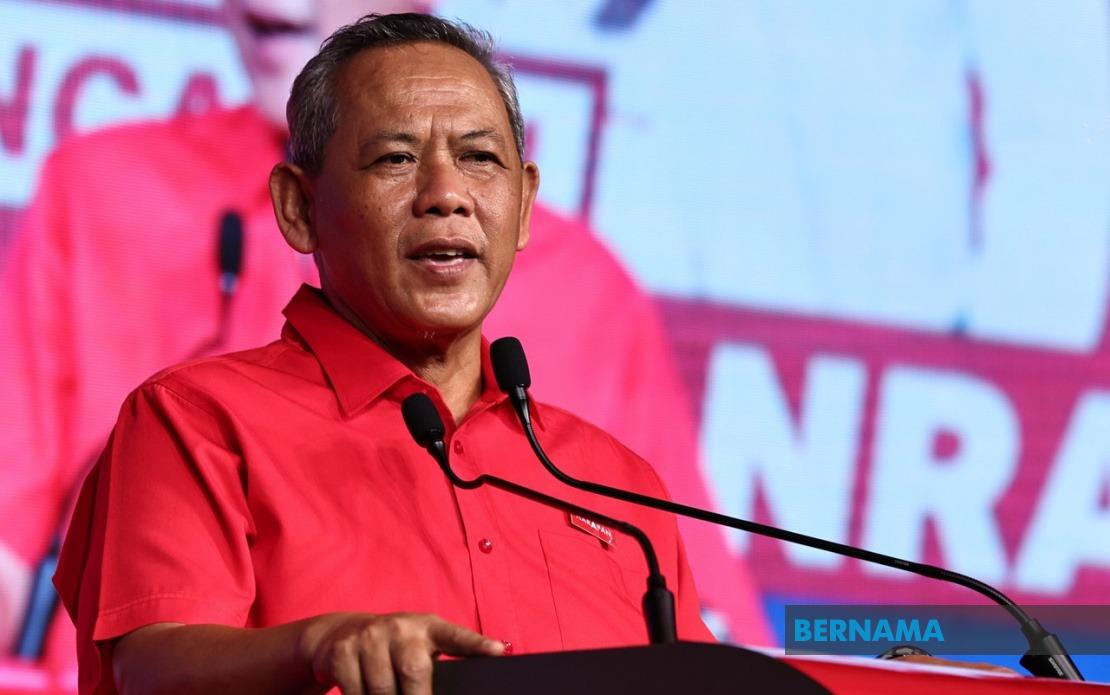
Negeri Sembilan Menteri Besar Datuk Seri Aminuddin Harun has firmly rejected suggestions that his switch to the Linggi state seat ahead of the upcoming state election signals an attempt to sidestep the challenge of retaining Sikamat, his constituency for the past four terms. Speaking to supporters through a Facebook post released in Seremban on July 16, Aminuddin characterised the decision as entirely his own initiative, driven by a desire to continue his service trajectory rather than escape electoral risk.
The Menteri Besar's comments come amid speculation within political circles about whether his relocation reflected concerns over Sikamat's electoral complexion or internal party dynamics. However, Aminuddin, who also chairs the Negeri Sembilan chapter of Pakatan Harapan, sought to reframe the narrative by emphasising continuity and personal aspiration. He expressed confidence that with voter approval, he would deliver the same level of commitment to Linggi residents that he had demonstrated across four consecutive terms in Sikamat, suggesting the move represented vertical ambition rather than horizontal evasion.
The Menteri Besar's departure from Sikamat creates space for Nor Azman Mohamad, whom the coalition has nominated as his successor. Aminuddin extended his good wishes to Nor Azman, expressing faith that the incoming representative would sustain the development work and community engagement that the outgoing assemblyman had pioneered. This endorsement appears designed to reassure Sikamat voters that the coalition remains committed to the constituency even as its long-serving incumbent transitions elsewhere.
Aminuddin's tenure in Sikamat reflects the financial and operational constraints that often characterise opposition politics in Malaysia. In his Facebook statement, he recalled the constituency's early years under his stewardship, when PH operated from cramped quarters above a small commercial shopfront with minimal state funding. During those lean opposition years, he noted, constituents and their representative worked collaboratively to supplement meagre allocations through grassroots fundraising and volunteer-driven programmes. That scrappy, community-centred approach became the foundation for constituency development once PH returned to state power.
The Menteri Besar's recollection of Sikamat's political journey carries significance beyond nostalgia. It underscores the tangible transformation that constituencies experience when governing coalitions change, a reminder particularly relevant to voters assessing whether to maintain coalition support in the 16th Negeri Sembilan state election. Aminuddin's emphasis on historical hardship and subsequent progress implicitly argues for continued PH governance while legitimising his own relocation by positioning Sikamat as a constituency capable of thriving without his direct representation.
In Linggi, Aminuddin faces a formidable challenge in incumbent assemblyman Datuk Mohd Faizal Ramli, a Barisan Nasional stalwart who has held the seat. This matchup will test whether the Menteri Besar's personal political capital and Selangor's structural advantages as the coalition's seat can overcome the incumbent's entrenched support base. The contest also carries symbolic weight for state-level dynamics, as a Menteri Besar's electoral performance often signals broader coalition momentum.
The electoral calendar for the 16th Negeri Sembilan state election compresses the campaign period considerably. Nominations occur on Saturday, July 22, with early voting scheduled for July 28 and general polling set for August 1. This compressed timeframe limits candidates' capacity for extensive grassroots mobilisation and favours candidates with pre-existing voter familiarity and organisational infrastructure. For Aminuddin, his status as Menteri Besar provides automatic media prominence and security apparatus support, advantages that Mohd Faizal's incumbency at the state assembly level alone cannot fully counterbalance.
The transition in Sikamat also reflects broader factional or strategic thinking within Negeri Sembilan's coalition leadership. By deploying Aminuddin to contest a more competitive seat while installing a successor in a presumably safer constituency, the coalition appears to be executing a calculated electoral calculus. This manoeuvre suggests confidence in Nor Azman's ability to retain Sikamat while simultaneously using the Menteri Besar's candidacy to shore up coalition performance in marginal territories. Whether this strategy succeeds will become apparent only after ballots are tallied.
For Malaysian voters and observers tracking coalition governance in the peninsula's states, the Negeri Sembilan election carries consequences beyond the state's borders. As a Pakatan Harapan-governed state, its electoral outcome influences perceptions of coalition viability and internal cohesion. Aminuddin's personal re-election and the coalition's broader seat count will shape discussions around whether PH's state administrations have delivered tangible benefits sufficient to retain voter confidence amid inflation, cost-of-living pressures, and competing communal anxieties that characterise contemporary Malaysian politics.

