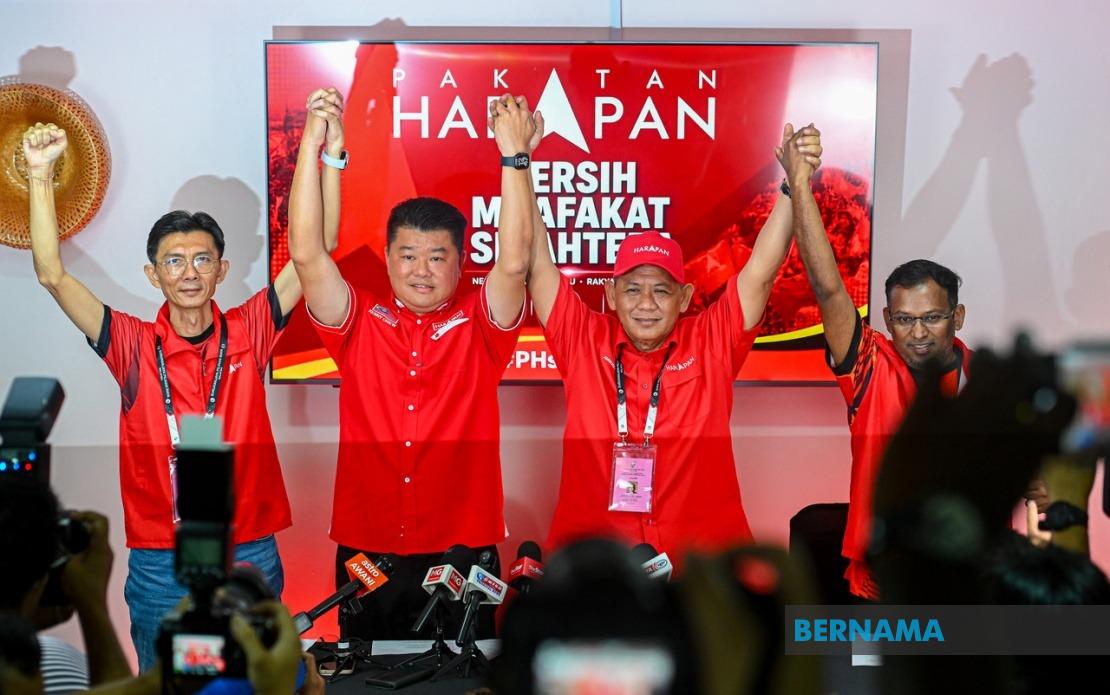
The Pakatan Harapan coalition in Negeri Sembilan has moved swiftly to counter claims of fractured unity within its ranks, with state party chairman Datuk Seri Aminuddin Harun publicly asserting that all major stakeholders remain committed to securing electoral gains across the Port Dickson parliamentary constituency. Speaking in Port Dickson on July 20, Aminuddin emphasised that both the party's leadership structures and ground campaign machinery have maintained productive working relationships as they prepare for the August 1 state election across five contested constituencies.
The timing of Aminuddin's remarks reflects ongoing sensitivities within Malaysian coalition politics, where perceptions of internal discord can rapidly translate into electoral disadvantages. The menteri besar's intervention appears designed to address circulating speculation on social media platforms concerning the re-nomination of incumbent Chuah state assemblyman Datuk Yew Boon Lye, a matter that drew particular scrutiny following reports involving Port Dickson PKR deputy division chief Datuk Kenny Chiew Chi Kin. Rather than allowing such narratives to fester, Pakatan Harapan sought to demonstrate cohesion by framing the issue as resolved through internal consultation.
According to Aminuddin's account, the ostensible source of tension has been substantially addressed, with Chiew pledging comprehensive backing for all coalition candidates standing across the state election. This public commitment carries particular symbolic weight given Chiew's position within the party apparatus and his apparent disappointment at not securing nomination as a candidate himself. The menteri besar took care to acknowledge Chiew's contributions to the division, particularly his efforts in building party infrastructure, while simultaneously reframing his political setback as an opportunity to demonstrate organisational loyalty.
The five constituencies encompassed by the Port Dickson parliamentary seat—Chuah, Lukut, Sri Tanjung, Bagan Pinang, and Linggi—represent strategically important territory for Pakatan Harapan's broader ambitions in Negeri Sembilan. Aminuddin himself contests Linggi as the coalition's candidate, placing him directly invested in the overall performance across the parliamentary division. The Port Dickson area remains politically competitive, with the neighbouring Selangor state and its proximity to the Klang Valley making these constituencies significant for both federal and state-level considerations among Malaysian political strategists.
The Chuah seat exemplifies this competitive environment. In the 2023 state election, Yew secured victory with a margin of 6,298 votes against Perikatan Nasional competitor Tang Jay Son. However, this election cycle presents a reconfigured challenge, with Yew now facing Barisan Nasional's Pau Jeou Ching. The shifting dynamics between opposition blocs—where Perikatan Nasional appears less prominently mentioned as a primary challenger in certain constituencies—reflects the broader political reorganisation occurring across Malaysian states following recent federal developments.
Aminuddin attributed the circulation of negative speculation to deliberate attempts by unnamed parties seeking to undermine the coalition's standing. This framing positions Pakatan Harapan as a victim of coordinated campaign tactics rather than suffering genuine organisational dysfunction. Such explanations, while politically convenient, acknowledge that external actors remain focused on exploiting potential weaknesses within coalition structures. In competitive electoral environments across Malaysia, identifying and amplifying divisions within opposing coalitions remains standard tactical practice among political adversaries.
The timing of these reassurances proves significant given the condensed campaign schedule. Early voting is scheduled for July 28, with the main polling day just four days later on August 1. This compressed timeframe means that any lingering perceptions of internal disarray could impact voter behaviour before substantial opportunity exists for corrective messaging. Aminuddin's proactive statements therefore represent necessary damage control within a critical campaign window, particularly given the prevalence of social media circulation of political rumours among Malaysian electorates.
Negeri Sembilan represents important testing ground for Malaysian coalition politics more broadly. The state operates under distinctive governance arrangements given its electoral college system, making state-level polling particularly complex compared to federal or other peninsular state elections. How coalitions manage internal tensions while contesting elections in such environments carries implications for understanding party dynamics across the broader Malaysian political system. Successful coalition performance depends substantially on maintaining morale and cohesion within party ranks, particularly among division-level leadership who bear responsibility for ground mobilisation.
For Pakatan Harapan specifically, the Negeri Sembilan election occurs within a broader context of state-level contests following the 2023 general election. Coalitions must balance competing regional interests, accommodating diverse leadership ambitions while maintaining sufficient unity to present viable electoral alternatives to voters. The Port Dickson division incident illustrates how nomination disputes—inherent to any democratic party system—can acquire heightened significance when interpreted through coalition fissure narratives. Managing such inevitable disagreements without allowing them to become symbols of broader organisational breakdown represents an ongoing strategic challenge for Malaysian political leaders navigating coalition governance.

