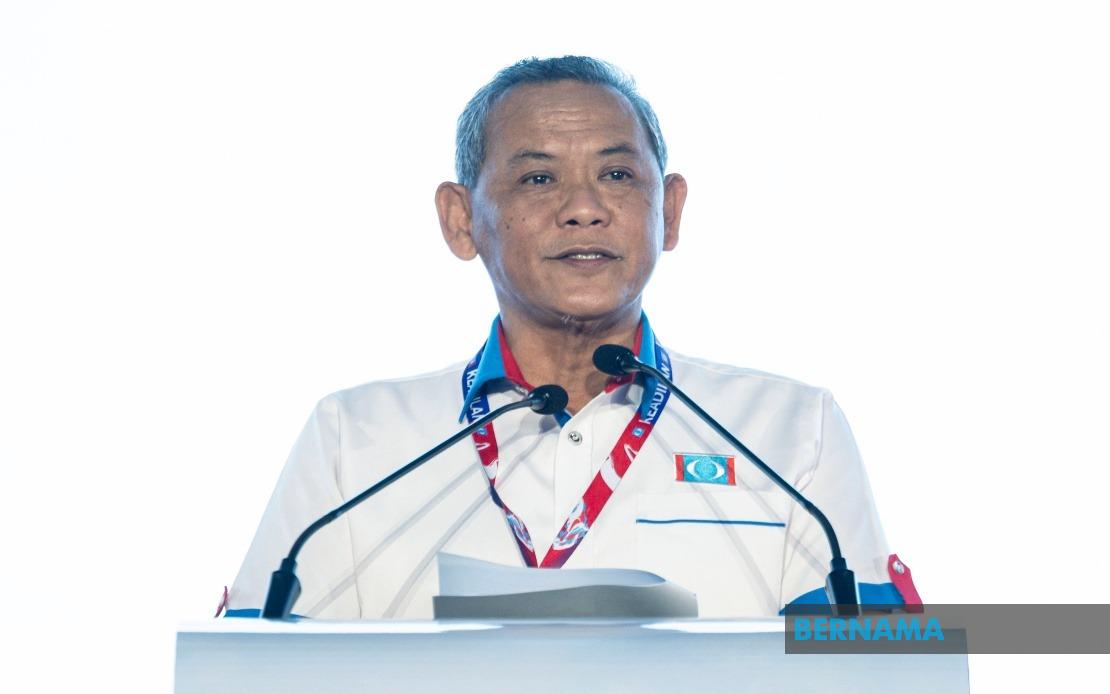
Former Negeri Sembilan Menteri Besar Datuk Seri Aminuddin Harun signalled his willingness to relinquish his role as chairman of Negeri Sembilan PKR's State Leadership Council during the party's national congress in Melaka on Friday, accepting responsibility for the coalition's disappointing electoral performance in the state. His decision to step aside comes after mounting pressure from six branch leaders within the party who had publicly called for the party hierarchy to reconsider its position following the August 1 state election results.
The Negeri Sembilan PKR faced a significant setback at the ballot box, retaining only two of the 15 state assembly seats it contested. The two seats secured were Chuah and Sri Tanjung, representing a substantial loss of ground in the state that underscores broader challenges facing the party in peninsular Malaysia's political landscape. The results marked a sharp reversal from the party's previous standing in the state and prompted considerable internal reflection about leadership and strategy.
Aminuddin's personal electoral loss added another layer to the party's troubles. The former Menteri Besar contested the Linggi seat but was defeated by a margin of 2,976 votes in a three-way race. Barisan Nasional incumbent Datuk Mohd Faizal Ramli secured victory with 9,139 votes, while Aminuddin obtained 6,163 votes and Bersatu candidate Datuk Zamri Md Said managed just 391 votes. The defeat was particularly symbolically significant given his former position as the state's chief executive, a role he had held under PKR's administration.
Addressing delegates at the Melaka International Trade Centre on the second day of PKR's National Congress, Aminuddin made a public commitment to accept accountability for the electoral reversal. He acknowledged the specific demands raised by the six state branch leaders and indicated his agreement with their assessment that the party needed fresh direction at the state level. His statement demonstrated a willingness to prioritise party unity and reform over personal political standing, a gesture that stands in marked contrast to how some politicians respond to electoral defeats.
The former Menteri Besar emphasised that he would not attempt to deflect responsibility or manufacture excuses for the loss. His language was notably direct and unambiguous, framing the decision as both a personal responsibility and a broader commitment to the party's institutional interests. He stressed that the chairmanship was not his personal property but rather a trust granted by the party membership, implying that if the organisation determined that a leadership change was necessary for its future success, such action would be justified.
Aminuddin's positioning left the ultimate decision to PKR's party leadership while signalling his full compliance with whatever course of action they determined appropriate. This approach preserved his standing within the party structure while making clear that personal ego was not a determining factor in his calculation. He indicated readiness to accept any consequences or actions the leadership deemed necessary to move the party forward in Negeri Sembilan and beyond.
However, Aminuddin offered an important reframing of the electoral setback that goes beyond mere damage control. He argued that defeat should not be interpreted as a reason to abandon the struggle or withdraw from political engagement. Instead, he characterised the loss as a foundational moment for rebuilding, suggesting that the difficult results could serve as a catalyst for deeper renewal rather than mere resignation. This perspective attempts to transform a negative outcome into an opportunity for strategic recalibration.
The Negeri Sembilan PKR's performance in the August 1 election reflected broader patterns affecting Pakatan Harapan components in several states during Malaysia's recent electoral cycle. The party's struggle to retain voter support in a traditionally competitive state indicates the complex political dynamics within peninsular Malaysia, where voter preferences have become increasingly volatile and coalition politics more fragmented. Negeri Sembilan's result raised questions about PKR's capacity to maintain relevance in state-level contests where Barisan Nasional and other opposition parties continue to compete aggressively.
The situation in Negeri Sembilan also illustrates how internal party accountability mechanisms can function in Malaysian politics, at least in principle. The willingness of branch leaders to publicly demand reassessment of state leadership and the receptiveness of a senior politician like Aminuddin to such criticism demonstrates that some party structures retain capacity for internal democratic discourse. This contrasts with other political organisations where such dissent might be suppressed or marginalised.
Aminuddin's decision carries implications for PKR's organisational coherence and succession planning in the state. The party will need to identify and develop alternative leadership capable of reversing electoral trends and reconnecting with voters who shifted away from PKR in the recent contest. The transition also provides an opportunity to implement fresh strategies and potentially restore ground-level party organisation that may have atrophied during the previous administration.
For Malaysian readers following Negeri Sembilan politics, Aminuddin's move represents a significant moment in state-level PKR politics with potential ramifications for the broader opposition landscape. The manner in which he has accepted accountability and the party's subsequent actions in selecting new leadership will provide indicators of whether PKR can genuinely reform and rebuild in the state, or whether the party faces deeper structural challenges that personnel changes alone cannot address.
The resolution of this internal PKR matter comes as the party navigates its position within the Pakatan Harapan coalition and attempts to chart a course through Malaysia's increasingly complex and competitive political environment. How effectively PKR executes its renewal strategy in Negeri Sembilan may offer lessons applicable to other states where the coalition struggles to maintain electoral ground against determined competition from both Barisan Nasional and other opposition formations.

