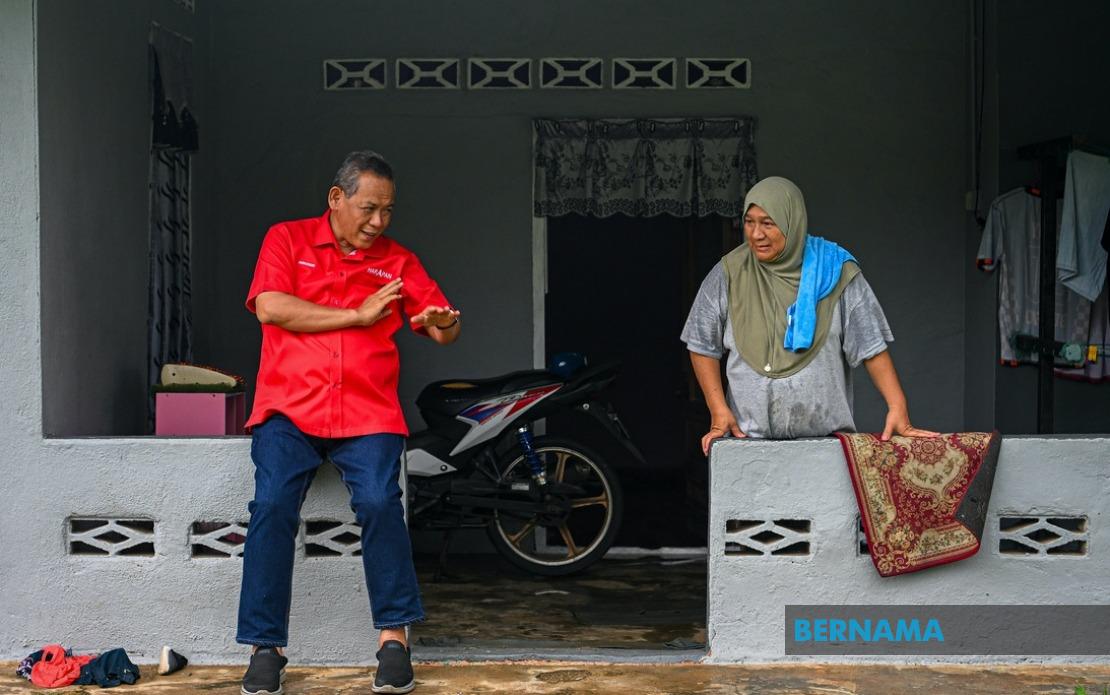
Pakatan Harapan's strategy for the Negeri Sembilan state election rests heavily on the administrative credentials and scandal-free tenure of Menteri Besar Datuk Seri Aminuddin Harun, who has governed the state across nearly two consecutive terms. The coalition is presenting clean, accountable governance and service-oriented leadership as its core electoral proposition, drawing a deliberate contrast with the political uncertainties that have characterised Malaysian politics in recent years. This approach signals PH's confidence that voters prioritise stability and competent administration over populist promises or factional appeals.
Datuk Seri Amirudin Shari, who serves as both PH's election director and Selangor Menteri Besar, highlighted during early campaign assessments that the message of transparent governance has gained traction at the grassroots level. Speaking after the first three days of campaigning, Amirudin noted that party machinery feedback demonstrates sustained voter confidence in Aminuddin's leadership model. The PKR vice-president's dual role as an adjacent state menteri besar gives him particular vantage in assessing voter sentiment across the broader Klang Valley and southern peninsula regions, where institutional performance records carry measurable political weight.
A critical element of PH's messaging involves the absence of major corruption allegations or administrative scandals during Aminuddin's time in office. Amirudin explicitly noted that the Pakatan Harapan administration in Negeri Sembilan has remained free from significant controversy throughout its tenure, a point of considerable political significance given Malaysia's recent history of state-level corruption cases. This clean record distinguishes PH's governance model from the broader perceptions of financial mismanagement that have attached themselves to previous administrations in various states, though it also raises expectations that any future PH government must maintain this standard.
The coalition is capitalising on what it describes as overwhelmingly positive feedback from voter interactions, though Amirudin cautioned that this sentiment may not always manifest in large public rallies or conventional campaign metrics. Instead, PH is relying on its established grassroots network to translate diffuse voter satisfaction into actual electoral support. This distinction matters strategically: while opposition turnout at major rallies can appear formidable, ground-level conversations and household engagement often provide more reliable indicators of voting behaviour patterns, particularly in state-level contests where local governance records weigh more heavily than national political theatre.
Amirudin's personal credibility as Port Dickson Member of Parliament adds another dimension to PH's positioning. Beyond his role directing the election campaign, his established presence in parliamentary politics and reputation for competent administration provides a counterweight to any claims that Pakatan Harapan lacks depth in experienced governance figures. The coalition is essentially leveraging its proven ability to produce credible state-level leaders, a quality that becomes increasingly important as voters across Malaysia assess whether PH possesses sufficient administrative talent to govern multiple states simultaneously.
Prime Minister Datuk Seri Anwar Ibrahim's personal involvement in the campaign features prominently in PH's strategy. The coalition leadership has drawn explicit parallels between the party's recent successful campaign in Johor and anticipated outcomes in Negeri Sembilan, suggesting that Anwar's national profile and public confidence in his administration translate into measurable electoral benefits for party candidates contesting at state level. This calculation reflects evolving Malaysian political dynamics, where national leadership approval ratings increasingly influence outcomes in sub-national elections, particularly when the same coalition controls both federal and state government.
The Negeri Sembilan electorate comprises 889,490 registered voters across the state, a substantial base that reflects the region's mixed urban and rural character. The electoral roll includes 867,151 ordinary voters alongside 16,884 military personnel and their spouses and 5,455 police personnel designated as early voters, reflecting Malaysia's constitutional provisions for public sector workers. These security force voters often display distinctive voting patterns compared to the general population, though their overall contribution remains modest relative to the ordinary voter base. Early voting is scheduled for July 28, with the main poll conducted on August 1, following dissolution of the state assembly on June 5.
PH's electoral mathematics in Negeri Sembilan builds from the 2023 state election outcome, when the coalition secured 17 seats to establish clear control. The opposition Barisan Nasional won 14 seats while Perikatan Nasional captured five, reflecting the tripartite competition that now characterises Malaysian state politics. A majority requires control of approximately 19 of the 36 state assembly seats, meaning PH's 2023 position left it vulnerable to any significant defections or losses. The coalition's campaign strategy of emphasising governance credibility and avoiding scandal suggests recognition that its 2023 majority, while clear, provides limited room for error in securing re-election.
The manifesto that PH planned to unveil during campaigning represents a careful calibration between continuity and change. By combining ongoing administrative initiatives with new policy proposals, the coalition is signalling both satisfaction with existing governance while acknowledging voter expectations for tangible improvements. This approach contrasts with opposition platforms that typically emphasise fundamental change, allowing PH to defend its record while maintaining forward momentum. The specific content of these proposals would shape the substantive terms of the campaign, moving beyond governance reputation toward concrete commitments on economic development, infrastructure, and social programmes affecting ordinary households.
Geographically and politically, Negeri Sembilan occupies a distinctive position within Malaysia's electoral landscape. The state's proximity to Kuala Lumpur and integration within the broader Klang Valley economic region means voter preferences reflect both local governance concerns and responses to national political dynamics. Urban and semi-urban areas around Seremban dominate the electorate, though rural constituencies in northern districts retain their political significance. This mixed composition requires campaign strategies that address both metropolitan development concerns and rural service delivery expectations—a challenge that Aminuddin's two terms in office presumably position him to navigate effectively.
The coalition's emphasis on clean governance and Aminuddin's absence of scandal should be understood within Malaysia's contemporary political context. Following several years of high-profile corruption cases involving both Barisan Nasional and other political figures, voter appetites for transparent administration have visibly increased, particularly among younger, more educated constituencies. By positioning itself as the clean-governance choice, PH is appealing directly to these demographic cohorts while also attempting to inoculate itself against potential opposition attacks regarding financial mismanagement. However, this strategy also creates vulnerability should any governance controversies emerge during the campaign, as voters who have been specifically promised scandal-free administration would feel particularly betrayed.
Looking beyond the immediate electoral contest, Negeri Sembilan's outcome carries implications for PH's broader governance coalition. Retaining state governments where the party has established credible records reinforces national-level confidence in Pakatan Harapan's administrative capacity. Conversely, losing control of any state would generate opposition claims that PH's governance model has faltered, potentially affecting the coalition's positioning for eventual federal elections. This elevation of state contests to national significance reflects Malaysia's increasingly integrated political system, where sub-national elections now function as proxies for assessing the federal government's performance and public support trajectory.

