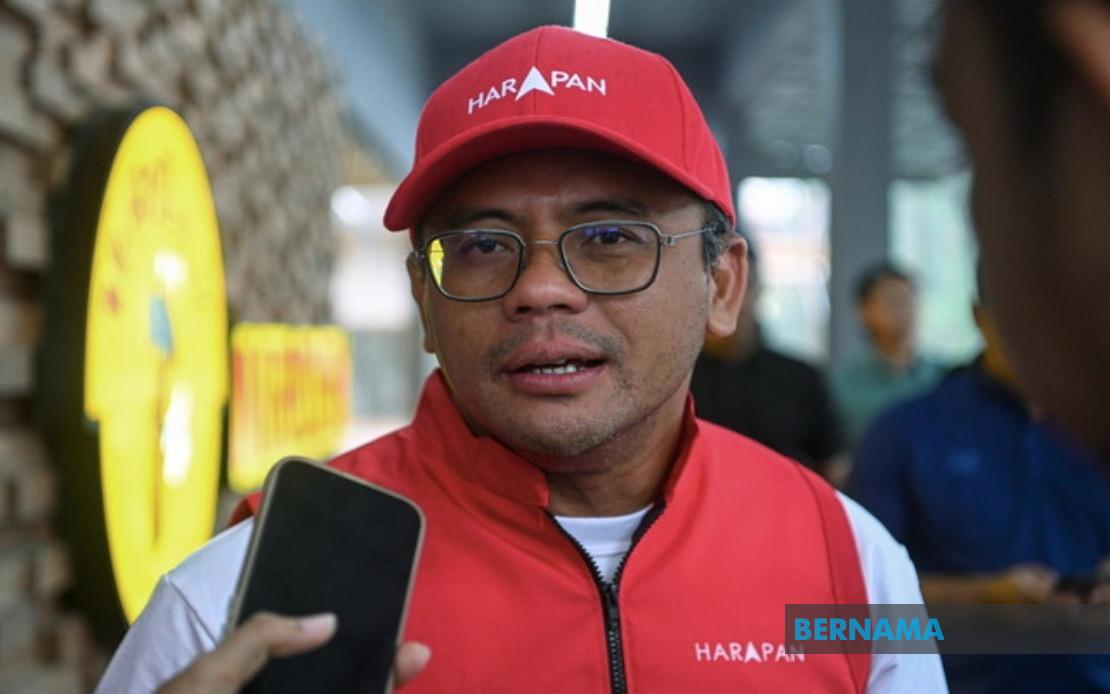
Pakatan Harapan's election director Datuk Seri Amirudin Shari has made a direct appeal to voters in Negeri Sembilan to exercise their democratic right in the state election scheduled for August 1, framing ballot participation as a fundamental civic responsibility. Speaking in Port Dickson following a campaign walkabout with PH Linggi candidate and current Negeri Sembilan Menteri Besar Datuk Seri Aminuddin Harun, Amirudin emphasized the importance of voter engagement despite challenging weather conditions that may affect the election period.
Amirudin's appeal carries particular strategic relevance given the geographic circumstances of Negeri Sembilan's electorate. Many residents in the state maintain employment in the Klang Valley, Malaysia's industrial and commercial heart, creating a potential disadvantage in mobilizing votes since workers must return to their home constituencies to cast ballots. However, Amirudin highlighted that the state's compact geography and proximity to Selangor mean voters do not face the prohibitive travel distances that characterized the Johor state election, where voters had to undertake lengthy journeys to participate. This distinction underscores PH's recognition that accessibility to polling stations can significantly influence voter turnout, and by extension, electoral outcomes.
The Selangor Menteri Besar's message reflects broader concerns within the coalition about ensuring maximum participation in what is widely viewed as a crucial test of political support in the crucial central region. The appeal to fulfil civic duty transcends mere get-out-the-vote rhetoric; it positions voting as a moral obligation rather than a choice, a framing particularly important for a coalition seeking to consolidate its hold on a state that has become politically competitive.
Beyond the immediate appeal for voter participation, Amirudin announced that Pakatan Harapan plans to organize a 'Munajat Perdana' — a special prayer gathering with religious and spiritual dimensions — on the evening of July 30, just hours before polling day. This event will be graced by Prime Minister Datuk Seri Anwar Ibrahim, signifying the highest-level political commitment from the federal government to the Negeri Sembilan contest. Such gatherings serve multiple purposes: they provide an opportunity for spiritual reflection aligned with Malaysian Islamic values, while simultaneously offering a platform for national leadership to reinforce messaging about the election's importance.
The scale of eligible participation in Negeri Sembilan demonstrates both the stakes and complexity of the election. According to election authorities, 889,490 voters are registered to participate, comprising 867,151 ordinary voters alongside 16,884 military personnel and their respective spouses, and 5,455 police personnel. This composition reflects the state's demographic profile and the significant presence of security force personnel, a voting bloc that has historically shown different engagement patterns compared to civilian voters.
Early voting mechanisms have been established to accommodate those with legitimate reasons for advance participation, with polling taking place on Tuesday preceding the main election day. This stagewise approach attempts to maximize convenience and accessibility, recognizing that some voters face scheduling conflicts or occupational constraints that might otherwise prevent their participation on August 1. The provision for early voting reflects electoral best practices increasingly adopted across Malaysian states to improve voter accessibility.
For Pakatan Harapan, achieving strong turnout in Negeri Sembilan holds strategic importance beyond the state itself. As a central region state with a diverse mix of urban and semi-urban constituencies, Negeri Sembilan serves as a barometer for coalition support among working-class and middle-class voters who commute to the Klang Valley. The result will likely influence perceptions about the coalition's grassroots momentum heading into potential federal elections, making the turnout figure itself a closely watched metric.
Amirudin's specific acknowledgment of weather challenges demonstrates sophisticated campaign planning. August in Malaysia typically coincides with monsoon conditions in certain regions, and acknowledgment of this obstacle while still urging participation signals that the coalition views the election as sufficiently important to warrant commitment regardless of environmental conditions. This messaging also implicitly acknowledges that weather-related low turnout could disadvantage any party, making mutual appeals for participation rhetorically sound.
The campaign strategy reflected in Amirudin's statements and the planned spiritual gathering shows Pakatan Harapan deploying multiple persuasion channels simultaneously — rational arguments about accessibility, moral framing around civic duty, and spiritual mobilization through religious gatherings. This multifaceted approach recognizes that different voter segments respond to different messaging modes, and by combining practical, ethical, and spiritual appeals, the coalition aims to overcome potential apathy or competing demands on voters' time.
The August 1 election will test not merely which coalition can secure the most seats, but whether either major political force can mobilize Negeri Sembilan's substantial electorate to meaningful participation levels. Amirudin's pre-election push for turnout suggests PH recognizes that victory margins may hinge as much on who can better motivate their supporters to actually vote as on core voter preference distributions.

