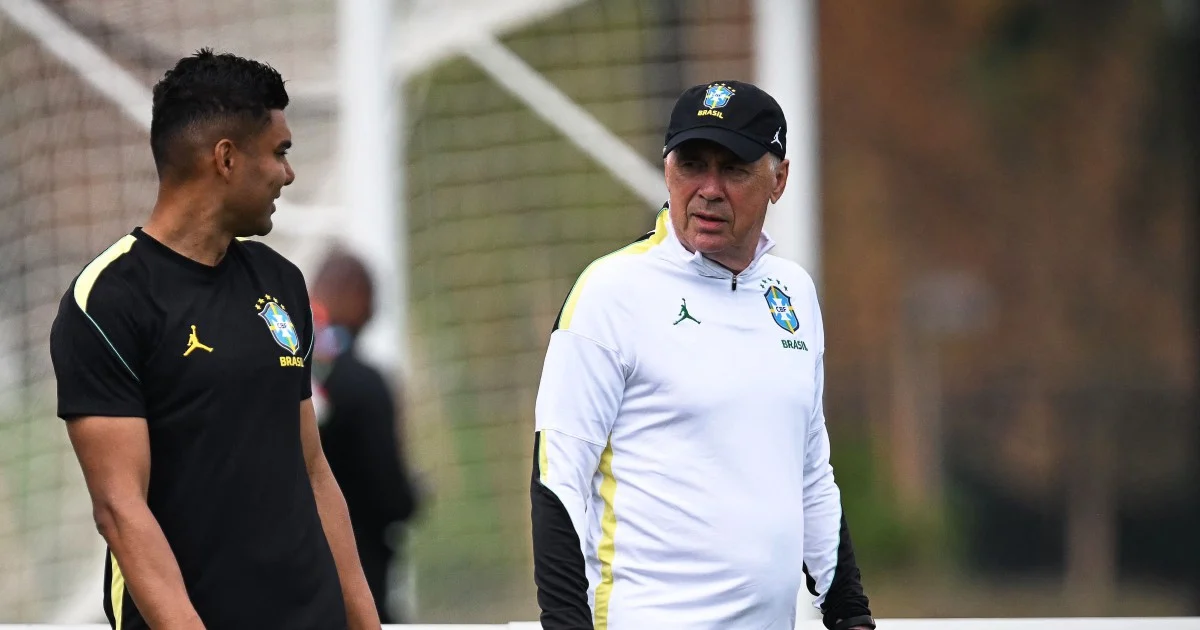
Brazil's World Cup campaign has gotten off to a disappointing start, but head coach Carlo Ancelotti is taking the setback in stride. The five-time champions drew 1-1 with Morocco in their opening Group C fixture in Philadelphia, and rather than show signs of alarm, the veteran Italian tactician is treating the result as a learning opportunity. With Haiti up next on Friday, Ancelotti sees the encounter as the ideal platform to address the defensive and offensive frailties that emerged during the Morocco encounter.
Ancelotti's measured response to the draw reflects his experience at the highest levels of European and international football. A man who has won the Champions League multiple times and managed some of Europe's biggest clubs, he understands that tournament football rarely unfolds perfectly from the start. The Brazilian coaching staff has identified specific areas requiring adjustment, and rather than make wholesale changes, Ancelotti appears intent on fine-tuning his team's approach for the Haiti match. This measured philosophy stands in stark contrast to the immediate panic that sometimes grips teams and their supporters after opening-round disappointments.
The draw with Morocco revealed vulnerabilities that could prove costly if left unaddressed. Brazil's attack, typically one of their greatest strengths, struggled to find its rhythm against a well-organised Moroccan defence. Meanwhile, defensive lapses allowed Morocco to equalise, suggesting coordination issues in the backline. These are the kinds of problems that compound if ignored, but they are also relatively straightforward to correct with proper preparation and focus. For a squad containing world-class talent, such technical issues are more about tactical execution and concentration than individual quality.
Haiti represents a vastly different challenge compared to the Moroccan defensive setup. The Caribbean nation enters the tournament as relative underdogs, making this a match where Brazil can reassert dominance and restore confidence within the squad. A convincing victory would not only place the Seleção back on track but also send a psychological signal to potential later opponents that the opening performance was merely a blip. Ancelotti's calm demeanour will be crucial in communicating this message to his players.
The timing of facing Haiti is also fortuitous for Brazil's tournament trajectory. Other Group C matches will provide additional context for where the team stands, but securing three points before the knockout stages become clearer represents essential business. The group stage offers opportunities to experiment tactically and build match rhythm without the immediate pressure of elimination. This reality undoubtedly influences Ancelotti's relaxed public posture regarding the Morocco outcome.
For Malaysian and Southeast Asian fans familiar with the regional football culture, Brazil's approach here offers instructive lessons about maintaining perspective. In domestic competitions across the region, teams sometimes overreact to single negative results, making knee-jerk tactical changes that destabilise established systems. Ancelotti's philosophy suggests that a more measured evaluation period—identifying specific problems and implementing targeted solutions—often yields better long-term results than panic-driven overhauls.
The composition of Brazil's squad also justifies Ancelotti's confidence. Despite the Morocco setback, the team possesses sufficient quality to compete for the tournament. Key players are fit and available, and the recent disappointing result may even provide additional motivation for the Haiti encounter. In tournament football, momentum can shift dramatically with a single strong performance, and Ancelotti understands this dynamic well.
Defensively, Brazil must tighten up considerably. The equaliser conceded to Morocco suggested moments of carelessness that tournament opponents will eagerly exploit. Haiti's threat profile differs significantly, but establishing defensive discipline now will prove invaluable in later matches against stronger attacking sides. This is precisely the kind of issue that can be systematically addressed through focused training and video analysis during the short preparation window before kickoff.
Offensively, Brazil needs to rediscover the fluidity and incisiveness that characterises their best football. The Morocco match saw moments of promise but lacked the cutting edge expected from a side containing such creative talent. Against Haiti, Brazil should have ample possession and space to develop attacking patterns, providing the opportunity to build confidence in their attacking movements. Converting such dominance into goals will be essential.
Ancelotti's calm demeanour also reflects the reality that single group-stage results, while important, do not define entire tournaments. Brazil has weathered poor performances before and gone on to achieve considerable success. History suggests that teams that overreact to early setbacks often struggle more than those that maintain perspective and focus on incremental improvement.
The Haiti match will be closely watched not just for the result but for the quality of Brazil's performance. A dominant display coupled with an emphatic victory would suggest that Ancelotti's assessment—that the Morocco draw was merely a minor stumble rather than a sign of fundamental problems—proves correct. Conversely, a narrow or unconvincing win might reinforce concerns about the team's current form.
Looking ahead, Ancelotti's approach this early in the tournament sets the tone for how Brazil will respond to pressure throughout their campaign. His refusal to panic sends a message of stability and confidence that should resonate through the squad. In international football, coaching demeanour often matters as much as tactical acumen, and a calm, composed leader can help talented players perform at their best when it matters most.

