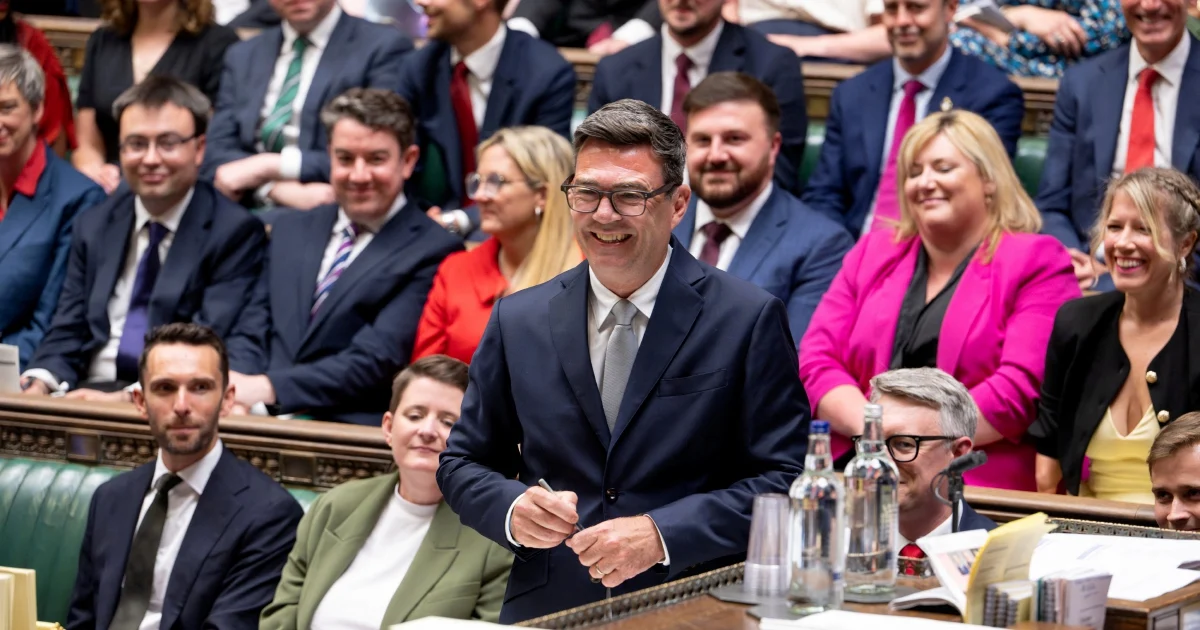
Andy Burnham, the long-serving mayor of Greater Manchester, received an enthusiastic reception in Westminster's parliament on Monday following Keir Starmer's shock announcement that he would be stepping down as Labour leader. The political development has thrust the northern English politician into the spotlight as a leading contender to assume the premiership, marking a significant turning point in British Labour politics after a turbulent period under Starmer's stewardship.
Burnham's prominence within the party reflects a broader shift in Labour's strategic thinking, with party figures increasingly looking toward figures who can articulate the concerns of working-class constituencies and industrial heartlands. His decade-plus tenure managing the affairs of Greater Manchester, a metropolitan region encompassing some four million people, has positioned him as a politician with genuine administrative experience beyond Westminster's confines. This track record resonates within Labour circles as the party contemplates its direction and seeks to rebuild public confidence following recent electoral and governance setbacks.
The Greater Manchester position itself has served as a testing ground for Burnham's political philosophy and capacity to govern at scale. Since taking office, he has overseen significant devolved powers relating to transport, economic development, and public health, allowing him to implement policy without being constrained by Westminster's partisan gridlock. These responsibilities have enabled him to build a political identity distinct from the typical Labour apparatus, establishing himself as a pragmatist willing to negotiate directly with central government and private sector partners.
Burnham's appeal extends beyond his executive credentials into his ability to communicate across different social constituencies. Unlike some Westminster-centric politicians, he has developed a reputation for accessibility and willingness to engage with grassroots community concerns. This approachability, combined with his background as a former health secretary and social care minister, gives him a policy foundation that spans multiple governmental domains. His experience navigating the complexities of public health administration has particular resonance given the NHS's continued centrality to British political discourse.
For Malaysian and Southeast Asian observers of British politics, Burnham's emergence reflects broader questions about regional devolution and the integration of subnational leaders into national governance structures. The model of directly elected mayors with genuine executive authority—now established in several English metropolitan areas—represents an approach to distributing power that some observers in our region have contemplated as alternative governance frameworks. Burnham's success in this role offers international lessons about how regional leaders can accumulate political capital and influence beyond their immediate jurisdictions.
The succession contest that Starmer's departure has triggered will likely unfold over coming weeks, with multiple candidates potentially entering the field to claim Labour's top job. Burnham enters this competition with several structural advantages, including a strong organisational base within his regional constituency and demonstrated ability to raise funds and mobilise volunteers. However, he will face challenges from other potential candidates who may argue for different strategic directions or claim superior credentials in specific policy domains.
Starmer's resignation stems from mounting pressures that have accumulated throughout 2024, encompassing disappointing electoral performances, internal party discord, and controversies surrounding governmental decision-making. The transition represents Labour's third leadership contest in the current parliamentary cycle—an unusual situation reflecting the party's ongoing struggle to establish a stable strategic direction and stable governance model. Each transition offers opportunities for different factions within Labour to advance competing visions of the party's purpose and policies.
Burnham's positioning as a potential successor carries implications beyond British politics. His potential elevation would signal Labour's commitment to elevating figures with demonstrated administrative capability and cross-regional appeal, rather than purely Westminster-focused politicians. This preference could reshape how the party recruits talent and develops leadership pipelines, potentially encouraging more experienced local government officials to consider parliament as a stepping stone rather than a parallel career track.
The broader political backdrop against which Burnham's potential ascendancy would occur includes significant challenges facing Britain's economy, public services, and international standing. Any new Labour leader will inherit responsibility for addressing structural issues within the NHS, addressing educational achievement gaps, and managing Britain's relationship with Europe and global partners. Burnham's experience managing cross-sector partnerships and negotiating with devolved authorities may provide useful experience for navigating these multifaceted challenges.
As the Labour Party contemplates its leadership options, observers across the Commonwealth and internationally will watch how the contest unfolds. Burnham's prominence demonstrates that genuine alternative governance experience—rather than lengthy parliamentary service alone—increasingly commands respect within Britain's major political parties. For regional leaders throughout the UK and comparable democracies, his trajectory illustrates how effective subnational administration can create pathways to national influence and executive opportunity.

