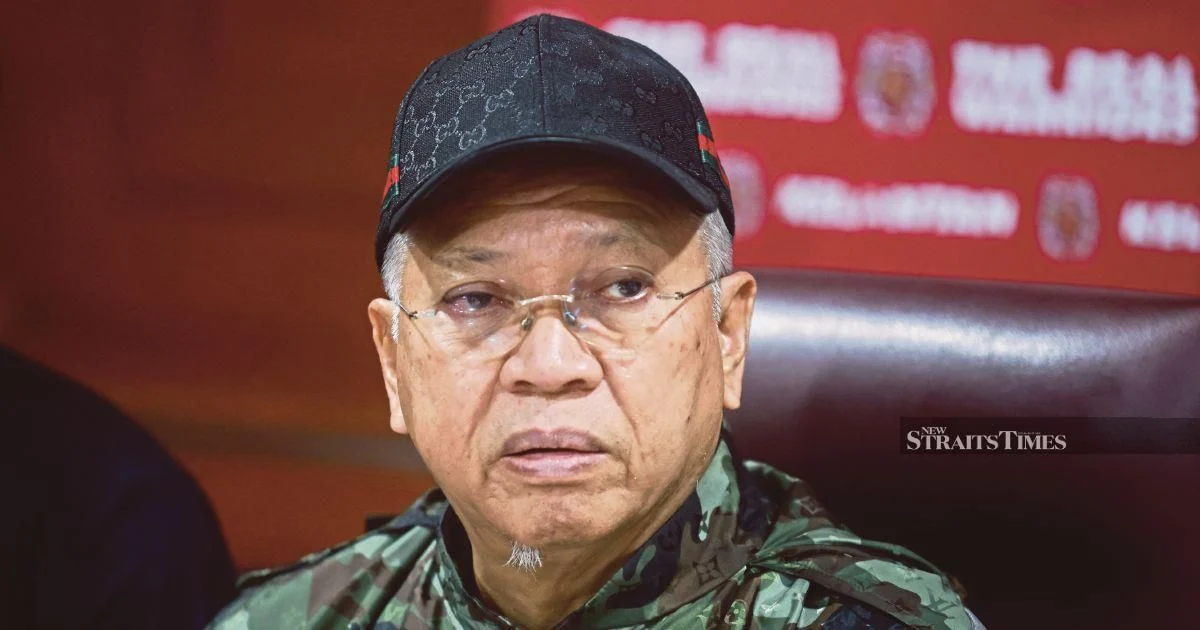
Tan Sri Annuar Musa disclosed in Kota Baru that he has undertaken multiple personal attempts to resolve the escalating tensions between Pas and the rival factions operating within Bersatu, though these efforts have ultimately proven unsuccessful. The candid admission from the senior Perikatan Nasional figure underscores the mounting pressures fracturing the coalition that has governed Malaysia since the 2022 elections, with internal divisions threatening to erode the alliance's ability to maintain parliamentary control and govern effectively.
The revelation carries significant weight coming from Annuar, whose position as a moderate voice within the coalition grants him considerable influence across different party lines. His public acknowledgment of failure signals that the divisions separating these parties run deeper than routine political disagreements, pointing instead to fundamental ideological and strategic incompatibilities that have resisted conventional mediation attempts. The timing of his comments in Kota Baru, a stronghold of Pas influence in Kelantan, suggests a deliberate effort to address party members and supporters who have grown increasingly concerned about the coalition's direction.
Pas, the Islamic-oriented party that has emerged as a dominant force in Perikatan Nasional, has previously clashed with Bersatu over governance priorities, resource allocation, and the trajectory of religious policy. These disputes have periodically threatened to destabilize the coalition, forcing leadership from both parties to engage in damage control. The emergence of multiple factions within Bersatu has complicated these dynamics substantially, fragmenting what should theoretically be a unified negotiating position and creating parallel power centres that complicate consensus-building efforts across the coalition.
Bersatu's internal schisms reflect broader personality conflicts and competing visions for the party's future direction, particularly following the departure of several high-profile figures and shifting allegiances within its membership. Some factions remain loyal to specific leaders, while others have gradually gravitated toward alternative political alignments or attempted to carve out distinct policy platforms within the broader coalition framework. This fragmentation has rendered it increasingly difficult for any single voice to represent Bersatu's interests in coalition negotiations, forcing other parties including Pas to engage with multiple interlocutors simultaneously.
Annuar's failed reconciliation efforts suggest that superficial bridge-building mechanisms and behind-the-scenes negotiations may no longer suffice to manage these tensions. The persistence of divisions despite intervention from senior figures indicates that party leaders may lack the political will or structural authority to impose discipline on their respective factions, or that the underlying conflicts have become too acute for conventional diplomatic channels to address. This erosion of coalition coherence arrives at a particularly vulnerable moment, as Perikatan Nasional faces ongoing scrutiny regarding governance performance and maintains a relatively narrow parliamentary majority that leaves little room for defections or abstentions.
The implications for Malaysian politics extend beyond internal coalition management. A fractious Perikatan Nasional could invite opportunistic moves from opposition parties seeking to exploit disunity, or encourage individual MPs to test their leverage through threats of defection. The government's capacity to advance its legislative agenda and respond decisively to national challenges becomes constrained when coalition partners cannot maintain alignment on core issues, potentially hampering economic policy implementation and security responses at critical junctures.
For Pas specifically, maintaining coalition unity serves strategic interests that extend beyond power-sharing arrangements. The party has used its Perikatan Nasional membership to amplify influence over national religious policy and advance its vision of Islamic governance, achievements that would become jeopardized if the coalition fractured and forced new political realignments. Conversely, Bersatu's fractured state may actually provide certain factions with incentives to remain within the coalition, since departure would mean abandonment of federal resources and ministerial portfolios currently accessed through coalition membership.
Regional observers view these internal Malaysian dynamics with particular interest given their potential to reshape Southeast Asia's largest Islamic-majority democracy at a moment of broader regional political flux. Coalition instability in Kuala Lumpur could influence calculations in neighbouring countries regarding engagement with Malaysian institutions and diplomatic priorities, while signalling weakness that rivals might seek to exploit in territorial or commercial disputes.
Annuar's willingness to publicly disclose his failed reconciliation attempts represents either an acknowledgment that confidential negotiations have exhausted their utility, or a deliberate strategy to pressure recalcitrant factions by exposing the seriousness of coalitional tensions to wider audiences. Either interpretation suggests that Perikatan Nasional leadership recognises the gravity of current divisions and the limitations of incremental conflict management approaches. Whether fresh mediation attempts, structural reforms to coalition decision-making processes, or more direct executive intervention will follow remains uncertain, but the trajectory points toward intensifying rather than diminishing coalition pressures in coming months.

