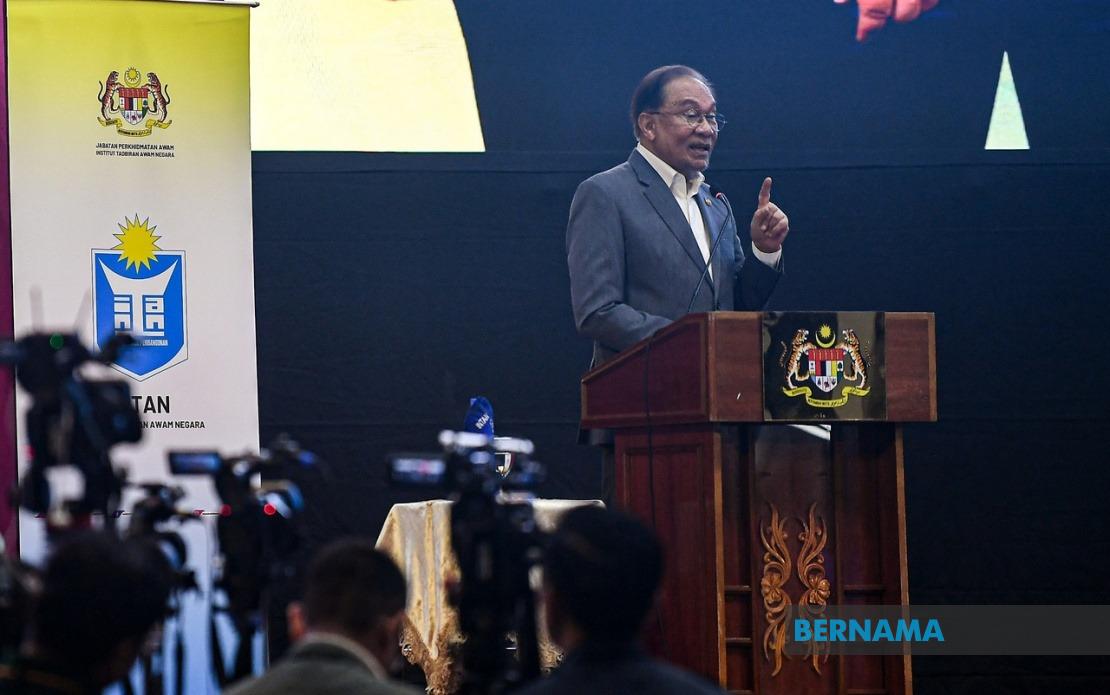
Prime Minister Datuk Seri Anwar Ibrahim has extended an apology to those who may have interpreted his direct and forceful communication style towards civil servants as excessively harsh, acknowledging feedback from colleagues who have counselled him on the appropriate tone expected of his office. Speaking in a video statement released on Facebook following his address at a Central Zone civil service gathering held at Universiti Islam Selangor, Anwar struck a reflective note about the tension between his natural inclination towards passionate oratory and the measured demeanour typically associated with a prime ministerial role.
Anwar revealed that multiple advisors have encouraged him to moderate his approach, urging him to speak in a gentler manner and engage more diplomatically with public servants and the broader population. His acknowledgment of this counsel demonstrates a willingness to consider perceptions of his leadership style, even as he grapples with the apparent contradiction between projecting prime ministerial dignity and expressing genuine conviction about matters affecting national development. The Premier's candid reflection underscores the delicate balance that political leaders must maintain between commanding respect through measured composure and conveying authentic passion for their agenda.
Despite his apology, Anwar remained unapologetic about the substance of his message, framing his firm tone as a natural consequence of his deep emotional investment in the nation's progress and his commitment to ensuring governmental effectiveness. He characterised his approach not as a character flaw or leadership shortcoming but rather as an expression of genuine feeling, suggesting that his intensity stems from sincere concern rather than temperamental excess. This distinction is crucial for understanding Anwar's perspective: he views his forthright manner as a reflection of earnestness rather than impropriety.
The Prime Minister articulated his rationale for addressing civil servants with particular directness, emphasising their pivotal position within the machinery of state. According to Anwar, the public sector occupies a unique and irreplaceable role as the primary instrument through which government policies are translated into tangible outcomes affecting millions of Malaysians. By this logic, his firm communication style represents a deliberate effort to underscore the gravity of their responsibilities and the elevated standards he expects them to maintain. Rather than viewing his tone as a personal failing, Anwar positioned it as a leadership technique designed to motivate and mobilise the civil service toward greater performance.
This explanation reveals important assumptions about public sector management and institutional culture in Malaysia. Anwar appears to believe that civil servants, by virtue of their professional standing and critical role, warrant and can benefit from direct, unvarnished communication about performance expectations and national priorities. His perspective challenges softer approaches to bureaucratic leadership, suggesting instead that clarity and firmness, when grounded in genuine commitment, can serve as motivational forces rather than demoralising ones. Whether this approach proves effective in practice remains an open question that will likely shape civil service morale and productivity during his tenure.
The incident also highlights the broader challenge facing Anwar as he navigates the expectations placed upon prime ministerial conduct in contemporary Malaysia. Modern democratic governance increasingly emphasises inclusive dialogue, emotional intelligence, and collaborative decision-making, yet Anwar's natural temperament appears to incline toward more assertive and direct forms of communication. His willingness to apologise conditionally while defending his underlying motivations suggests he is attempting to thread a needle between authenticity and institutional decorum, between leading with conviction and respecting sensitivities within the civil service.
From a Southeast Asian governance perspective, Anwar's reflections touch upon perennial tensions in the region's public administration. Many Malaysian and regional bureaucracies retain hierarchical structures and expectations that can either accommodate or resist more intense forms of leadership communication. Anwar's approach may resonate with those who believe that economic development and institutional excellence require demanding standards, while others may view it as incompatible with the more collaborative management styles increasingly championed in international development and governance literature. The Prime Minister's comments thus implicitly engage with broader debates about what leadership style best serves Malaysia's aspirations.
The video statement also carries significance in how it was disseminated and framed. By releasing his apology and explanation through Facebook rather than through traditional parliamentary or media channels, Anwar employed a more direct and personal medium to address perceptions about his conduct. This choice itself reflects a leadership philosophy that values accessibility and direct engagement with the public and the bureaucracy. The informal nature of the medium may have allowed Anwar to present a more candid and humanised version of his thinking than would have emerged from a formal statement.
Moving forward, Anwar's comments suggest he will likely continue to employ direct communication with civil servants while remaining alert to feedback about tone and approach. His acknowledgment of colleagues' counsel indicates he is not entirely dismissive of concerns about excessive harshness, even if he refuses to retreat from his fundamental conviction that passionate, earnest leadership is appropriate and necessary. This calibration will be worth monitoring as an indicator of how Anwar's leadership style evolves and how the civil service responds to his approach. The outcome will have implications not only for administrative effectiveness but also for the broader political culture and institutional health of Malaysia.

