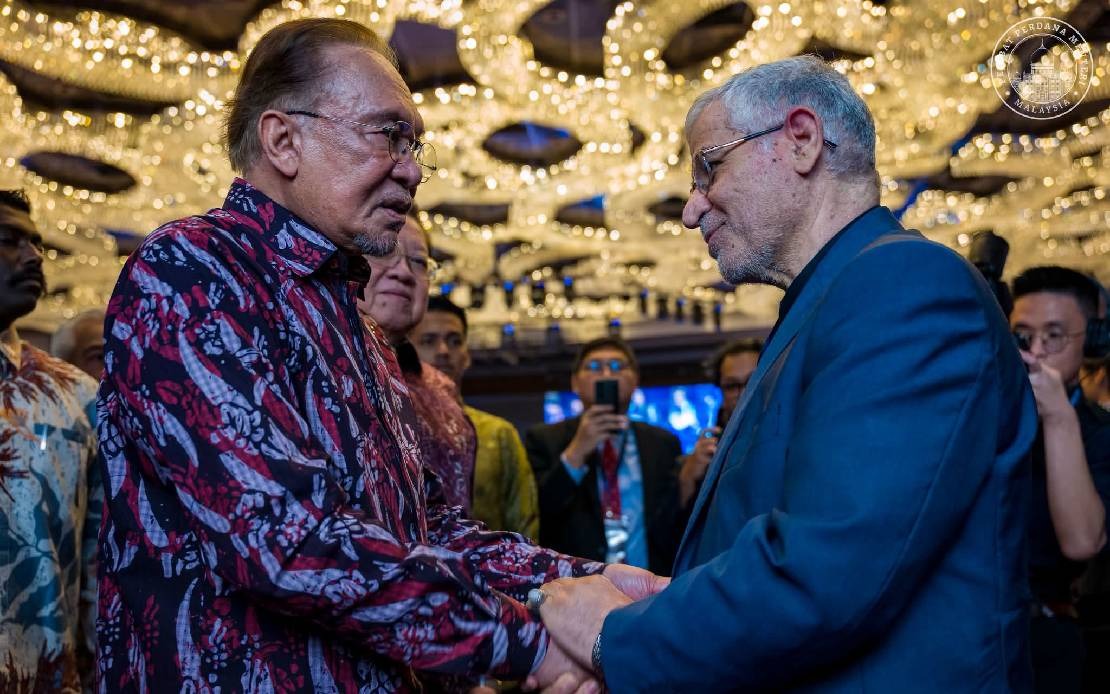
Prime Minister Datuk Seri Anwar Ibrahim has conveyed his regrets to the Iranian government for declining to participate in the state funeral and commemorative ceremonies honouring Iran's Supreme Leader, the late Ayatollah Ali Khamenei. The apology was delivered during a bilateral meeting between Anwar and Iranian Ambassador to Malaysia Valiollah Mohammadi at the 39th Asia-Pacific Roundtable conference in Kuala Lumpur on Tuesday, with the Premier subsequently sharing the details via social media.
Anwar's absence from the high-profile event reflects the competing demands facing Malaysian leaders managing international obligations and domestic governance responsibilities. Rather than attend the funeral proceedings personally, the Prime Minister designated Agriculture and Food Security Minister Mohamad Sabu to represent Malaysia at the ceremonies, a decision that underscores the diplomatic importance Kuala Lumpur places on its relationship with Tehran despite the geographic and political distance between the nations.
The 86-year-old Khamenei, who had served as Iran's Supreme Leader since 1989, passed away at his residence in central Tehran on February 28 following a combined military operation involving the United States and Israel. His death marked a pivotal moment in Iranian politics and regional Middle Eastern affairs, prompting an extended state funeral process that would span multiple days and locations across the Islamic Republic.
The funeral arrangements themselves carry significant symbolic weight in Iranian tradition and governance. The state farewell ceremony stretches across six days commencing July 4, with initial funeral processions occurring in both Tehran and Qom before the Supreme Leader's final interment at the Imam Reza Shrine in Mashhad on July 9. This extended timeline reflects the magnitude of Khamenei's position within Iran's political system and the scale of national mourning observed in the country.
Though unable to attend in person, Anwar made a point of reiterating Malaysia's sympathies with both the Iranian government and its population during the period of national grief. The expression of condolences represents a standard diplomatic gesture, yet it carries additional significance given Malaysia's historical relationships within the Islamic world and its efforts to maintain balanced ties across different regional players and ideological camps.
Anwar's explicit citation of "unavoidable official commitments" as the reason for his non-attendance provides insight into the scheduling pressures contemporary national leaders face when managing state affairs. The Asia-Pacific Roundtable conference itself represents the kind of multilateral engagement that demands a head of government's presence, particularly for a nation like Malaysia that has strategic interests throughout the region and seeks to maintain influence within regional institutions and forums.
The delegation of ministerial representation serves multiple diplomatic purposes. By sending Mohamad Sabu rather than leaving the position vacant, Malaysia demonstrates respect for the occasion while signalling that higher-level attendance constraints prevent the Prime Minister's participation. This approach preserves diplomatic relationships without creating awkwardness through complete absence, a balancing act that diplomatic services routinely navigate.
From a broader Southeast Asian perspective, Malaysia's engagement with Iran's succession moment reflects the region's complex positioning between major powers. While most ASEAN nations maintain working relationships with Tehran, few have the historical Islamic ties that Malaysia can leverage. The funeral attendance decision, therefore, becomes a microcosm of how regional powers calibrate their international relationships according to domestic priorities and external pressures.
Khamenei's passing and the subsequent political transitions in Iran will likely influence regional dynamics throughout Southeast Asia and beyond, given Iran's strategic significance in global energy markets, its influence in various regional conflicts, and its role in broader geopolitical competition. Malaysia's careful diplomatic management of these circumstances, through formal representation while maintaining domestic focus, reflects a pragmatic approach to navigating complex international affairs without overextending limited resources or attention.

