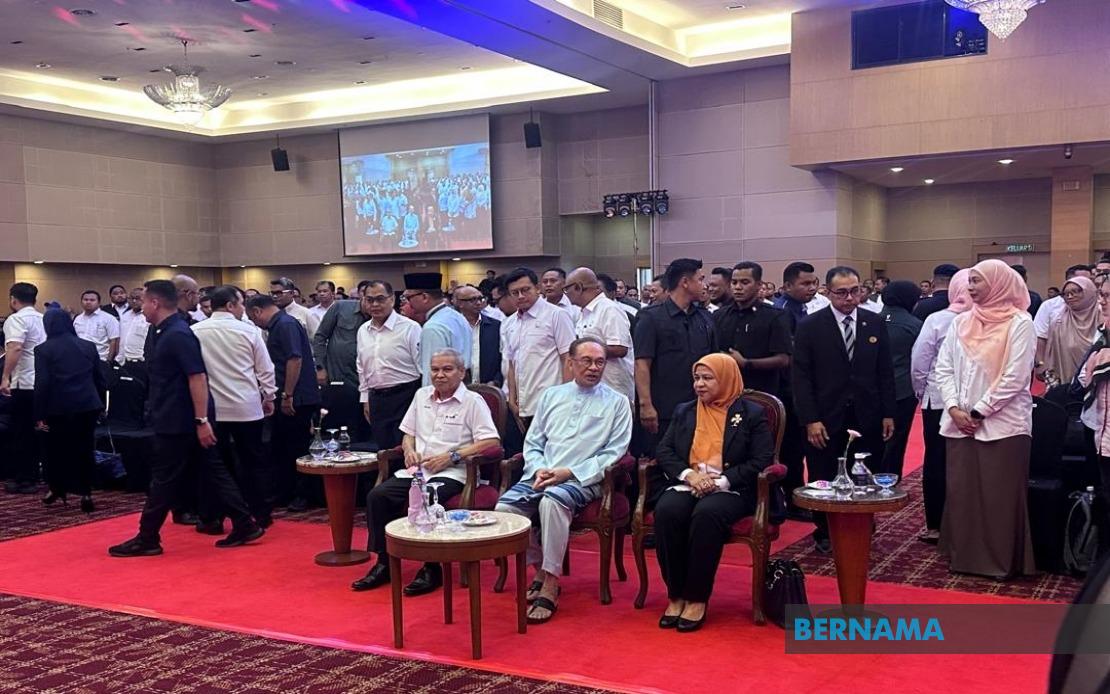
Prime Minister Datuk Seri Anwar Ibrahim has signalled that any official disclosure regarding the Federal Land Development Authority (FELDA) will be deferred until investigators complete their work, marking a methodical approach to handling the sensitive probe into the agency's operations. Speaking at the Tenera Hotel in Bangi after presiding over a dialogue session with FELDA's senior leadership, Anwar indicated that the Special Task Force has already commenced its examination and that findings would surface within a reasonable timeframe, though he refrained from specifying an exact deadline.
The investigation encompasses a broad remit, addressing governance structures, operational efficiency, and historical shortcomings within the sprawling organisation that manages state-owned agricultural land across Malaysia. Anwar's remarks underscored the dual nature of the inquiry: while understanding past failures remains necessary for institutional learning, the administration's focus tilts decidedly toward current practices and strategic direction. This distinction signals an intent to move beyond blame-seeking and towards constructive reform, a message reinforced during his interaction with FELDA chairman Tan Sri Ahmad Badri Mohd Zahir and director-general Datuk Dr Suzana Idayu Wati Osman, both of whom participated in the engagement.
FELDA has long occupied an outsized role in Malaysian political economy, serving as both a development vehicle for rural communities and a significant economic player with landholdings and commercial enterprises across the nation. The organisation's trajectory, however, has been marked by persistent questions about financial stewardship, operational transparency, and the distribution of benefits to settler families and stakeholders. Previous administrations have faced criticism over their handling of FELDA-related matters, making any comprehensive review politically consequential and institutionally important.
Anwar's decision to wait for the task force to conclude its work reflects awareness of the reputational stakes involved. Premature announcements or partial disclosures could invite accusations of selective truth-telling or political interference in an investigative process. By anchoring his position to the completion of a thorough review, the Prime Minister aims to establish credibility for whatever findings emerge and to position any reform agenda as evidence-based rather than ideologically motivated. This approach mirrors recent precedent: the government released the Royal Commission of Inquiry report on Tabung Haji, allowing public scrutiny of institutional deficiencies in that fund manager.
The timeframe for completion remains vague, with media reports previously suggesting a few months would be required before the investigation concludes. Such delays are not uncommon in complex institutional reviews, particularly where multiple governance layers, financial records spanning years, and personnel interviews must be examined. The scope of FELDA's operations—encompassing land management, settler welfare, commercial ventures, and regulatory compliance—ensures that any credible investigation cannot be rushed without sacrificing thoroughness.
Anwar's pledge to release the report publicly once finalised carries significance for stakeholder confidence and democratic accountability. FELDA settlers, many of whom depend on the authority for their livelihoods and social security, have legitimate interest in understanding how the institution operates and whether their interests are being protected. Similarly, policymakers responsible for agricultural and rural development policy require reliable data on FELDA's performance to make informed decisions about the organisation's future role and structure. Civil society groups monitoring governance will likely scrutinise the findings for evidence of systemic weaknesses or misconduct.
The investigation's focus on management improvements suggests that reformers within government recognise institutional dysfunction extending beyond individual culpability. FELDA has faced criticism over bureaucratic inefficiency, inadequate technology adoption, and misalignment between settler needs and agency programming. A task force examining these operational dimensions could yield practical recommendations for modernising processes, enhancing accountability mechanisms, and realigning the organisation with contemporary development priorities.
For Malaysian stakeholders invested in agricultural policy and rural development, the investigation outcome will shape expectations about how serious the government is regarding institutional reform. If the report documents substantial failings yet corrective measures prove inadequate, credibility erosion could follow. Conversely, if findings demonstrate genuine commitment to addressing root causes and implementing systemic change, FELDA's contribution to rural prosperity could be substantially improved.
The political dimension warrants consideration as well. FELDA settlers have historically been considered a core electoral constituency, making the organisation's health a matter of political consequence. An investigation that implicitly endorses better stewardship without appearing to assign blame selectively allows the government to claim commitment to accountability while preserving relationships with the settler community. Anwar's measured tone—focusing on forward momentum rather than recrimination—suggests awareness of these delicate political balances.
Regional observers may also find the investigation instructive. Other Southeast Asian nations manage comparable land development authorities and state enterprises, many facing similar governance challenges. How Malaysia's government handles this review could offer lessons for the region regarding institutional accountability, transparency in state enterprises, and balancing development objectives with fiduciary responsibility. The decision to publish findings enhances Malaysia's comparative transparency record, distinguishing it from peers with more secretive governance practices.
As the Special Task Force continues its work, attention will focus on whether the promised timeline holds and whether the eventual findings address public concerns comprehensively. The manner in which FELDA's investigation concludes and is disclosed will carry implications extending well beyond a single agency, touching on broader questions of how Malaysian institutions evolve and whether government can credibly commit to reform backed by evidence and transparency.

