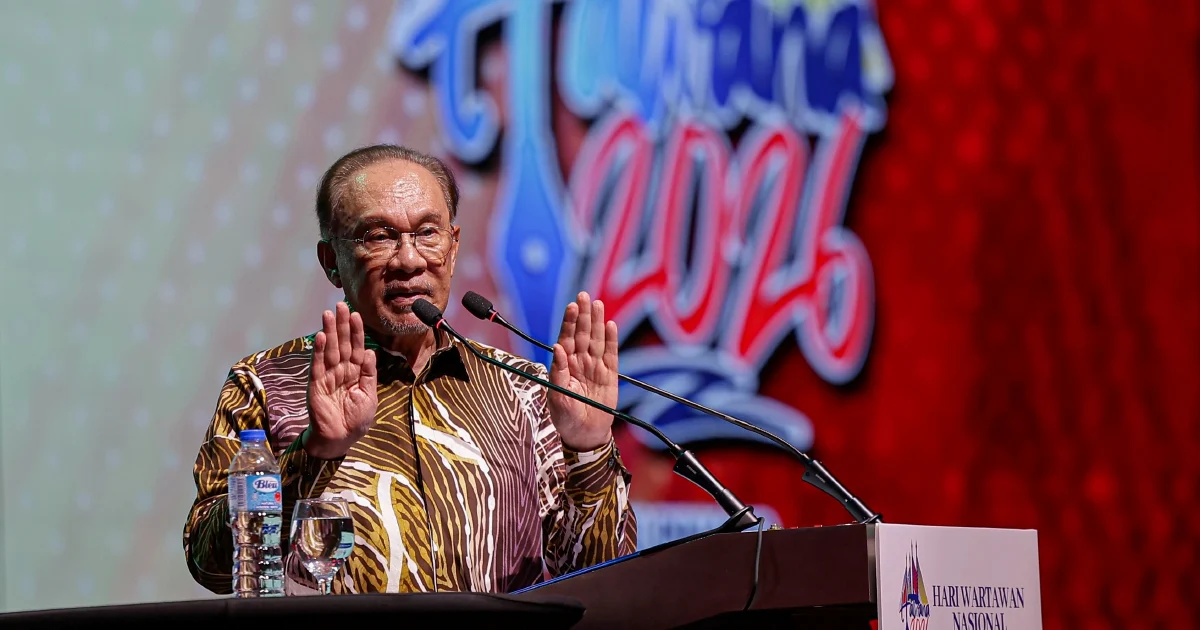
Prime Minister Datuk Seri Anwar Ibrahim has expressed firm confidence that the appointment of former Federal Court judge Tan Sri Nallini Pathmanathan as chairman of the Malaysian Media Council will substantially strengthen the institution's credibility and restore public confidence in its regulatory functions. Speaking in Butterworth, Anwar underscored the significance of this judicial appointment for a body responsible for overseeing media standards and conduct across the country.
The selection of Nallini, a judge with an established track record on Malaysia's highest court, carries particular weight as the Media Council grapples with persistent questions about its independence and effectiveness. As media environments across Southeast Asia face mounting pressures from digital disruption and declining trust in institutions, the choice of a jurist signals an attempt to infuse the council with the impartiality and legal expertise traditionally associated with the judiciary. This move suggests recognition that media governance requires not merely regulatory capacity but also perceived legitimacy among both the press and the public.
Anwar's endorsement carries substantial political meaning at a moment when media relations remain sensitive in Malaysia. The Prime Minister's willingness to publicly champion Nallini's appointment indicates cabinet-level confidence in her ability to navigate the contentious terrain of media regulation—a domain where previous council leadership has faced criticism from journalists, media organisations, and civil society groups. His statement therefore serves as both a personal backing and a signal to stakeholders that the administration stands behind this institutional strengthening.
The Malaysian Media Council operates in a complex ecosystem where traditional broadcast media, print journalism, and digital platforms coexist with varying degrees of regulation and self-governance. The council's remit spans enforcement of media ethics codes, handling of complaints, and advisory functions on broadcasting standards. Yet the institution has periodically faced questions about whether its processes are transparent enough, whether its decision-making truly reflects independent judgment, and whether it commands respect from media practitioners. Nallini's judicial background provides potential answers to these concerns, offering the authority that comes with judicial office and presumed familiarity with due process and reasoned adjudication.
In the Malaysian context, where media freedom rankings from international bodies have occasionally flagged concerns about regulatory overreach and political pressure on journalism, the elevation of someone from the Federal Court bench signals an institutional recalibration. A judge brings ingrained respect for constitutional principles, institutional independence, and legal procedure—qualities that media councils worldwide depend upon to function effectively. This is particularly relevant for Southeast Asia, where media regulation mechanisms in neighbouring jurisdictions have sometimes struggled with perceptions of capture or instrumentalisation by government.
The timing of this appointment also intersects with Malaysia's evolving approach to digital media governance. As traditional media's influence wanes relative to social media platforms and digital news outlets, the council faces pressure to remain relevant and authoritative. Nallini's chairmanship might be expected to bring refined legal reasoning to emerging questions about misinformation, online privacy, and the boundaries between regulation and freedom—issues that existing frameworks were not designed to address. Her judicial experience in interpreting constitutional provisions and legislative intent could prove invaluable in this domain.
Anwar's public confidence in this appointment should be understood against the backdrop of broader governance renewal within his administration. Since taking office, the Prime Minister has pursued various institutional strengthening measures across different sectors. The Media Council appointment forms part of a pattern where credibility and public perception of fairness are treated as strategic priorities. For an institution whose function depends entirely on stakeholder acceptance of its decisions, such perception management is not superficial but fundamental.
For Malaysian journalists and media organisations, Nallini's leadership presents both opportunity and challenge. The opportunity lies in potential for more sophisticated, legally rigorous handling of complaints and disputes; the challenge involves ensuring that a more judicially-minded approach does not translate into excessive formalism or deference to legal technicalities at the expense of press freedom concerns. Media councils in democracies face the perpetual tension between protecting freedom of expression and maintaining professional standards—a balance that requires both legal knowledge and deep understanding of journalism's societal role.
Regionally, Malaysia's investment in media council credibility matters beyond its borders. As ASEAN nations collectively grapple with questions of media governance in democratic settings, the Malaysian example—whether successful or not—will be observed by policymakers and media professionals across Southeast Asia. A well-functioning, independent-seeming council under judicial leadership could offer a replicable model; conversely, failure would reinforce suspicions about the inherent politicisation of media regulation in the region.
The appointment also reflects implicit acknowledgment that media regulation cannot be purely technical or administrative. It requires judgment about values, context, and societal interests—the very qualities that judicial temperament is thought to embody. Whether Nallini's tenure ultimately succeeds in rebuilding public trust will depend not merely on her personal reputation but on how the council operates under her leadership: whether decisions are transparently reasoned, whether processes feel fair, and whether the council demonstrates genuine independence from political and commercial pressure.

