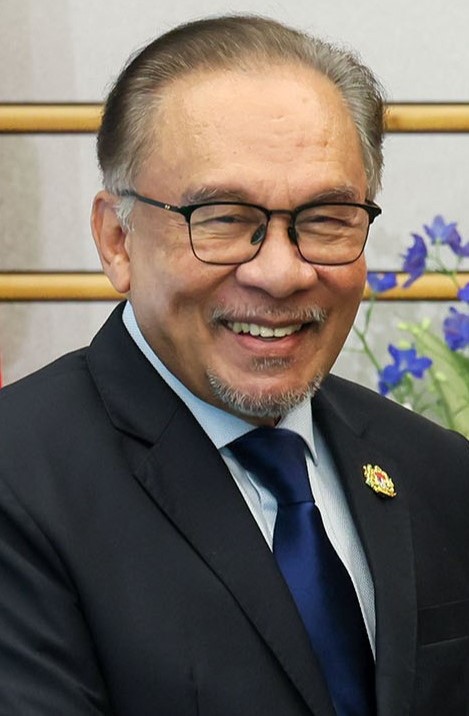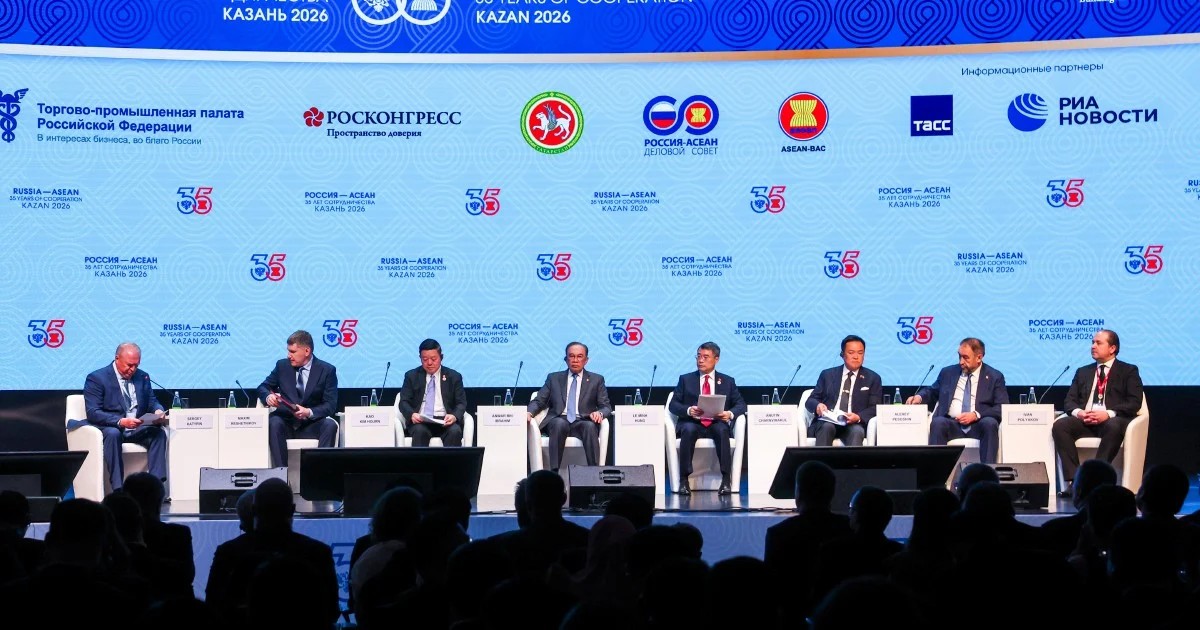
Prime Minister Datuk Seri Anwar Ibrahim has outlined an ambitious agenda for strengthening bilateral cooperation between ASEAN and Russia, emphasizing the need for multilateral frameworks that extend far beyond conventional diplomatic engagement. Speaking in Kazan, the Malaysian leader stressed that the two regions possess complementary strengths that remain largely untapped, presenting significant opportunities for mutual economic advancement and shared prosperity across sectors critical to both populations.
Food security represents a cornerstone of Anwar's proposed partnership framework, reflecting Malaysia's own vulnerabilities in agricultural production and supply chain resilience. The Southeast Asian region, home to over 650 million people, faces mounting pressures from climate disruption, land constraints, and competing demands on agricultural resources. Russia, conversely, maintains substantial surplus production capacity in grains and other staple commodities, positioning it as a potential stabilizing force in regional food markets. Beyond simple trade arrangements, Anwar's proposal implies structured cooperation in agricultural research, soil conservation technologies, and climate-adaptive farming methods that could yield measurable improvements in food self-sufficiency across ASEAN member states.
Energy cooperation emerges as equally consequential for ASEAN's long-term development trajectory. Southeast Asia remains heavily dependent on energy imports, with supply chains vulnerable to geopolitical disruptions and price volatility. Russia's vast hydrocarbon reserves and expertise in energy infrastructure development could complement ASEAN's diverse energy portfolios, which already span hydropower, natural gas, and expanding renewable capacity. The dialogue signals Malaysian recognition that comprehensive energy security requires diversified supplier relationships and reduced concentration risk in any single market or partnership bloc. Strategic energy cooperation would likely encompass not merely commodity supply but also technological transfer in refining, exploration capabilities, and emerging energy technologies such as hydrogen production.
Anwar's inclusion of advanced manufacturing alongside energy and food security underscores ASEAN's aspirations toward higher-value industrial production. The region currently functions primarily as an assembly destination for multinational corporations, with limited domestic capacity in engineering innovation and precision manufacturing. Russian industrial expertise, particularly in defence, aerospace, and heavy machinery sectors, could catalyze knowledge transfer that positions ASEAN economies higher along global supply chains. This cooperation dimension addresses long-standing concerns among Southeast Asian policymakers about over-reliance on Chinese manufacturing dominance and American technological standards.
Digital technologies constitute a rapidly emerging pillar of Anwar's proposed framework, reflecting ASEAN's accelerating shift toward digitalization across commerce, governance, and daily life. Russia has demonstrated particular strength in cybersecurity, software development, and telecommunications infrastructure, domains where ASEAN faces significant capacity gaps. Enhanced collaboration in digital innovation ecosystems, fintech development, and data governance standards could accelerate the region's digital transition while reducing technological dependency on established Western platforms. Malaysia, positioned as ASEAN's digital economy leader, stands to benefit substantially from deepened technical partnerships that strengthen regional competitiveness.
Education appears as the final element in Anwar's enumeration, though its strategic importance transcends traditional student exchange programming. The Malaysian Prime Minister's emphasis on educational cooperation implicitly acknowledges that transformative development requires human capital cultivation across scientific disciplines, vocational training, and institutional capacity-building. Russian universities maintain considerable reputation in mathematics, physics, and engineering fields where ASEAN faces talent shortages. Structured educational partnerships, from scholarships to institutional twinning arrangements, would generate cohorts of Southeast Asian professionals equipped with Russian-origin expertise returning to their home economies.
This articulation of ASEAN-Russia cooperation occurs within a distinctly multipolar international environment, where Southeast Asian nations navigate complex relationships across established great powers and emerging regional influencers. Malaysia's positioning, under Anwar's leadership, emphasizes strategic autonomy and pragmatic partnership without ideological alignment. Unlike Cold War-era bloc dynamics, contemporary ASEAN seeks simultaneous engagement with Russia, China, the United States, India, and Europe, extracting maximum advantage from competition among external powers for regional influence and market access.
The Kazan dialogue also reflects recognition that ASEAN's internal cohesion depends partly on demonstrating tangible economic benefits from multilateral engagement. Member states increasingly measure regional association value through concrete infrastructure development, investment flows, and employment creation. Concrete sectoral cooperation frameworks, properly implemented, can generate the economic dividends necessary to sustain popular support for ASEAN-centric regional architecture amid competing nationalist impulses and great power competition.
For Malaysia specifically, expanded ASEAN-Russia relations offer opportunities to reduce economic vulnerability in critical import categories while securing markets for Malaysian agricultural and manufactured products. The country's strategic location along critical maritime corridors between major energy producers and consumers enhances its positioning as a node in broader ASEAN-Russia cooperation frameworks. Enhanced bilateral energy cooperation could additionally address Malaysia's own transition requirements as fossil fuel reserves gradually diminish and renewable energy adoption accelerates.
Anwar's advocacy for this expanded cooperation framework signals ASEAN's determination to construct regional partnerships reflecting genuine Southeast Asian interests rather than default alignments inherited from historical colonial relationships or Cold War geopolitical divisions. The proposal encompasses sectors where technological gaps, resource deficits, and comparative advantages create authentic mutual benefits, conditions necessary for sustainable long-term partnerships. Implementation will require navigating bureaucratic complexities, competing timelines, and occasional tensions between ASEAN consensus-based decision-making and partner expectations regarding negotiation pace and institutional formality.