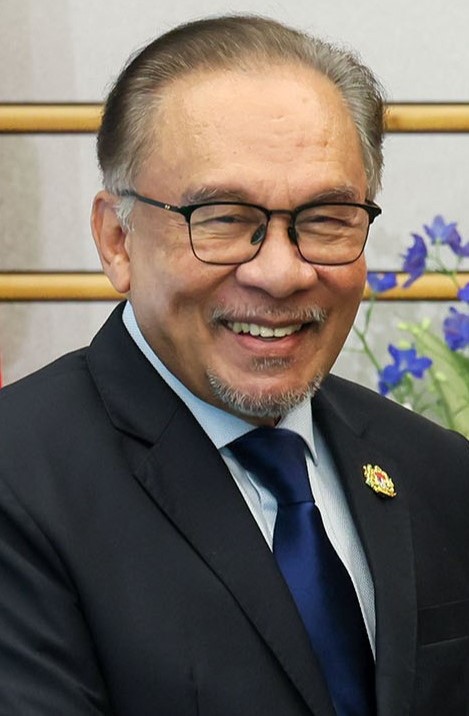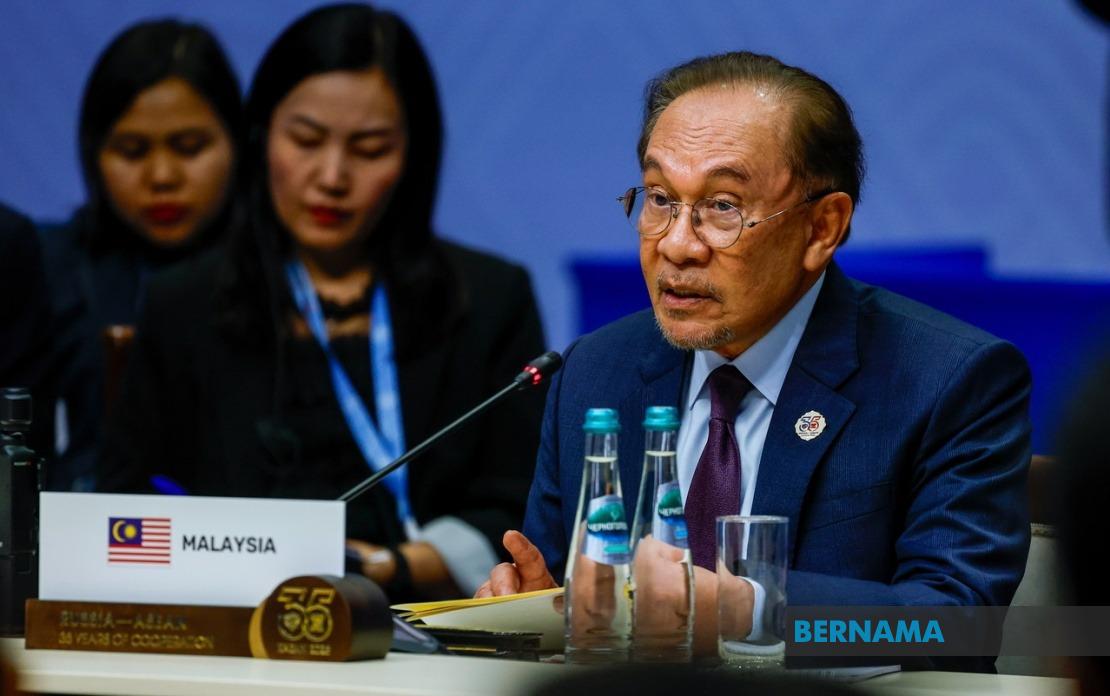
Prime Minister Datuk Seri Anwar Ibrahim has made a forceful appeal for ASEAN and Russia to forge deeper strategic partnerships across multiple sectors, positioning dialogue and diplomatic engagement as essential tools for navigating an increasingly fractious geopolitical landscape. Addressing delegates at the ASEAN-Russia Commemorative Summit held in Kazan on June 18, Anwar articulated Malaysia's vision for a strengthened relationship between the ten-nation bloc and Moscow, framing the gathering as a critical opportunity to pursue cooperative ventures in an era marked by mounting uncertainties and tensions across the globe.
The summit itself carries considerable symbolic weight, marking the 35th anniversary of formal relations between ASEAN and Russia—a partnership that was formally established in 1991 in Kuala Lumpur. This milestone provided the backdrop for what Malaysian officials have characterised as the highest platform yet available for both sides to assess progress achieved over three decades and to recalibrate their strategic direction. The significance of this anniversary gathering extends beyond mere commemoration; it reflects a deliberate attempt to reinvigorate institutional frameworks that have underpinned interaction between the bloc and Moscow throughout a transformative period in regional and international affairs.
In his address during the plenary session, Anwar outlined an ambitious agenda for bilateral engagement spanning multiple domains crucial to both parties' development trajectories. He specifically highlighted the potential for expanded cooperation in trade and investment flows, recognising that deepened economic ties could generate tangible benefits for ASEAN economies seeking diversified partnerships beyond traditional Western markets. Equally important in his remarks was the emphasis on digital infrastructure development, which resonates strongly with ASEAN nations increasingly focused on technological advancement and digital economy transformation. The prime minister also underscored opportunities in artificial intelligence, a sector where both ASEAN and Russia possess considerable capacity and complementary strengths.
Energy cooperation emerged as another central pillar in Anwar's envisioned framework, a particularly salient point for resource-importing ASEAN members confronting volatile global energy markets and climate transition imperatives. Food security similarly featured prominently in his discourse, acknowledging that supply chain vulnerabilities exposed by recent geopolitical disruptions require multilateral solutions and diversified sourcing arrangements. Beyond these tangible sectors, Anwar advocated for collaboration in the halal industry, reflecting Malaysia's own positioning as a global centre for halal certification and commerce—a niche where ASEAN expertise could prove valuable to Russian producers seeking market access across the Muslim world.
The Malaysian leader also placed considerable emphasis on people-to-people exchanges and cultural cooperation, arguing that sustained human connections form the bedrock upon which institutional partnerships can flourish. This broader developmental vision reflects a recognition that lasting strategic relationships depend not merely on government-level protocols but on networks of understanding extending through academic, business, and civil society channels. Such networking dimensions become particularly important when relations between ASEAN members and extraregional powers face periodic strains rooted in differing strategic interests or value propositions.
Critically, Anwar reiterated Malaysia's principled commitment to resolving conflicts through peaceful means, explicitly grounding this position in adherence to international law and mutual respect. This emphasis carries particular weight given contemporary geopolitical turbulence and the imperative for ASEAN members to navigate competing pressures from major powers while maintaining the bloc's traditional stance of strategic autonomy and non-alignment. The prime minister's stress on dialogue as a foundational tool for conflict resolution stands as a quiet rebuke to escalatory approaches and suggests Malaysia's desire to position ASEAN as a stabilising force in an increasingly polarised world.
Anwar dedicated considerable attention to Middle Eastern developments, underscoring Malaysia's longstanding stance on Palestinian rights and condemning Israeli military operations. He specifically called for an immediate halt to violence in Gaza, unrestricted humanitarian assistance, and respect for Palestinian self-determination—positions reflecting Malaysia's vocal advocacy within international forums. His remarks also encompassed criticism of Israeli military expansion into Lebanon and warnings against attacks on United Nations peacekeeping forces operating in that country. These declarations demonstrate that Southeast Asian diplomatic voices, particularly from Malaysia, continue to assert themselves on global issues beyond the region, resisting any notion that smaller nations should remain silent on matters of international justice and conflict resolution.
The summit is expected to yield four substantive outcome documents that will structure cooperation between ASEAN and Russia through 2030. The Kazan Declaration commemorating the 35-year partnership trajectory constitutes the central political statement, while accompanying instruments addressing energy and cultural cooperation provide sectoral specificity. Perhaps most significantly, the comprehensive plan of action for implementing the ASEAN-Russia Strategic Partnership through 2030 establishes concrete mechanisms and timelines for advancing the cooperative agenda articulated by leaders like Anwar. These documents reflect an intent to move beyond rhetorical commitment toward actionable frameworks with measurable targets and clear institutional responsibilities.
The summit brought together Philippine President Ferdinand Marcos Jr., who currently holds the ASEAN Chair, alongside leaders and official representatives from other member states. This broad participation underscores ASEAN's view of the Russia relationship as a collective endeavour rather than a bilateral arrangement involving individual members, reinforcing the bloc's cohesion on external partnership questions. For Malaysia specifically, hosting and contributing substantially to discussions on such a major partnership demonstrates its enduring role as a diplomatic architect within ASEAN—a position it has maintained through consistent emphasis on principled engagement and constructive multilateralism.
The timing of this summit acquires additional relevance when considered against the backdrop of contemporary geostrategic competition between Western powers and Russia, alongside broader US-China tensions reshaping the Asian landscape. ASEAN members, including Malaysia, find themselves navigating pressures to adopt more explicitly aligned postures in emerging bloc competitions. By advocating for strengthened Russia ties whilst simultaneously maintaining Western partnerships, ASEAN leaders articulate their preference for a more multipolar international order where regional states retain genuine agency. Anwar's framing of the ASEAN-Russia partnership within broader commitments to dialogue, respect for international law, and mutual benefit reflects this calculated balancing act.
Looking forward, the strengthened cooperation framework envisioned at Kazan carries implications extending well beyond bilateral ASEAN-Russia relations. It signals Southeast Asian determination to maintain diversified external partnerships and resist pressure toward alignment blocs. For Malaysian policymakers specifically, the summit outcome reinforces Kuala Lumpur's positioning as an advocate for inclusive, pragmatic diplomacy—an approach that has often distinguished Malaysia's foreign policy from more ideologically rigid positions adopted by certain regional counterparts. As ASEAN continues adapting to a multipolar Asia wherein traditional hierarchies appear increasingly contested, the cultivation of functional partnerships with major powers on terms preserving regional autonomy remains strategically essential.