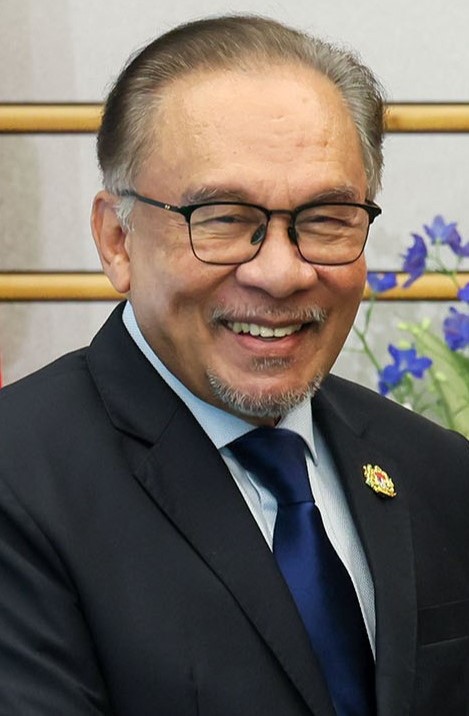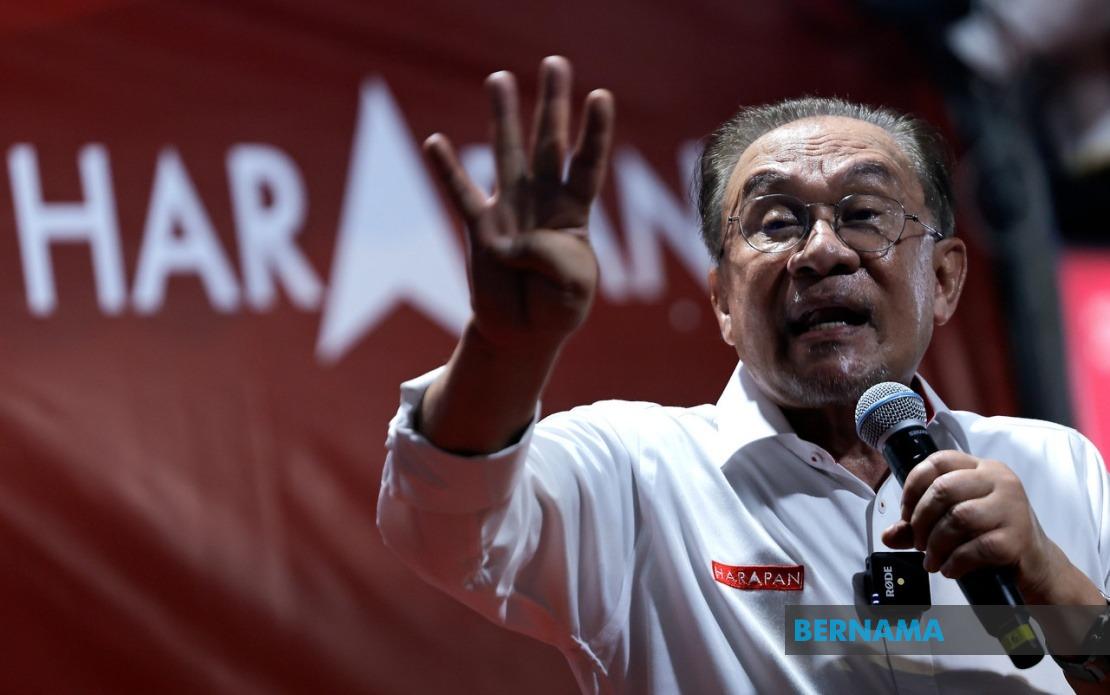
Prime Minister Datuk Seri Anwar Ibrahim has launched an urgent appeal to voters across Johor to cast their ballots carefully in the upcoming state election on July 11, emphasizing that the selection of principled leadership will prove decisive in shaping the state's trajectory. Speaking at a Pakatan Harapan rally in Muar, Anwar stressed that voters must prioritize candidates who demonstrate genuine integrity and remain grounded after winning office, rather than succumbing to the temptations of power and arrogance that have historically plagued Malaysian politics.
The Pakatan Harapan chairman articulated a sharp critique of the tactics employed by certain political factions that he believes prioritize divisive identity politics over substantive governance. According to Anwar, these groups deliberately inflame racial and religious sentiments to mobilize electoral support, only to abandon their responsibilities once they occupy office. This pattern, he argued, fundamentally betrays the trust that voters place in their representatives and undermines the social cohesion necessary for national progress. He called on the public to exercise greater discernment in political decision-making, urging them to look beyond inflammatory rhetoric and consider the long-term consequences for Malaysian society.
Anwar delivered an impassioned exhortation for voters to contemplate the broader implications of their electoral choices, painting a picture of interconnected concerns that extend beyond immediate political contests. He invoked images of future generations, educational institutions, healthcare systems, and the economic security of vulnerable populations, suggesting that voting decisions ripple across these fundamental pillars of national life. This framing transforms the Johor election from a localized contest into a referendum on competing visions of governance and social responsibility, positioning Pakatan Harapan as the steward of these collective concerns.
The prime minister articulated a sophisticated argument about the relationship between state and federal governments that goes beyond conventional partisan positioning. He contended that administrative coherence between Johor and Kuala Lumpur is not merely administratively convenient but essential for optimizing development outcomes for ordinary citizens. When state and federal authorities operate from aligned strategic frameworks, Anwar suggested, the machinery of government functions more efficiently, and the benefits of large-scale infrastructure projects and economic initiatives distribute more equitably across society.
Anwar highlighted the Johor-Singapore Special Economic Zone as a concrete example of federal achievement that requires continued federal stewardship and complementary state policies to deliver maximum benefit to communities. Similarly, he referenced the ongoing expansion of the Port of Tanjung Pelepas as evidence of federal commitment to Johor's economic development. However, he stressed that without a receptive state government willing to implement supportive policies and prioritize grassroots welfare, these major investments risk enriching concentrated interests rather than broadly improving living standards. This argument challenges the conventional wisdom that local governments necessarily champion local interests better than federal authorities.
The PM made an explicit distinction between his government's role in negotiating and executing major economic projects and the state government's responsibility for implementing social policies that translate these opportunities into tangible improvements for ordinary people. He positioned federal authorities as architects of structural economic opportunity while expecting state representatives to function as effective administrators of public welfare at the community level. This division of labor framework attempts to justify federal intervention while respecting formal state autonomy, presenting both as necessary for comprehensive development.
Anwar specifically urged voters residing outside Johor to return and participate in the election, framing electoral participation as an obligation rooted in shared responsibility for the state's future. This appeal recognizes the significant diaspora population that maintains ties to Johor while working or studying elsewhere in Malaysia, acknowledging that many of these voters retain stakes in their home state's development. By mobilizing this dispersed electorate, Pakatan Harapan hopes to overcome potential disadvantages in traditional strongholds and broaden its support base among more educated and mobile populations.
The prime minister emphasized that individual votes carry disproportionate significance in determining electoral outcomes and, consequently, in shaping policy directions that affect resource distribution and economic opportunity. This emphasis on voting power serves multiple strategic purposes: it validates voter agency against potential apathy or defeatism, encourages maximum turnout among presumed PH supporters, and suggests that tight election contests make every ballot consequential. By portraying the election as genuinely competitive, Anwar reinforces motivation for supporters to actively campaign and mobilize their networks.
For Malaysian observers, the speech reveals the high stakes that Pakatan Harapan attaches to the Johor contest and the party's recognition that maintaining federal-state alignment requires electoral victories at subnational levels. Johor represents Malaysia's second-largest state by population and commands significant economic importance, making its governance trajectory relevant to national development trajectories. A Pakatan Harapan victory would eliminate one of the few remaining significant state governments outside the coalition's control and consolidate the party's dominance in peninsular Malaysia's most economically dynamic regions.
Anwar's emphasis on integrity and humility as leadership qualities reflects a broader narrative within Pakatan Harapan's political positioning that contrasts its governance approach with what it portrays as the entrenched arrogance and corruption of previous administrations. By centering these character-based arguments, the coalition attempts to transcend specific policy debates and appeal to voters' aspirations for ethical governance. This framing proves particularly potent in contexts where previous administrations have faced serious allegations of abuse of power and financial misconduct, making integrity a salient electoral concern.
The timing of Anwar's rally speech, approximately four weeks before the July 11 election, indicates that Pakatan Harapan views the Johor contest as sufficiently uncertain to warrant intensive mobilization efforts from the party's highest leadership. Rather than assuming victory, the PM positioned the election as a pivotal moment requiring sustained commitment and broad coalition participation. This approach contrasts with a strategy of taking Johor for granted, suggesting internal party assessments indicate competitive dynamics that necessitate aggressive campaigning to secure electoral success.