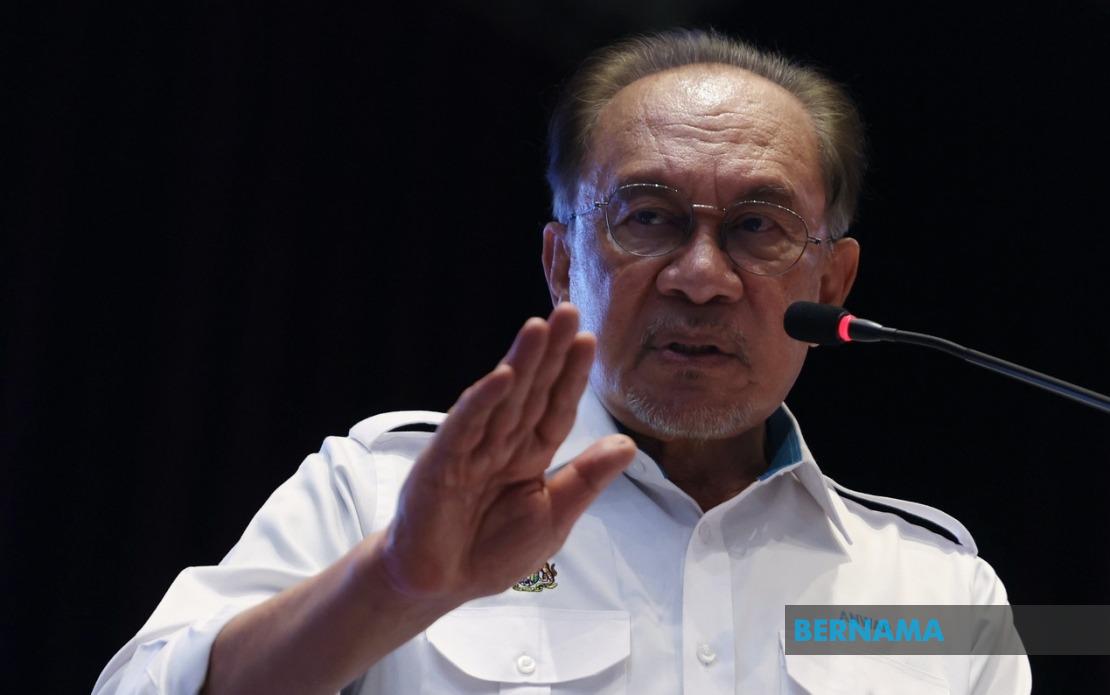
Prime Minister Datuk Seri Anwar Ibrahim has issued a firm reminder to the nation's political establishment to keep the country's revered royal institutions separate from partisan election campaigns and political controversies. Speaking in Alor Gajah on June 24, Anwar stressed that competing political viewpoints and public statements from politicians ought to be resolved through mature discourse without drawing the institution of the Malay Rulers into the fray. His measured but pointed intervention appears aimed at setting boundaries around acceptable political behaviour as Malaysia approaches a major electoral cycle.
Anwar's statement carries particular weight given the tradition of royal deference in Malaysian politics and the constitutional role that the institutions play in the nation's governance framework. By framing the matter as one of maturity and propriety rather than direct accusation, the Prime Minister sought to elevate the conversation and appeal to politicians' sense of responsibility. His phrasing—"Let those involved engage in politics"—implicitly acknowledges that electoral competition is a legitimate activity, but with important guardrails that must be respected.
The timing and context of Anwar's remarks stem from comments attributed to Amanah president Datuk Seri Mohamad Sabu during Pakatan Harapan's candidate announcement in Johor on Monday. According to reports circulating in political circles, some observers interpreted Mohamad Sabu's statements as containing implicit or explicit references to the royal institution, though the specifics of which remarks drew concern remain unclear from the Prime Minister's public remarks. This ambiguity underscores how sensitive such matters are within Malaysia's political discourse.
The episode reflects ongoing tensions within the broader Pakatan Harapan coalition, which has governed Malaysia since 2018 and currently holds the Prime Minister's office. Amanah, as a component party, operates within this coalition but has occasionally pursued independent political positions that have created friction. The incident suggests that coalition discipline and alignment remain works in progress, particularly as parties vie for electoral advantage heading into fresh campaigns.
Anwar delivered these comments while attending a civil service engagement event at the Public Works Department's Centre of Excellence for Engineering and Technology in Melaka, alongside Chief Secretary to the Government Tan Sri Shamsul Azri Abu Bakar. The presence of senior government officials—including Melaka Chief Minister Datuk Seri Ab Rauf Yusoh and Deputy Higher Education Minister Adam Adli Abd Halim—underscored the formal nature of the occasion and the government's desire to project administrative continuity and focus during an election season.
The constitutional and cultural standing of Malaysia's royal institutions merits examination in this context. The Malay Rulers occupy a unique position in the Malaysian system, serving as custodians of Islamic affairs in their respective states and holders of constitutional authority. These institutions have historically commanded deep respect across the Malaysian public, and attempts to politicise them risk fracturing the broad consensus that underpins their legitimacy. Anwar's intervention therefore operates not merely as a political manoeuvre but as a defence of institutional integrity.
Such cautions have become increasingly necessary in recent years as Malaysia's political landscape has grown more contentious and social media has amplified partisan messaging. The risk that campaigns might veer into territory that tests the boundaries of acceptable criticism has grown correspondingly. By articulating a clear standard in advance, Anwar has attempted to forestall future incidents and establish shared expectations for political conduct among rival parties and factions.
For Malaysian voters and regional observers, the incident highlights the delicate balance that Malaysian democracy must maintain between robust political competition and respect for institutions that transcend party politics. The success of this balance depends critically on whether political leaders—across all parties—internalise the message that certain lines ought not to be crossed, regardless of electoral incentives or factional interests. The Prime Minister's public statement serves as both clarification and warning on this fundamental matter.
The inclusion of multiple government officials at the Alor Gajah event also suggests that civil service engagement and modernisation remain priorities for the administration, even as electoral preparation consumes political energy. This dual focus—simultaneously addressing institutional propriety and pursuing governance objectives—reflects the complexity of leading a coalition government in an active campaign environment. The coordination between the Chief Secretary's office and the Prime Minister's messaging indicates that the government is attempting to project both political seriousness and administrative stability to the electorate and the public service alike.

