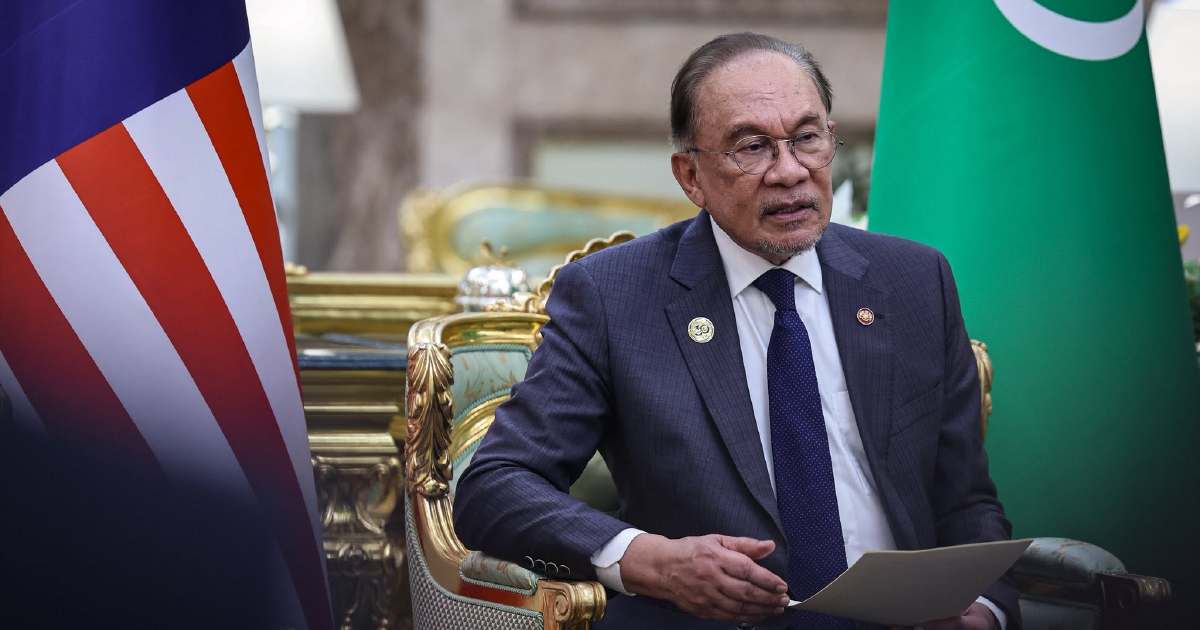
Prime Minister Anwar Ibrahim has publicly endorsed Petronas' latest achievement in Turkmenistan, characterizing the gas field agreement as a critical breakthrough for the national oil and gas company's portfolio and Malaysia's broader energy positioning in Central Asia. The development represents a tangible expansion of Petronas' international upstream operations beyond its traditional Southeast Asian footprint, signalling the company's ambitions to diversify revenue streams and secure long-term hydrocarbon access in strategically important regions.
The Turkmenistan venture underscores Petronas' evolution as a major player in extractive industries across multiple continents. Over the past two decades, the Malaysian enterprise has progressively expanded into challenging operating environments, building technical expertise and financial capacity to compete in frontier markets where geological complexity and geopolitical considerations demand sophisticated project management. This Central Asian entry demonstrates the company's willingness to navigate regulatory frameworks and partnership structures in countries outside its zone of historical dominance, a capability increasingly vital as traditional Southeast Asian reserves mature and production declines at established fields.
For Malaysia's energy security narrative, the Turkmenistan agreement holds particular relevance. Domestic natural gas production has been declining relative to consumption growth, driven by the nation's industrialisation and rising demand from petrochemicals, power generation, and manufacturing sectors. While Malaysia remains a net energy exporter on aggregate, the country faces pressures on gas availability for domestic consumption. Strategic international acreage—particularly in regions with substantial untapped reserves like Turkmenistan—helps Petronas generate export revenues while positioning the company to supply Malaysian customers from overseas production when domestic sources become constrained.
Turkmenistan itself represents one of the world's largest repositories of natural gas, holding proven reserves exceeding 17 trillion cubic metres. The country's geographic position as a bridge between the Caspian Sea hydrocarbon province and Asian markets makes it strategically valuable to energy traders and producers seeking to diversify supply chains away from traditional Middle Eastern dependence. For Petronas, entry into this market means access to resources at a scale that can support both regional infrastructure projects and long-distance export arrangements, including liquefied natural gas (LNG) pathways that could eventually benefit Asian customers including Malaysia itself.
The political dimension of this agreement warrants attention within Southeast Asia's evolving energy diplomacy. Malaysia has long positioned itself as a neutral, pragmatic actor in international resource competition, maintaining balanced relationships across major powers while protecting its own commercial interests. The Turkmenistan partnership reflects this orientation—neither geopolitically confrontational nor subordinate to any single power bloc. As energy competition intensifies globally, particularly between Western companies and Chinese state enterprises in Central Asian gas markets, Petronas' successful negotiation demonstrates Malaysia's capacity to secure substantive deals independently and demonstrate value as a partner to resource-rich nations seeking reliable, technically competent investors.
Anwar's public endorsement carries additional weight given his administration's emphasis on economic growth and fiscal consolidation. Petronas contributes substantially to federal revenue through dividends and taxation, and the company's profitability directly affects government budget capacity. Major international projects that generate returns over decades provide stability to fiscal planning. A successful Turkmenistan operation could deliver production revenue streams beginning within several years, supporting medium-term budget forecasts and reducing dependence on volatile oil price cycles for government income.
The timing of this announcement also reflects Petronas' strategic positioning amid global energy transition discussions. While the world gradually shifts toward renewable and low-carbon energy sources, hydrocarbon demand remains substantial, particularly in developing Asian economies where energy consumption will expand for decades. Natural gas, positioned as a transitional fuel cleaner than coal, enjoys sustained demand in power generation and industrial applications throughout the region. By securing long-dated gas assets now, Petronas is securing its commercial relevance during the extended period when fossil fuels will dominate the Asian energy mix, even as renewable capacity expands.
From a technical standpoint, the Turkmenistan project likely involves complex subsurface challenges typical of the region's deep-water and onshore fields. Petronas brings to such ventures extensive experience with demanding geological conditions, advanced drilling technologies, and operational expertise accumulated across projects in the South China Sea, the Gulf of Thailand, and other complex basins. The company's technical workforce—comprising Malaysian engineers, geoscientists, and project managers alongside international specialists—provides capability competitive with major global operators, enabling Petronas to bid successfully against larger international companies for premium acreage.
International partnerships remain central to Petronas' project economics. The Turkmenistan agreement likely involves collaboration with local authorities, potential co-investors, and international service providers who bring complementary capabilities. These partnership structures distribute risk while leveraging each party's comparative advantages—Petronas contributes financial strength and operational discipline; Turkmenistan provides resource access and regulatory authority; other partners may contribute technology or market access. For Malaysia, such arrangements amplify the economic impact by creating opportunities for Malaysian service companies, engineering consultancies, and technology providers to participate in the supply chain.
The broader implications extend to Malaysia's profile within global energy conversations. As a country transitioning from commodity dependence toward higher-value economic activities, Malaysia benefits from Petronas' success in demonstrating continued relevance and profitability of traditional energy sectors. This success helps justify ongoing investment in energy infrastructure, port facilities, and industrial zones that support hydrocarbon-related industries, while providing employment for thousands of Malaysian workers in operational, engineering, and administrative roles.
Looking forward, the Turkmenistan venture positions Petronas for potential expansion across Central Asia if initial development succeeds. The region contains vast undeveloped reserves, limited competition from other national oil companies outside China and Russia, and growing Asian demand for secure energy supplies. Successful execution in Turkmenistan could open doors to similar opportunities in neighboring Kazakhstan, Uzbekistan, and other states, creating a regional portfolio that strengthens Petronas' long-term competitiveness and Malaysia's strategic energy position throughout Asia for decades to come.

