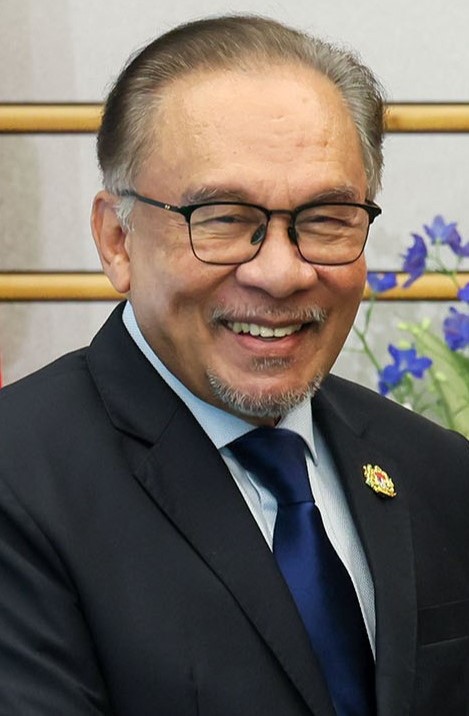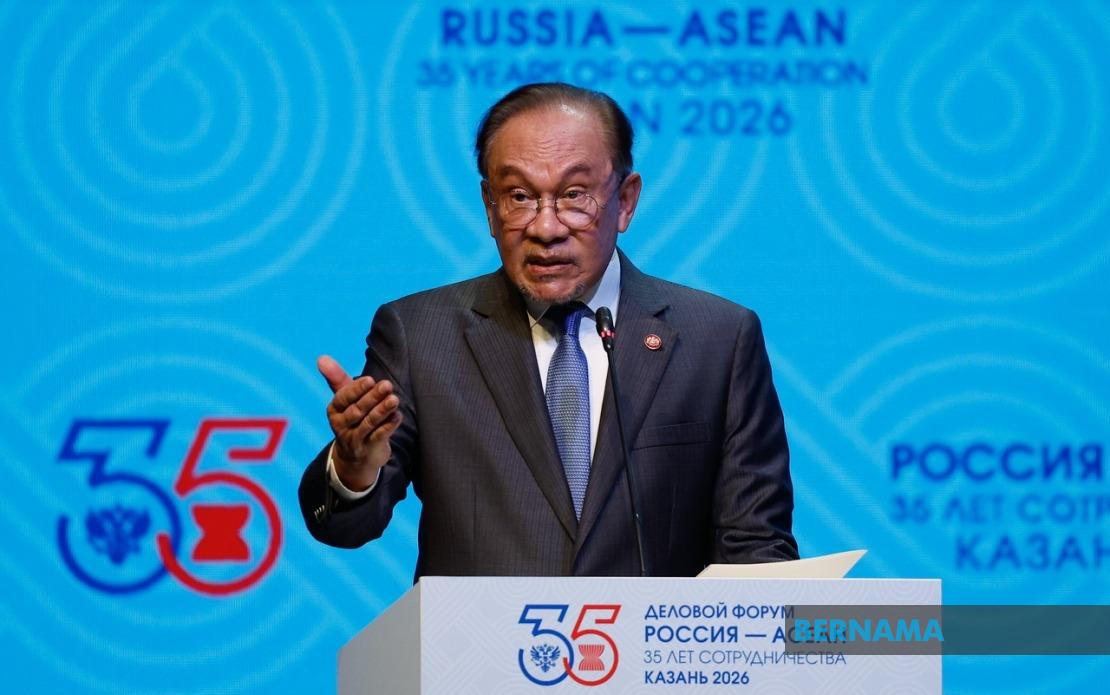
Prime Minister Datuk Seri Anwar Ibrahim has emphasised the substantial scope for expanding bilateral cooperation between ASEAN and Russia, describing current engagement levels as merely scratching the surface of what the two regions could achieve together. Speaking during a two-day working visit to Kazan for the ASEAN-Russia Commemorative Summit, Anwar fielded questions spanning economic partnerships, cultural exchange, energy security, and pressing geopolitical challenges including the humanitarian situation in Gaza.
The centrepiece of Anwar's remarks focused on the underexploited nature of ASEAN-Russia relations, a theme he reiterated throughout his interactions with international media at the ASEAN-Russia Business Forum. While ASEAN maintains established economic partnerships with major global powers including the United States, China, and India, the bloc's engagement with Russia remains comparatively limited. Anwar identified this disparity as an opportunity rather than a constraint, suggesting that deliberate platform-building like the business forum could catalyse genuine momentum toward more substantive cooperation.
The Prime Minister outlined multiple sectors where ASEAN and Russia could deepen their partnership. Beyond traditional areas such as energy security and cybersecurity, he highlighted potential for collaboration in agriculture, digital technology, scientific research, and higher education. This diversified approach reflects a strategic recognition that sustainable bilateral relations require breadth across economic, technological, and human capital dimensions. Anwar particularly spotlighted Tatarstan's demonstrated capabilities in technology, science, research, and defence infrastructure, positioning the Russian republic as a meaningful entry point for ASEAN nations seeking technology transfer and knowledge partnerships.
Energy security emerged as a critical pillar in Anwar's vision for enhanced ASEAN-Russia ties. The emphasis on this sector carries particular significance for Southeast Asian economies heavily dependent on stable energy supplies and diverse energy sourcing. Russia's substantial hydrocarbon reserves and technological expertise in energy production position it as a valuable counterbalance to existing energy dependencies, though geopolitical tensions and Western sanctions have historically complicated such partnerships. Anwar's framing suggests Malaysia and ASEAN more broadly are exploring pragmatic approaches to energy diversification that acknowledge Russia's structural role in global energy markets despite current political headwinds.
A striking element of Anwar's engagement in Kazan involved his recent bilateral meeting with Russian President Vladimir Putin, which the Prime Minister characterised as productive and substantive. The focus on economic cooperation and energy security during those discussions suggests Malaysia is actively advancing bilateral negotiations on concrete projects rather than merely maintaining ceremonial diplomatic contact. This direct leader-to-leader engagement underscores Malaysia's willingness to maintain substantive channels with Moscow, a position that distinguishes ASEAN's diplomatic approach from more Western-aligned blocs.
The conversation took an unexpectedly personal turn when journalists broached Anwar's apparent affinity for Russian music, evident from his social media activity. Rather than deflecting, Anwar openly acknowledged his appreciation for Russian musical traditions, noting that his children had memorised pieces including "Matushka", "Zemlya", and "Kalinka Malinka". This candid moment served a subtle diplomatic function, humanising bilateral relations and demonstrating cultural engagement that transcends transactional economic dealings. When pressed on literary preferences, Anwar pivoted to articulate a deeper intellectual engagement with Russian cultural heritage, citing his familiarity with works by Leo Tolstoy, Anton Chekhov, and Boris Pasternak, many of which he noted had been translated into Malay.
Anwar's elevation of cultural and literary exchange as equivalent in importance to technological and economic cooperation reflects a sophisticated understanding of soft power dynamics. By emphasising that cultural understanding generates "better affection and understanding of people and human beings", he implicitly argued that enduring diplomatic relationships require emotional and intellectual foundations alongside material interests. This philosophy extended to his opening remarks at the forum, where he recited a verse by renowned Tatar poet Abdullah Tukay, a symbolic gesture acknowledging Tatarstan's literary patrimony and signalling respect for regional cultural identity within the Russian federation.
The discussion shifted toward international affairs when Anwar addressed recent tensions involving Iran and the United States. Rather than adopting inflammatory rhetoric, the Prime Minister indicated he had been consulting with multiple key regional leaders including Iranian President Masoud Pezeshkian, Pakistani Prime Minister Shehbaz Sharif, Egyptian President Abdel Fattah El-Sisi, and Turkish President Recep Tayyip Erdogan. Notably, all these leaders, according to Anwar's account, were advocating peaceful resolution pathways. This characterisation positions Malaysia as part of a coalition of moderate, constructive voices seeking de-escalation, a posture consistent with ASEAN's non-alignment principles and commitment to regional stability.
The humanitarian crisis in Gaza occupied considerable space in Anwar's remarks, reflecting his documented commitment to Palestinian causes and consistent public advocacy on this issue. Rather than limiting his criticism to specific actors, Anwar broadened his critique to encompass what he characterised as systemic failures and double standards within the international community. His assertion that the international system permits "killing, torturing children and women on a daily basis" while observers remain silent constitutes a pointed indictment of geopolitical hypocrisy, suggesting that professed commitments to human rights and democratic values lack credibility when applied selectively.
Anwar's Gaza comments carry particular resonance for Malaysian audiences, where Palestinian solidarity maintains significant public and political salience. His willingness to voice strong moral critiques while simultaneously engaging pragmatically with Russia, Iran, and other non-aligned powers suggests Malaysia is pursuing a careful diplomatic balancing act. The country seeks to maintain moral clarity on humanitarian issues while preserving constructive relationships with diverse international actors, an approach that distinguishes Malaysian foreign policy from more ideologically rigid Western postures.
The breadth of topics Anwar addressed during his Kazan visit reflects the multifaceted nature of contemporary international relations. Simultaneous engagement across economic partnership-building, cultural diplomacy, geopolitical mediation, and humanitarian advocacy demonstrates Malaysia's positioning as a bridge actor within global affairs. By treating cultural and literary appreciation as diplomatically significant rather than peripheral, Anwar has articulated a vision of international relations that transcends narrow transactional frameworks.
The visit's strategic implications extend beyond bilateral ASEAN-Russia dynamics. Malaysia's prominent voice in these discussions signals the bloc's interest in maintaining constructive engagement across the geopolitical spectrum, resisting pressure toward binary Cold War-style alignments. For regional observers, Anwar's Kazan engagement suggests ASEAN will continue seeking substantive partnerships with all major powers while maintaining autonomy in pursuit of its collective and individual national interests.