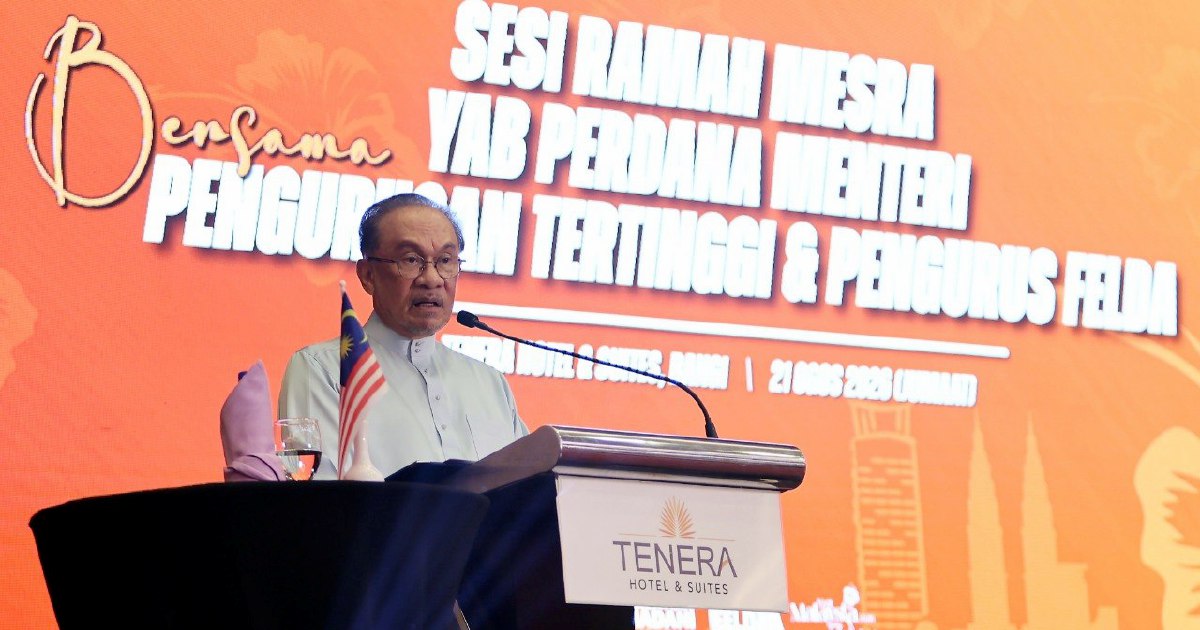
Prime Minister Datuk Seri Anwar Ibrahim has announced that a dedicated task force set up to examine problems within the Federal Land Development Authority has officially commenced its investigative operations. Speaking in Bangi, Anwar indicated that the findings from this inquiry would be made public once the task force completes its work, signalling the government's commitment to transparency regarding institutional challenges at the state-owned enterprise.
The establishment of this task force reflects growing concerns about governance and operational matters at Felda, one of Malaysia's most significant rural development bodies. The authority has historically played a crucial role in agricultural development and land settlement schemes across the peninsula, but has faced mounting scrutiny over its financial management and organisational effectiveness in recent years. The decision to formally investigate these issues through a structured task force demonstrates the Prime Minister's intent to address longstanding grievances and modernise the institution's operations.
Felda's operational challenges have become increasingly apparent to both stakeholders and the broader public. The authority manages extensive agricultural land holdings and coordinates the livelihoods of thousands of settlers and their families who depend on its schemes for income and support. When institutional problems arise at this level, they directly affect vulnerable rural communities who rely on fair management practices and transparent governance. The task force's work therefore carries significant implications for land settlers whose economic stability hinges on the authority's decisions and resource allocation.
The timing of this investigative initiative is significant within Malaysia's current governance context. The government has positioned itself as committed to institutional reform and anti-corruption measures across multiple sectors. By prioritising an examination of Felda's operations, authorities are signalling that no establishment is exempt from scrutiny, regardless of its historical importance or political sensitivity. This approach aligns with broader efforts to strengthen public sector accountability and rebuild confidence in government institutions.
Felda's financial performance has become a matter of public concern, with the authority facing questions about debt management, investment decisions, and operational efficiency. The task force's investigation will likely examine these financial dimensions alongside governance structures and decision-making processes. Understanding precisely where inefficiencies occur and what corrective measures are necessary requires thorough, impartial examination of internal practices, financial records, and management frameworks.
The settlers and their representatives have long sought clarity on how Felda resources are utilised and whether their interests receive adequate priority in the authority's strategic planning. Many settlements have reported concerns about agricultural support, infrastructure maintenance, and fair treatment in benefit distribution. A credible investigation offers an opportunity to document these grievances formally and establish a factual foundation for future reforms that might genuinely improve conditions for rural communities dependent on Felda schemes.
Southeast Asian observers will note that land development authorities operate across the region with varying degrees of success and public confidence. Malaysia's experience with Felda—both its historical achievements in rural transformation and its more recent institutional challenges—provides instructive lessons for neighbouring countries considering similar developmental models. The quality of governance at such bodies ultimately determines whether land settlement schemes succeed in improving rural prosperity or become vehicles for mismanagement.
The task force's composition and operational scope remain important considerations for assessing the credibility of its eventual findings. Independent representation, adequate investigative resources, and protection from political interference all contribute to whether stakeholders will accept the conclusions. The public announcement of the investigation itself represents a positive step toward institutional accountability, though the ultimate measure of success will be whether recommendations lead to meaningful reforms and whether the government implements findings fully.
Preliminary outcomes might address several key areas: the integrity of decision-making processes, alignment of management practices with settler interests, financial sustainability strategies, and modernisation of the authority's operational framework. Each of these dimensions requires careful analysis and consultation with affected communities to ensure that reforms genuinely improve rather than inadvertently worsen conditions for rural stakeholders.
The announcement also carries implications for investor confidence in rural development initiatives more broadly. If Felda can successfully address its institutional challenges through transparent investigation and credible reform, it might restore confidence among both domestic and international stakeholders in Malaysia's capacity to manage large-scale agricultural development programmes effectively. Conversely, should the process be perceived as superficial or politically motivated, it could further erode confidence in the authority's future direction.
As the task force proceeds with its work, maintaining communication with affected communities about progress and preliminary findings would strengthen public trust in the process. Rural settlers and their representatives deserve regular updates about the investigation's scope and timeline, ensuring that the exercise remains grounded in genuine accountability rather than becoming an exercise in procedural formality.
The Prime Minister's commitment to public disclosure of findings, once investigations conclude, sets an important precedent for institutional transparency. Whether Felda emerges from this process as a reformed and more effective instrument for rural development will depend significantly on the thoroughness of the investigation and the government's willingness to implement substantial recommendations, even if they require difficult decisions about personnel or structural reorganisation.

