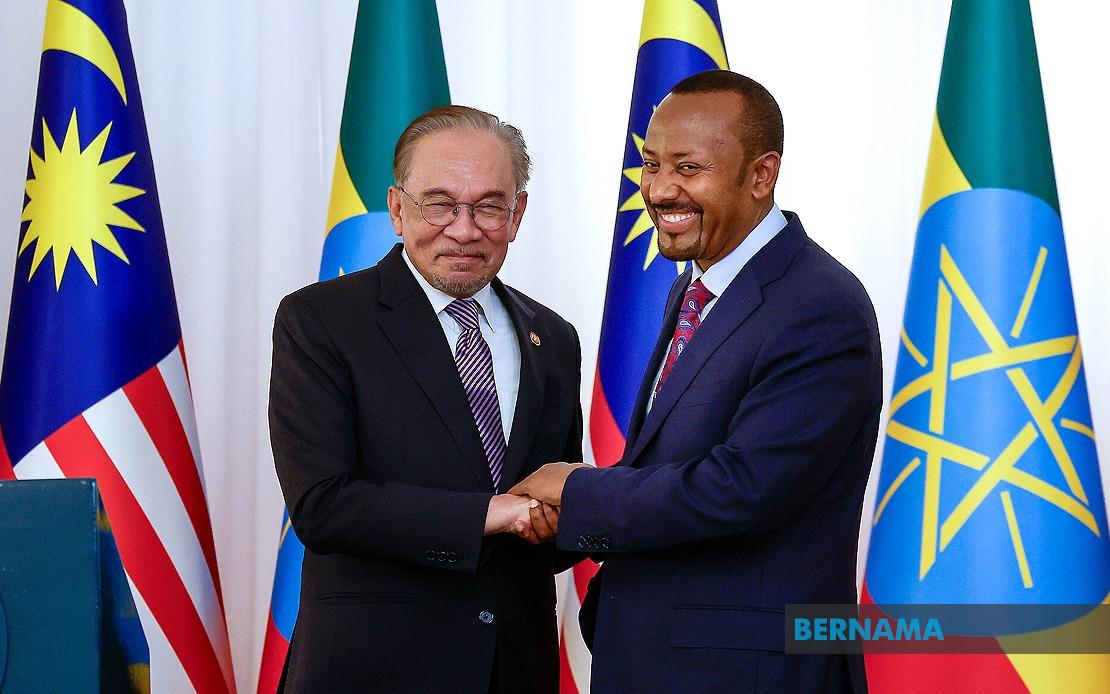
Prime Minister Datuk Seri Anwar Ibrahim has publicly congratulated Ethiopian Prime Minister Abiy Ahmed Ali and his Prosperity Party following their success in Ethiopia's recent general election. The Malaysian leader expressed his felicitations through a Facebook post, signalling continued commitment to strengthening relations with the East African nation and reinforcing Malaysia's diplomatic engagement across the African continent.
Anwar's message carries particular significance given his groundbreaking visit to Addis Ababa last year, which marked the first time a sitting Malaysian prime minister had travelled to Ethiopia in an official capacity. That journey represented a milestone in bilateral relations and underscored Malaysia's strategic pivot toward deepening ties with African nations beyond traditional commercial relationships. The visit laid crucial groundwork for enhanced cooperation across multiple sectors, from trade and investment to cultural and educational exchanges.
In his congratulatory remarks, Anwar emphasised the ideological alignment he discovered during his engagement with Abiy, noting that both leaders share a similar worldview regarding global affairs and the international order. This alignment proves consequential for Malaysia's broader diplomatic strategy, as it positions the country alongside a progressive African leader who has pursued significant internal reforms since taking office in 2018. Ethiopia's strategic location as the seat of the African Union headquarters further amplifies the importance of maintaining strong ties with its leadership.
The Prime Minister specifically highlighted the value of South-South cooperation, the principle that developing nations benefit substantially from working together as equals rather than deferring to traditional Western-centric international structures. This philosophy aligns with Malaysia's own positioning within the Global South and reflects Anwar's consistent emphasis on building alternative frameworks for regional and continental development. Ethiopia's central role in African geopolitics makes it a natural partner for such endeavours.
Anwar's characterisation of Ethiopia as an important partner in Malaysia's broader African strategy indicates the government's intention to move beyond episodic engagement toward sustained institutional cooperation. Ethiopia hosts numerous regional and continental organisations, making it a hub for diplomatic activity across the continent. For Malaysia, establishing robust relations with Addis Ababa opens doors to expanded influence and partnerships throughout Africa, a continent increasingly important to Malaysian trade and investment ambitions.
The timing of Anwar's congratulations reflects standard diplomatic protocol while also demonstrating Malaysia's attentiveness to developments in key partner nations. Abiy's Prosperity Party secured another electoral mandate, reinforcing the incumbent's position despite various internal and regional challenges facing Ethiopia. The election outcome carries implications for stability in the Horn of Africa and the broader East African region, areas where Malaysia maintains various interests ranging from maritime security to trade corridors.
Anwar's reference to initiatives set in motion during his 2023 visit suggests concrete bilateral projects are underway or in advanced stages of negotiation. These likely encompass areas such as technical cooperation, skills development, and potentially joint ventures in sectors where Malaysian expertise and investment could contribute to Ethiopia's development agenda. Such partnerships typically yield mutual benefits, enabling Malaysia to establish footholds in promising African markets while providing Ethiopia with access to Malaysian resources and technology.
The congratulatory message also reflects Malaysia's recognition of Abiy's significant role in addressing Ethiopia's internal peace and security challenges, particularly following the conclusion of the Tigray conflict. International observers have noted Abiy's reform initiatives and his efforts to consolidate democratic institutions, even as concerns persist regarding human rights and governance standards. Malaysia's engagement signals support for Ethiopia's stabilisation and development trajectory during this critical period of national reconstruction.
For Malaysian business interests and investors, stability in Ethiopia under Abiy's continued leadership potentially creates a more predictable environment for long-term commitments. Malaysian firms have begun exploring opportunities in Ethiopia's manufacturing sector, particularly given the nation's competitive labour costs and regional location. Enhanced bilateral ties at the highest political level typically facilitate smoother business operations and preferential treatment for Malaysian enterprises navigating the Ethiopian regulatory landscape.
The statement also underscores Malaysia's commitment to representing Global South interests in international forums. Ethiopia's election victory provides a foundation for Malaysia to work alongside Addis Ababa in various multilateral contexts, from African Union deliberations to broader developing nations' coalitions addressing climate change, technology transfer, and equitable economic development. Such partnerships strengthen Malaysia's voice in these critical discussions.
Looking forward, Anwar's pledge to carry forward the momentum established during his previous visit suggests an expectation of higher-level exchanges and deeper institutional engagement. This could encompass follow-up visits, expanded cultural exchange programmes, and strategic sectoral partnerships. The Prime Minister's personal investment in the relationship indicates its importance within his government's diplomatic priorities.
The congratulatory gesture also serves Malaysia's interest in diversifying its international partnerships beyond traditional Southeast Asian and Western-focused diplomacy. As regional powers increasingly look toward Africa as a source of raw materials, markets, and geopolitical influence, Malaysia's proactive engagement with African leaders positions it favourably in emerging triangular relationships involving other regional powers also expanding their African footprint. Ethiopia's status as Africa's second-most populous nation and its historical significance make it a logical anchor for such engagement strategies.

