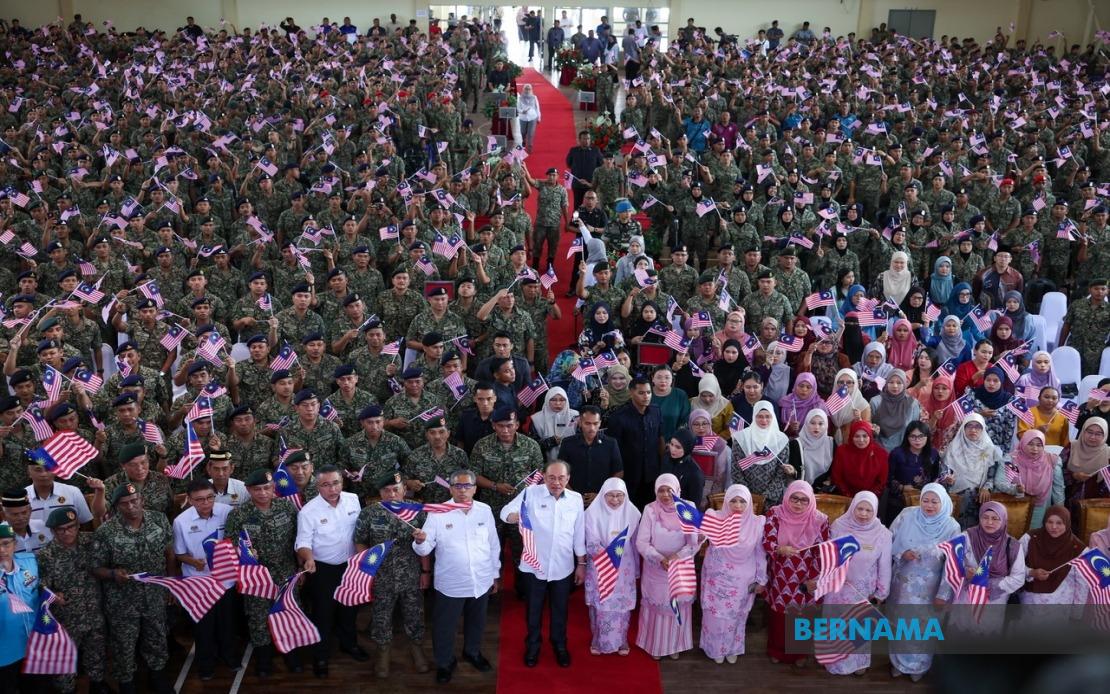
Prime Minister Datuk Seri Anwar Ibrahim has firmly rebuffed suggestions that his government is abandoning its commitment to protecting Bumiputera interests, particularly those of the Malay community. In remarks delivered in Tampin on July 27, he pointed to the creation of new Malay reserve land in Kuala Lumpur as concrete evidence of the administration's determination to reverse decades of erosion in Malay-held property within the capital.
Central to Anwar's defence is the reclamation of the 480-acre Bandar Malaysia site in 2023, which the Prime Minister described as having been held by Chinese interests and a private operator in violation of regulatory requirements. The recovery of this strategic parcel represents a significant shift in how the government approaches protection of indigenous Malay landholdings in an increasingly commercialised urban landscape where property ownership patterns have become deeply concentrated among non-Bumiputera entities and foreign investors.
The historical context here is particularly instructive for Malaysian observers. Since the nation achieved independence in 1957, Kuala Lumpur had witnessed the systematic erosion of Malay reserve land without a single acre of new reserve territory being formally gazetted during the intervening decades. Successive administrations had either permitted the conversion of existing reserves or simply allowed them to be sold off through various mechanisms, contributing to a diminishing Malay ownership footprint in the country's premier economic and administrative hub. This trend had become a persistent source of concern among Bumiputera advocacy groups and Malay-majority constituencies.
From the reclaimed Bandar Malaysia site, the government has now designated 50 acres—approximately 20 hectares—as freshly minted Malay reserve land. The location matters substantially; these are among the most commercially valuable properties in Kuala Lumpur, situated within an area earmarked for major development. Placing such premium real estate into reserve status represents both a symbolic and economic commitment to halting further diminution of Malay property interests in the capital, and signals that future commercial expansion in the city will occur with a designated portion explicitly protected for Bumiputera purposes.
Management of the broader Bandar Malaysia site has been entrusted to Petronas and Khazanah Nasional, both entities which Anwar characterised as Malay-controlled. This institutional choice carries weight for implementation, as it means the development trajectory and commercial benefits of this reclaimed land would be steered through Malaysian entities with explicit accountability to national development objectives rather than left to private commercial logic alone. The decision reflects an understanding that control over land management structures is as important as ownership itself when seeking to advance collective Bumiputera interests.
A notable aspect of Anwar's account concerns the political consensus required to execute this policy within a multiethnic coalition government. The Prime Minister explicitly stated that the proposal encountered no objections when presented to the Cabinet, including from DAP representatives. He recounted that DAP secretary-general Anthony Loke requested only a clarification of the government's rationale, to which Anwar provided detailed explanation regarding the shrinking proportion of Malay landholdings in Kuala Lumpur. Loke's subsequent acceptance of the measure suggests that the initiative, while advancing Bumiputera interests prominently, was framed in terms palatable to non-Malay coalition partners—possibly emphasising development and national interest aspects alongside communal protection.
This negotiation dynamic carries implications for how Malaysia's multiethnic political coalitions can navigate communal interest policies. The Pakatan Harapan government must balance advocating for Bumiputera rights against maintaining the coalition's multiethnic character and appeal. Anwar's emphasis on securing Cabinet consensus without dissent suggests the government is attempting to present such measures as developmentally sound and nationally beneficial rather than zero-sum communal competitions, though critics may argue this framing obscures the fundamentally communal nature of reserve land designations.
The timing of these statements is also significant. Since Anwar assumed office in 2022, various quarters have periodically questioned whether a government dependent on non-Malay votes might deprioritise traditionally Bumiputera-focused policies. By highlighting concrete action on Malay reserve land—a deeply resonant issue within Malay-Muslim communities—the Prime Minister appears intent on demonstrating that his administration has not retreated from core Bumiputera commitments despite broader coalition necessities. For Malaysian constituencies sensitive to questions of Bumiputera protection, such demonstrations of tangible action carry political weight beyond the purely economic value of the land involved.
The reserve land initiative also reflects practical recognition that Kuala Lumpur, as the capital and primary commercial hub, holds particular symbolic and economic importance for national narratives about Bumiputera advancement. Allowing further erosion of Malay landholdings in the capital would have broader psychological ramifications beyond property ownership statistics, potentially feeding perceptions that Bumiputera interests are being marginalised in Malaysia's most important economic zone. Conversely, reversing this trend through reclamation and designation sends a message about government commitment to ensuring that Bumiputera communities retain meaningful economic presence in the nation's premier city.
Moving forward, the implementation and development of these newly designated reserves will warrant close observation. The success of this initiative will be measured not merely by the symbolic designation of land, but by whether actual commercial opportunities and wealth generation flow to intended Bumiputera beneficiaries, and whether the 50 acres eventually produce tangible economic benefits to communities they are meant to serve. The project's long-term trajectory will likely inform debates about whether the government's Bumiputera policies are delivering substantive advancement or primarily symbolic gestures.
For regional observers and neighbouring Southeast Asian nations monitoring Malaysia's approach to indigenous interest protection, the Kuala Lumpur reserve land initiative represents one government's attempt to balance economic development with communal protection within a competitive, multicultural environment. How effectively Malaysia executes this balance while maintaining coalition stability could offer lessons—or cautionary examples—for other diverse economies grappling with similar tensions between development imperatives and ethnic interest advocacy.

