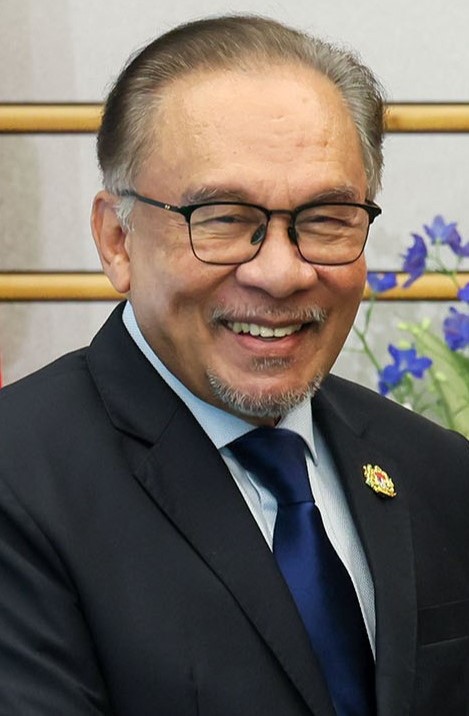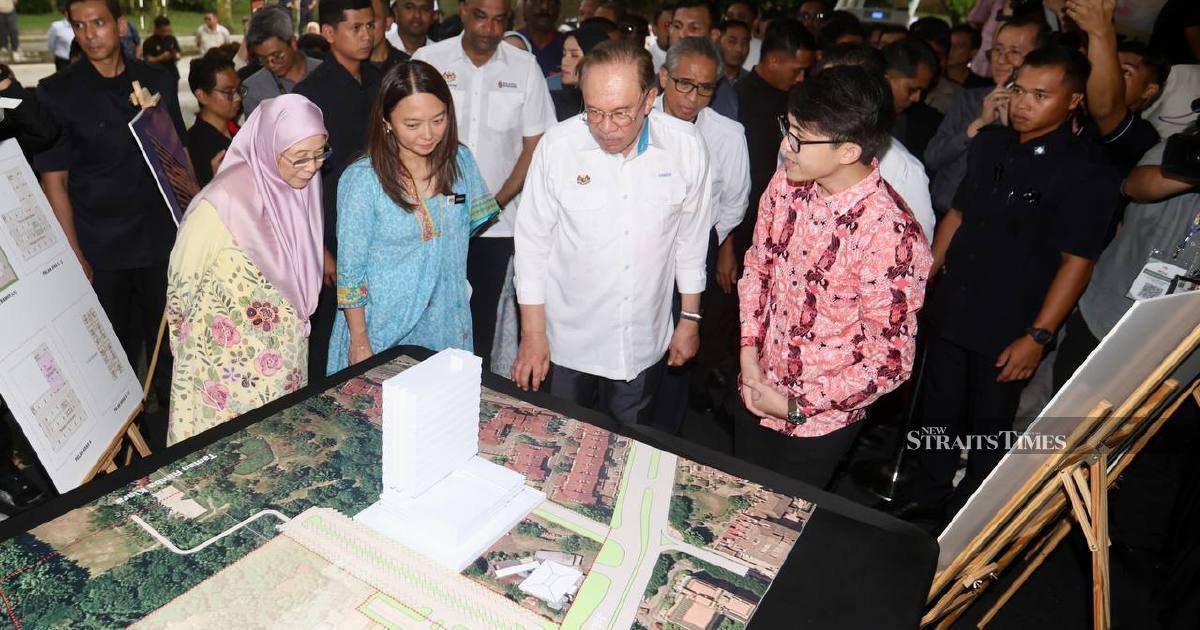
Prime Minister Datuk Seri Anwar Ibrahim has firmly rebuffed claims that the government has marginalised the urban poor in their struggle for improved living conditions, asserting that his administration maintains an unwavering commitment to safeguarding the rights and interests of Malaysia's most vulnerable communities. The statement underscores the government's broader push to reframe its development agenda as inclusive and responsive to the needs of those at the economic periphery.
The Bukit Kiara project has emerged as a focal point in this narrative, serving as the government's primary illustration of how urban renewal initiatives can simultaneously accommodate commercial interests whilst protecting low-income residents from displacement. Rather than being presented as a trade-off between progress and social welfare, the administration characterises the undertaking as a demonstration that both objectives can coexist within a coherent policy framework.
Urban displacement and housing affordability remain contentious issues across Malaysia's major metropolitan areas. As cities expand and property values climb, long-established communities—many of them home to lower-income households—face mounting pressure from developers and market forces. The government's intervention in high-profile cases like Bukit Kiara signals an attempt to balance economic development imperatives with social protection mechanisms that prevent wholesale eviction of poorer households.
Anwar's emphasis on protecting urban poor rights carries particular resonance given the economic pressures facing Malaysia's working-class populations. Inflation, stagnant wages, and rising rental costs have compounded the financial strain on lower-income families, making secure housing and community stability increasingly valuable to vulnerable groups who lack the resources to relocate or absorb sudden housing cost increases.
The Bukit Kiara case represents one of several urban development initiatives currently undergoing scrutiny regarding their social implications. Urban planners and housing advocates have long highlighted the risks inherent in rapid metropolitan transformation, noting that without explicit safeguards, marginalised communities often bear disproportionate costs despite the broader promise of modernisation and renewal. By positioning the project as evidence of protective mechanisms, the government seeks to project an image of development that accounts for social justice considerations.
The political stakes surrounding this issue extend beyond Bukit Kiara itself. Urban communities in major cities like Kuala Lumpur, George Town, and Johor Bahru represent significant electoral constituencies, and how the government manages housing and development issues directly influences public confidence in its commitment to broad-based prosperity. Perceived failures to protect vulnerable populations can erode support among precisely those voter segments upon which ruling coalitions depend for electoral legitimacy.
Malaysia's experience with urban development reflects broader Southeast Asian trends. Rapid industrialisation and metropolitan growth across the region have frequently generated tensions between economic modernisation and social cohesion. The Malaysian government's explicit framing of its position—that rights protection and development are compatible—suggests a recognition that public scepticism about development-driven displacement poses both a policy and political challenge requiring active management.
The assertion that the government has never sidelined urban poor interests also implies a systematic approach to development planning, where consultation, compensation mechanisms, and alternative housing arrangements form part of project design rather than afterthoughts addressed under pressure. This framing positions rights protection as integrated into development strategy rather than a constraint imposed upon it, reflecting a subtle but significant rhetorical distinction with implications for how future projects are conceived and implemented.
Enforcing genuine protections for urban poor communities requires robust institutional mechanisms and meaningful consultation processes. The government's public emphasis on Bukit Kiara suggests growing awareness that economic growth narratives alone no longer satisfy constituencies increasingly concerned about inequality and community stability. This shift reflects broader acknowledgment that sustainable development must include visible mechanisms demonstrating that marginalised communities have voice in decisions affecting their neighbourhoods and futures.
Moving forward, the Bukit Kiara project will likely serve as a benchmark against which future urban developments are measured. If implementation demonstrates that communities can participate meaningfully in decisions, receive fair compensation or alternative housing, and retain social networks, it may establish a template that influences how subsequent projects proceed. Conversely, if the project becomes associated with inadequate protections or unfulfilled commitments, it could undermine government credibility on urban poor welfare across multiple constituencies.
The government's positioning reflects recognition that modernisation narratives require social legitimacy in increasingly aware electorates. Urban poor communities, whilst often lacking individual wealth, collectively represent significant electoral power and possess capacity to mobilise around issues affecting their material interests and dignity. Anwar's explicit reassurance that the government prioritises their rights acknowledges this political reality whilst attempting to reframe development policy as fundamentally aligned with rather than opposed to the welfare of Malaysia's working populations.