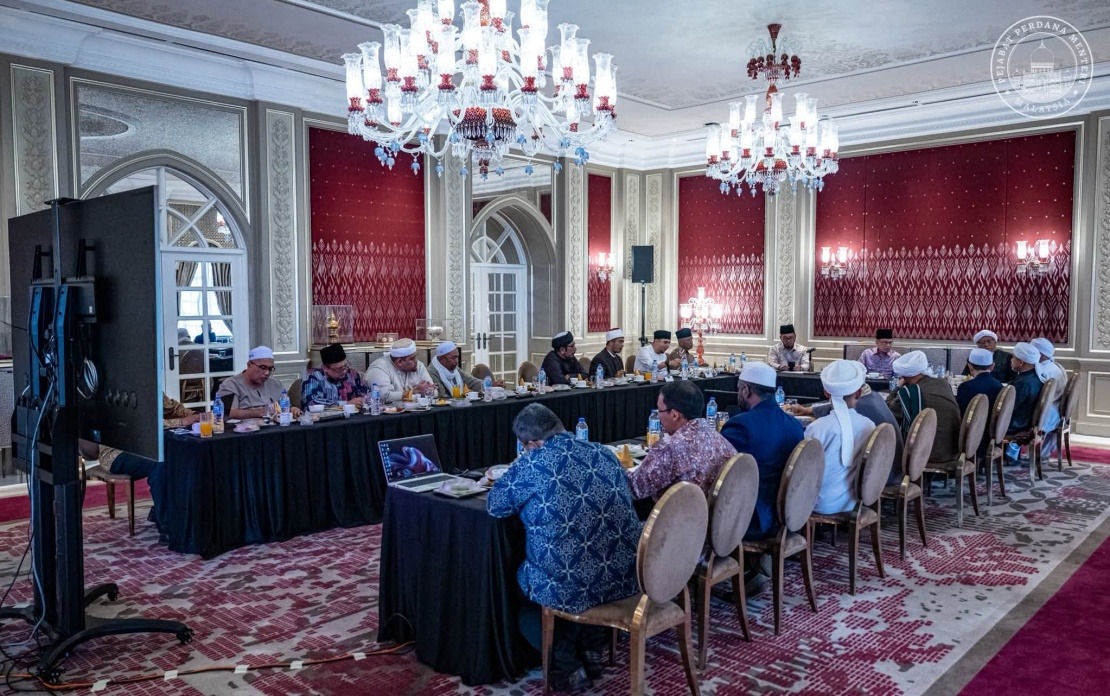
Prime Minister Datuk Seri Anwar Ibrahim has highlighted the critical role that engagement with religious scholars plays in shaping government direction, framing such consultations as far more than procedural meetings but rather as structured opportunities for reflection and refinement of policy. Speaking after a series of discussions held during Maulidur Rasul observances, Anwar characterised these interactions as essential mechanisms through which government initiatives can be anchored in genuine Islamic knowledge, informed by scholarly counsel, and calibrated to address the evolving needs of Malaysia's Muslim community.
The Prime Minister's remarks came following a meeting with Sheikh Dr Muhyiddin Awwamah, who represents Darul Hadis al-Awwamiyyah, one of the prominent Islamic institutional voices in the region. This encounter formed part of a deliberate engagement strategy designed to solicit expert perspectives on the trajectory of Islamic development within Malaysia and to draw on the intellectual resources available within the scholarly community. Anwar's emphasis on treating such dialogue as a form of principled consultation reflects a broader governance philosophy that prioritises integrating religious and intellectual perspectives into the administrative apparatus.
In his public comments, Anwar articulated a vision of governance wherein those holding political authority remain fundamentally receptive to voices grounded in religious knowledge and scholarly tradition. He noted that every government initiative should be subjected to this threefold standard: grounding in sound knowledge, refinement through expert advice, and alignment with contemporary realities facing Muslim communities. This framework suggests an understanding that effective Islamic governance requires constant recalibration between timeless principles and modern circumstances, a tension that religious scholars are uniquely positioned to help navigate.
The meeting with Sheikh Dr Muhyiddin carried additional symbolic weight given his family lineage. His father, Al-'Allamah Sheikh Muhammad bin Awwamah, stands as a towering figure in Islamic scholarship, particularly renowned for his expertise in hadith studies and his substantial contributions to Islamic intellectual tradition. By publicly acknowledging this heritage and expressing appreciation for the elder scholar's written works, Anwar positioned these consultations within a continuum of intellectual transmission spanning generations. His reference to such scholarly contributions as constituting an "intellectual legacy" rather than mere text demonstrates recognition that Islamic knowledge operates as a living tradition requiring stewardship and active engagement from each generation.
The timing of these discussions during Maulidur Rasul celebrations adds religious significance to the government's consultation strategy. The Prophet Muhammad's birthday observance traditionally occasions broader reflection on Islamic principles and the transmission of prophetic knowledge within Muslim communities. By scheduling high-level policy dialogue during this period, the government signalled that engagement with Islamic scholarship forms an integral component of national religious observance rather than existing as a separate administrative function.
For Malaysian policymakers and observers, this emphasis on scholarly consultation carries particular relevance given the complexity of governing a diverse Muslim population with varying theological perspectives and socioeconomic circumstances. Religious scholars serve as bridges between classical Islamic tradition and contemporary Malaysian Muslim experience, and their input on policy development can lend legitimacy and cultural resonance to government initiatives affecting Islamic affairs, education, and community welfare. By institutionalising these conversations, the government acknowledges that technocratic approaches alone prove insufficient for addressing issues touching on religious identity and practice.
Anwar's framing also addresses a persistent tension within Muslim-majority governance structures: the relationship between secular administrative authority and religious knowledge. His articulation suggests that neither can function optimally in isolation. Government institutions require guidance from those steeped in Islamic intellectual tradition, while religious scholars benefit from understanding the practical constraints and possibilities that administrative officials confront. This dialogical model potentially strengthens both spheres by creating accountability mechanisms grounded in mutual respect and shared commitment to community welfare.
The emphasis on listening to religious voices extends beyond symbolic politics into substantive domains. Issues ranging from Islamic education curriculum, halal standards, waqf administration, and religious harmony initiatives all benefit from scholar input that can bridge doctrinal principles with implementation realities. Scholars familiar with hadith methodology, jurisprudential reasoning, and Islamic history can provide perspectives that purely secular bureaucratic expertise cannot supply, particularly when decisions carry implications for religious observance and community identity.
The government's engagement strategy also reflects awareness that religious legitimacy matters profoundly for policy acceptance within Muslim communities. Decisions framed as emerging from genuine consultation with respected scholars gain traction that government pronouncements alone might not achieve. This proves particularly important for potentially contentious matters where different Islamic schools of thought or cultural traditions within Malaysian Islam might advocate divergent approaches. Scholarly consensus or reasoned disagreement documented through formal dialogue can depoliticise such differences and situate them within legitimate Islamic discourse.
Moving forward, the sustainability of this consultation model depends on genuine reciprocal engagement rather than performative gesturing. Scholars must perceive that their input substantively influences policy outcomes, while government officials require confidence that scholarly advice remains grounded in practical realities rather than divorced from implementation challenges. The transparency with which government responds to scholarly recommendations and the visible integration of their counsel into policy frameworks will ultimately determine whether such dialogues function as meaningful collaborative exercises or devolve into symbolic theatre.
For the broader Southeast Asian context, Malaysia's structured approach to consulting religious scholars offers a case study in how Muslim-majority democracies can formally integrate religious and secular governance modalities. As other regional governments grapple with similar questions about religious authority and state policy, the Malaysian model of institutionalised scholarly dialogue presents both opportunities and cautionary lessons regarding the complexities of sustaining such partnerships over time.

