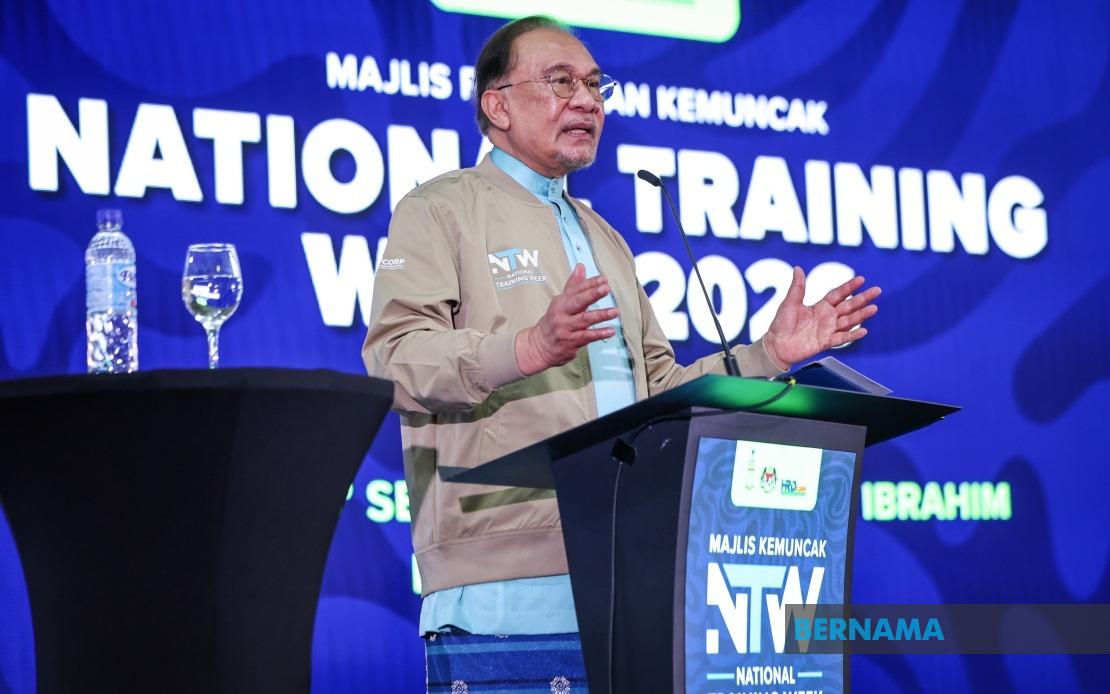
Prime Minister Datuk Seri Anwar Ibrahim signalled strong confidence on Wednesday that the Cabinet will greenlight the public disclosure of the Royal Commission of Inquiry report on Lembaga Tabung Haji, marking a potential turning point in a transparency matter that has drawn sustained scrutiny from policymakers and the public alike. Speaking at the National Training Week 2026 finale held at Universiti Teknologi MARA (UiTM) Permatang Pauh in Bukit Mertajam, Anwar underscored his personal support for releasing the document while emphasising that institutional protocols must be observed throughout the decision-making process. The Prime Minister's remarks represent a clear indication of Government intention to move forward with unveiling findings that have remained under wraps, pending Cabinet consideration at the following week's meeting.
The Tabung Haji inquiry has been a subject of considerable public interest, reflecting broader concerns about governance and accountability within Malaysia's institutional frameworks. Anwar acknowledged the mounting expectations around the report's release, noting that he personally harboured no reservations about making its contents available to stakeholders and the broader Malaysian public. However, his insistence on adhering to proper procedural channels underscores the administration's commitment to ensuring that such consequential decisions emanate through established governmental structures rather than unilateral action. This measured approach seeks to balance transparency imperatives with institutional legitimacy, a recurring challenge in contemporary Malaysian governance.
The delay in releasing the inquiry report has stemmed from practical considerations advanced by Tabung Haji's former leadership structure. According to Anwar's account, the fund requested additional time to implement recommendations and undertake organisational reforms before the findings became public knowledge. This deferral mechanism, while potentially frustrating to transparency advocates, reflects a pragmatic recognition that RCI reports can catalyse significant institutional changes, and releasing findings prematurely—before management systems are prepared to respond—may result in operational disruption. The Prime Minister's framing suggests that this waiting period served a constructive purpose in allowing the organisation to prepare its operational and strategic response.
Significant changes in Tabung Haji's leadership constellation have altered the calculus around public disclosure. A newly constituted management team has assumed responsibility for executing the systemic improvements recommended within the inquiry's findings. Anwar indicated that this transition in institutional leadership has created conditions favourable to releasing the report, as the refreshed management structure possesses both the mandate and the capacity to implement reforms systematically. This development potentially addresses one of the underlying concerns that prompted the initial deferral—that an organisation lacking adequate leadership buy-in would struggle to translate recommendations into meaningful practice. The presence of a committed management cohort substantially increases the likelihood that public disclosure will translate into concrete organisational improvement rather than merely generating controversy.
The Cabinet deliberation scheduled for the subsequent meeting represents the formal mechanism through which this decision will be processed and authenticated. Anwar's confidence in securing Cabinet approval rests on the groundwork that has preceded this juncture and his personal advocacy for transparency. Malaysia's Cabinet system requires collective decision-making on matters of sufficient public significance, ensuring that no single minister can unilaterally determine outcomes affecting public institutions. This institutional architecture, while sometimes slowing processes, serves protective functions by distributing responsibility and encouraging comprehensive deliberation. The fact that the Prime Minister himself has committed to tabling the proposal suggests administrative preparation and likely pre-consultation with key ministerial stakeholders.
The political and institutional context surrounding this development warrants careful analysis. Transparency regarding the governance and performance of public financial institutions carries substantial weight within Malaysian society, particularly among constituencies concerned with accountability and institutional reform. The Tabung Haji, as a significant repository of pilgrimage savings belonging predominantly to Muslim Malaysians, occupies considerable cultural and economic importance. Public confidence in such institutions depends substantially on demonstrable transparency and visible responsiveness to identified deficiencies. By committing to disclosure, the Government positions itself as responsive to legitimate demands for institutional accountability and willing to expose areas requiring remediation.
For the broader Southeast Asian context, Malaysia's approach to managing institutional inquiry reports and their public disclosure influences regional perceptions of governmental transparency standards. Nations in the region continue grappling with questions about how to balance institutional accountability with practical implementation considerations. Malaysia's resolution of this particular matter, therefore, carries significance beyond domestic concerns, potentially establishing patterns that other jurisdictions observe and potentially emulate. The decision also reflects evolving expectations among Malaysian stakeholders regarding governmental openness and institutional responsiveness to scrutiny.
The involvement of Penang Chief Minister Chow Kon Yeow and Human Resources Minister Datuk Seri R. Ramanan at the announcement venue underscores the multi-stakeholder nature of governance reform initiatives. Chief Ministers from constituent states frequently coordinate with federal authorities on matters affecting institutional performance, particularly when reforms carry implications for human resources management and training frameworks. The National Training Week platform itself—focused on professional development and institutional excellence—provides an appropriate venue for signalling governmental commitment to transparency and reform.
The timeline for Cabinet consideration remains imminent, with the Prime Minister indicating that the formal proposal will be presented within days. This accelerated trajectory suggests that preparatory work has been completed and that blocking objections have been addressed through prior consultation. Malaysian Cabinet decision-making typically follows patterns established through pre-meeting discussions among ministers, reducing the likelihood of dramatic reversals during formal sessions. Anwar's public articulation of his position substantially constrains subsequent possibilities for derailment, as reversing course would require extraordinary circumstances and would generate significant political costs.
The anticipated approval of the Tabung Haji RCI report's public release represents a convergence of transparency demands, institutional readiness, and political will. For Malaysian citizens invested in pilgrimage savings, the disclosure promises access to authoritative findings regarding fund governance and performance. For policymakers, the move demonstrates responsiveness to accountability pressures while maintaining respect for institutional processes. The outcome will likely establish important precedents for how similar inquiries are managed and disclosed within Malaysia's administrative apparatus, influencing institutional behaviour across multiple sectors.

